
What stem cell hair treatment is
Often searched for as “stem cell hair treatment”; technically it is an autologous scalp micrograft. No cells are cultured or expanded in a lab. It is a supportive, non-surgical procedure, not a transplant and not a cure for hair loss. Small tissue samples are taken from a shaved patch behind your ear, broken down mechanically with micro-blades into a micrograft, and mixed with platelet-rich plasma (PRP) from a small sample of your own blood, then injected into the scalp in the same session to support the scalp and the follicles already there [1].
It is best understood as one of several supportive options, used alongside a healthy scalp routine or, in some cases, alongside a hair transplant, rather than as a standalone solution. Outcomes vary from person to person, and suitability is assessed individually.
- Since 2016, caring for international patients
- Specialist-led, under the leadership of a plastic surgery specialist (plastic, reconstructive and aesthetic surgery), planning and design are carried out by physicians certified in hair transplantation
- Hospital environment, procedures in a fully equipped hospital
- 12-month follow-up, with a clear revision policy
- Languages, English, Turkish, German, Russian, Romanian
How the treatment works
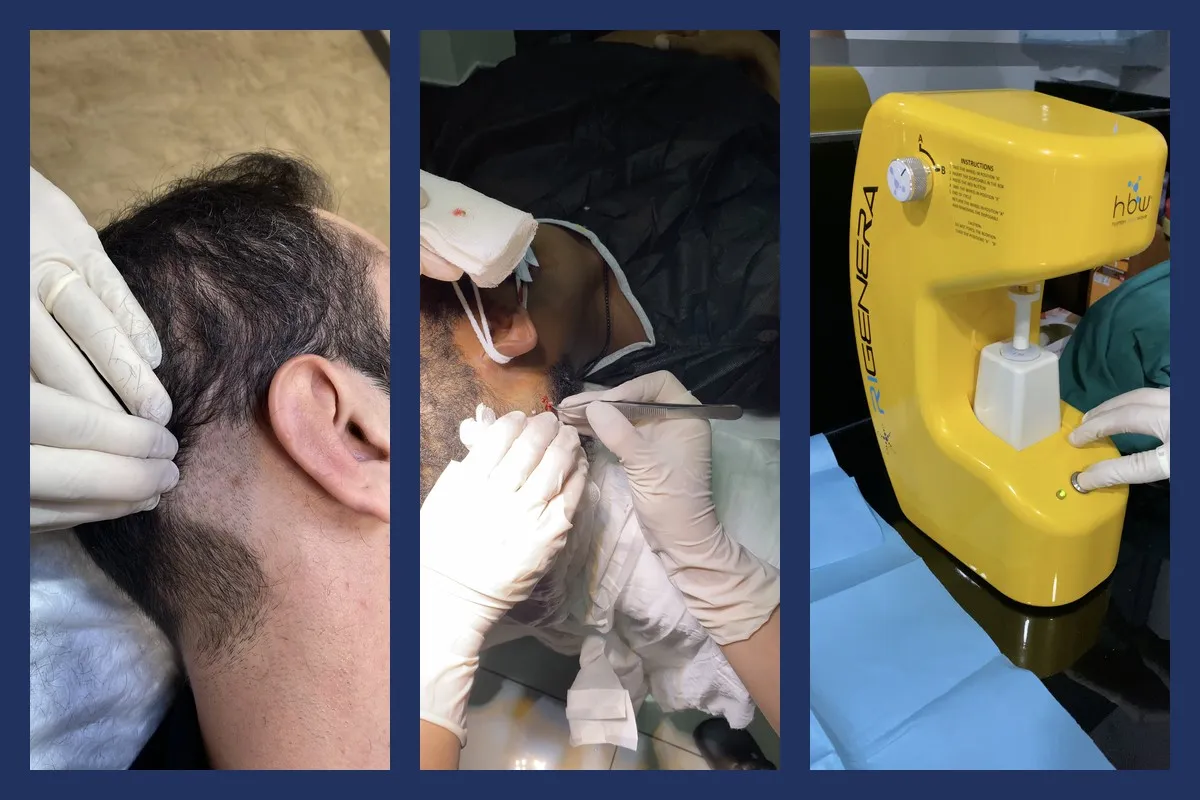
The treatment is carried out in a single appointment. The procedure is always done under local anesthetic: a small patch behind the ear is shaved and numbed, and four to five tiny tissue samples are taken from that patch.
- Sample. Under local anesthetic, a small patch behind the ear is shaved and numbed, and four to five tiny tissue samples are taken from it, an area chosen because it is discreet and heals well.
- Mechanical micrograft. The sample is broken down mechanically with fine micro-blades into a micrograft, in the clinic and in the same session. Nothing is cultured, grown or expanded in a laboratory.
- Mixing with PRP and injection. The micrograft is mixed with PRP, prepared from a small sample of your own blood, and injected into the scalp to support the scalp and existing follicles [1][2].
There is little to no downtime. Some tenderness or redness at the injection sites is normal for a short time and settles on its own.
Two options
There are two ways the micrograft is prepared, and we advise which suits you at the assessment.
- Manual autologous scalp micrograft with PRP, €400. The tissue sample is prepared by hand with micro-blades and mixed with PRP.
- Rigenera Activa device-based autologous micrograft, €1,000. A medical device standardizes the mechanical fragmentation of the sample before it is mixed with PRP.
Both use your own tissue and PRP; the difference is how the sample is broken down. Which one is appropriate depends on your case, and we explain the choice honestly at the consultation. Prices are updated September 2026.
Who it is for
Stem cell hair treatment is a supportive option, not a replacement for a hair transplant. It may suit you if you are looking to support the scalp during early thinning, or as an addition to a wider plan; it is decided case by case. If your hair loss calls for restoring coverage in an area that is already bald, a transplant is the procedure that adds hair, and this treatment does not replace it. We assess whether it is appropriate for you at the consultation, and we will say if it is not [1].
Who should not have it
There are situations where we do not carry out the treatment, or where it is postponed until a condition is managed. It is generally not suitable if you have any of the following, and we check this at the assessment:
- Anticoagulant (blood-thinner) use
- A bleeding or clotting disorder
- An active scalp infection or active skin disease (for example a psoriasis or eczema flare)
- Ongoing cancer treatment
- Pregnancy or breastfeeding
- Uncontrolled diabetes
- A low platelet count
If any of these applies, we will tell you and, where appropriate, reassess once it is under control.
What to expect
Because this is supportive care, it is not measured by a guaranteed result. Any effect builds gradually and varies between people. It is done as a single session; whether a repeat is useful is decided at your follow-up. We do not promise a specific amount of regrowth, and we do not present it as more effective than any other treatment. What we do is set out honestly what it can and cannot do for your case.
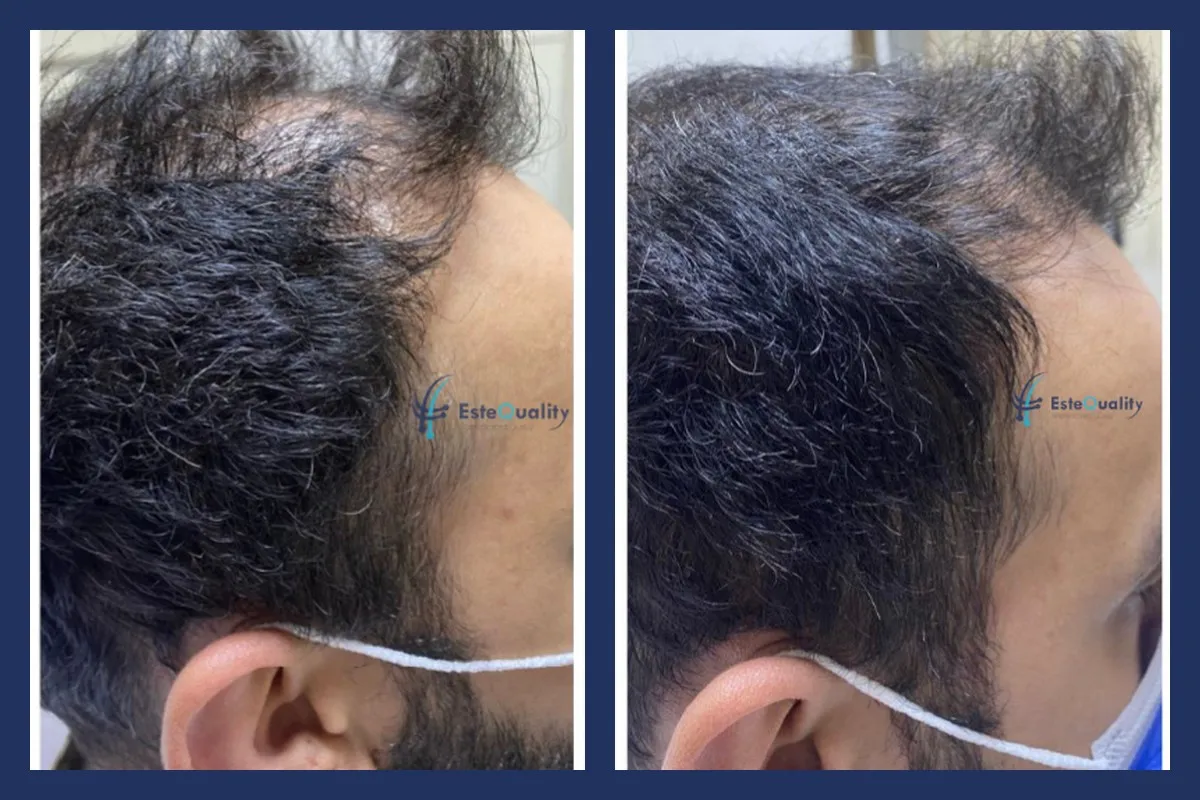
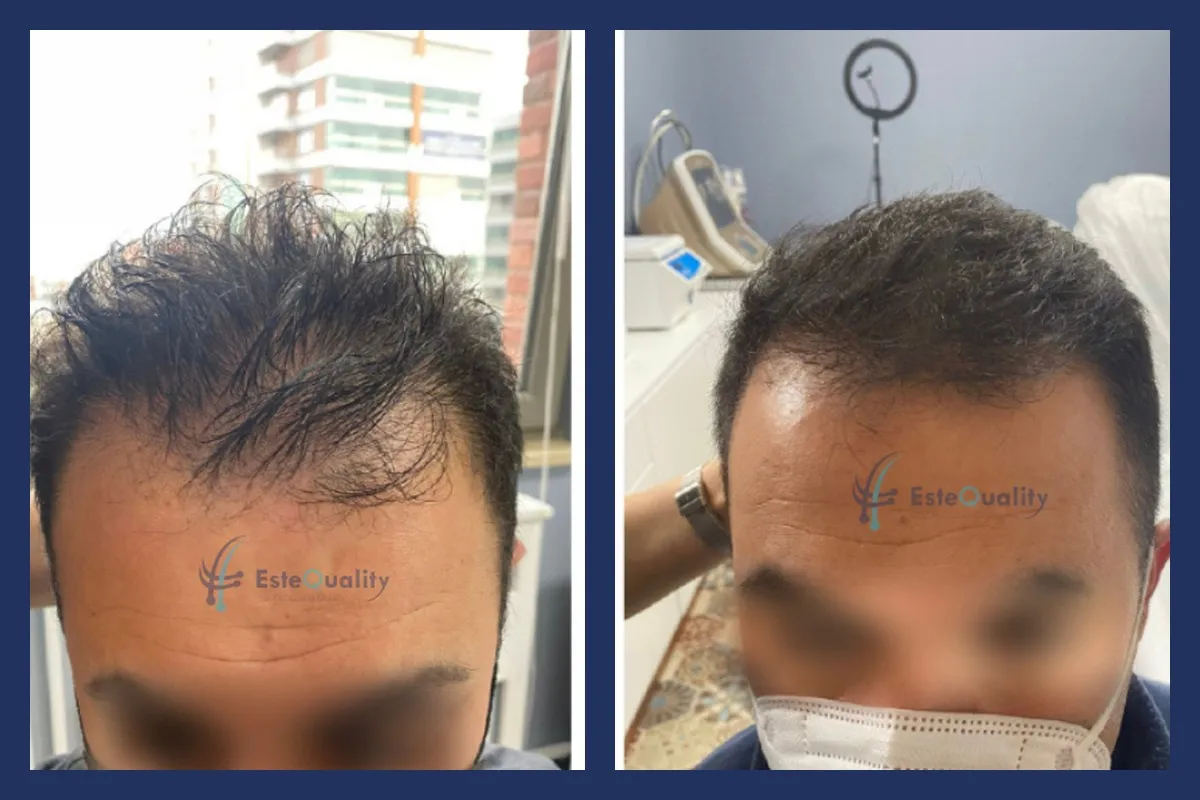
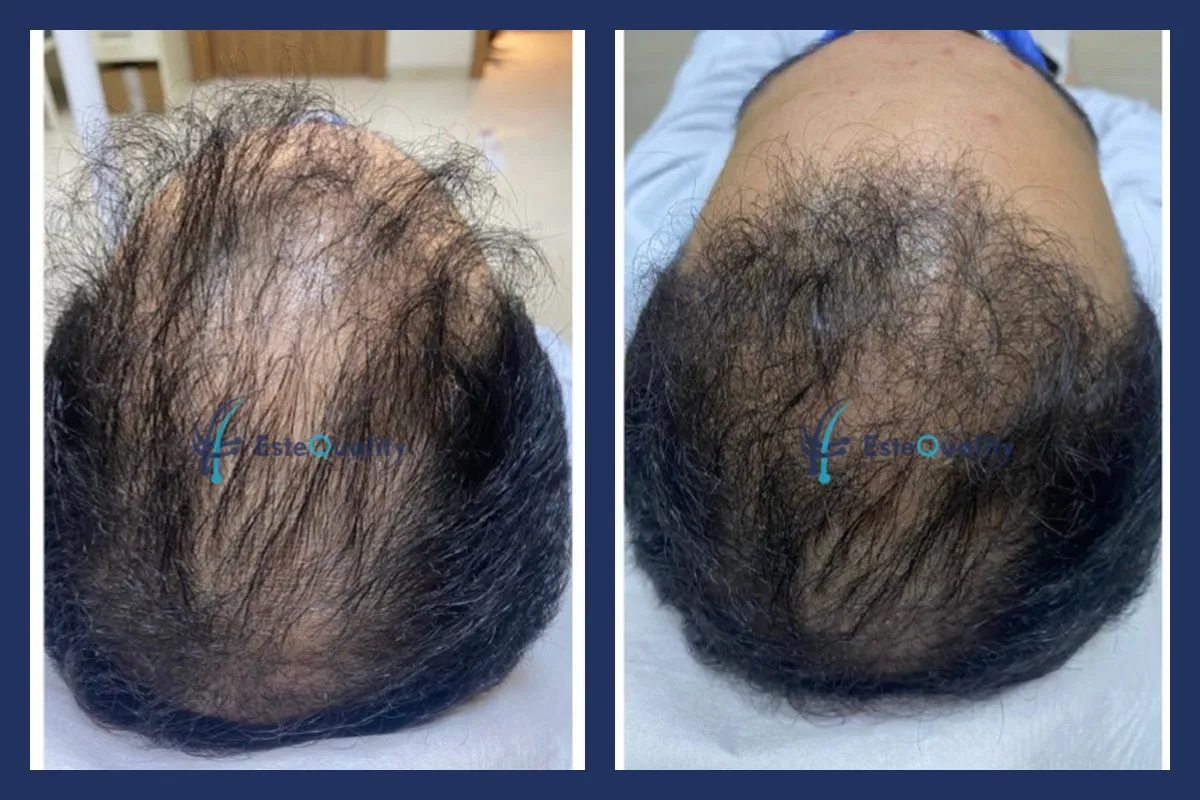
Three patients, all treated with the Rigenera Activa option, at 6 months.
Cost
Stem cell hair treatment is offered as an optional add-on, in two options: manual autologous scalp micrograft with PRP, €400; Rigenera Activa device-based autologous micrograft, €1,000, updated September 2026. It can be combined with a transplant package or taken on its own; for a plan matched to your case, message us on WhatsApp. Our full package ranges are on our hair transplant packages in Turkey page.
Recovery and aftercare
Recovery is straightforward: the injection sites settle quickly and there is no lengthy downtime. Our general aftercare guidance, the 12-month follow-up and the revision policy that apply across our treatments are set out in full on our hair transplant in Turkey page.
Frequently asked questions
Is stem cell hair treatment a cure for hair loss?
No. It is a supportive, non-surgical treatment used to support the scalp and existing follicles; it does not replace a hair transplant, and outcomes vary from person to person [1].
Does it actually use stem cells grown in a lab?
No. Nothing is cultured or expanded in a laboratory. It is technically an autologous scalp micrograft: your own tissue is broken down mechanically and mixed with PRP in the same session.
How is it different from PRP?
PRP uses a sample of your own blood, prepared and injected into the scalp. This treatment adds a micrograft made from a small tissue sample taken from behind the ear, mixed with PRP. We do not present either as better than the other; the right choice depends on your case [2].
What is the difference between the manual and Rigenera Activa options?
Both use your own tissue and PRP. The manual option prepares the sample by hand; the Rigenera Activa option uses a medical device to standardize the fragmentation. We advise which suits you at the assessment.
How many sessions will I need?
It is done as a single session. Whether a repeat is useful is decided at your follow-up rather than booked in advance.
Does it hurt, and is there downtime?
It is done under local anesthetic, so discomfort is limited. There is some bleeding where the tissue is taken, so we apply an antibiotic dressing behind the ear; you can remove it the same night. The injection sites may be slightly red or tender for a short time. There is little to no downtime.
Sources
- ISHRS, Regenerative and adjunctive therapies in hair restoration (autologous, supportive, not curative). https://ishrs.org/patients/
- AAD, Platelet-rich plasma (PRP) for hair loss: what it is and what to expect. https://www.aad.org/public/diseases/hair-loss/treatment/prp-hair-loss
- NHS, Hair loss (causes and when to seek advice). https://www.nhs.uk/conditions/hair-loss/
- Mayo Clinic, Hair loss (treatments and realistic expectations). https://www.mayoclinic.org/diseases-conditions/hair-loss/symptoms-causes/syc-20372926


