
What is Sapphire FUE hair transplant?
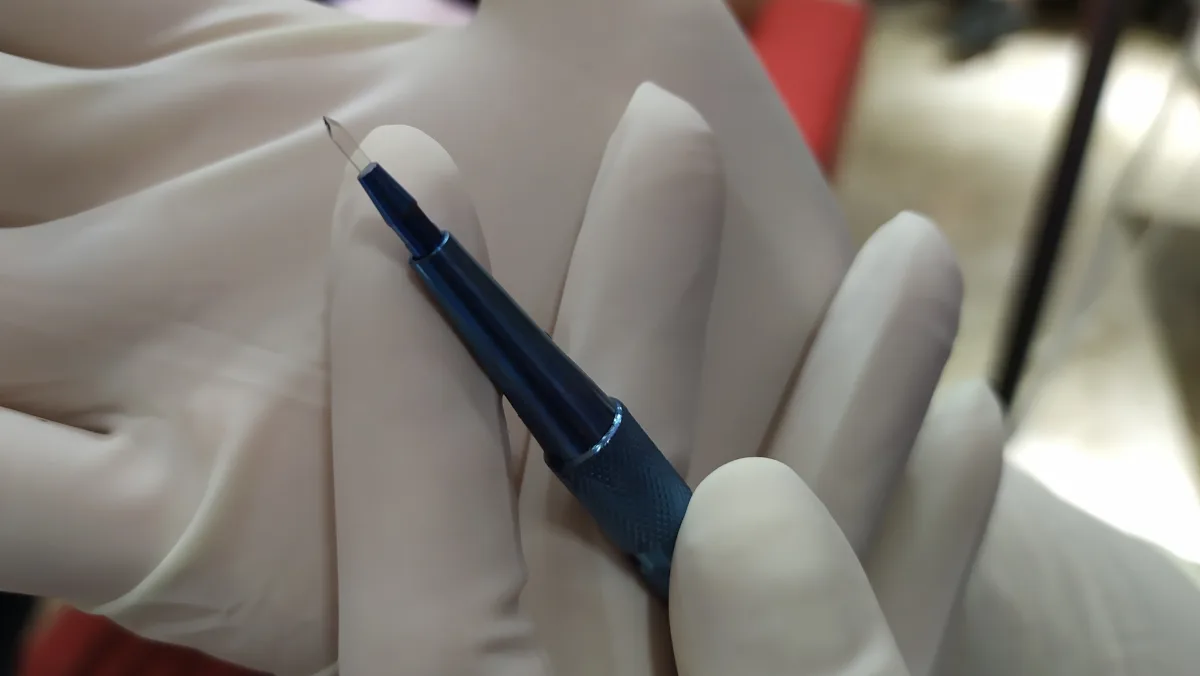
Sapphire FUE is a version of follicular unit extraction (FUE) in which the recipient sites (the small openings that receive each graft) are made with a blade cut from sapphire rather than steel [1]. Everything else follows the familiar FUE pattern: grafts are harvested from the donor area, then placed into the thinning zones. The sapphire blade changes the middle step, where the physician opens the channels for the grafts.
The idea behind it is precision. A sapphire tip can be shaped very finely, which lets the physician open smooth, clean recipient channels. It is often chosen for detailed work along the hairline and mid-scalp, though the result depends on the physician’s plan and hand, not the blade.
- Since 2016, caring for international patients
- Specialist-led, under the leadership of a plastic surgery specialist (plastic, reconstructive and aesthetic surgery), planning and design are carried out by physicians certified in hair transplantation
- Hospital environment, procedures in a fully equipped hospital
- 12-month follow-up, with a clear revision policy
- Languages, English, Turkish, German, Spanish, Russian, Romanian
Sapphire blade vs steel: what actually differs
The blade is a refinement, not a different operation. Compared with a traditional steel blade, a sapphire tip is prized for a few reasons:
- A finer, smoother edge, which can make cleaner channel openings.
- Consistent sharpness, because a hard sapphire tip holds its fine edge through a long procedure. In our own procedures the sapphire tip has not needed to be replaced mid-session.
- Potentially smaller openings than a steel blade — a difference in the cut itself, not a guarantee of a better result.
What the blade does not change is the biology underneath. How many grafts take, when they shed, and how the growth comes in are much the same as with a steel blade; healing is comparable [2]. Be wary of a clinic that sells sapphire as an automatic upgrade. The material makes precise work easier for a good physician, but the design of your hairline and the hand doing the work decide the outcome, not the blade.
How Sapphire FUE is done
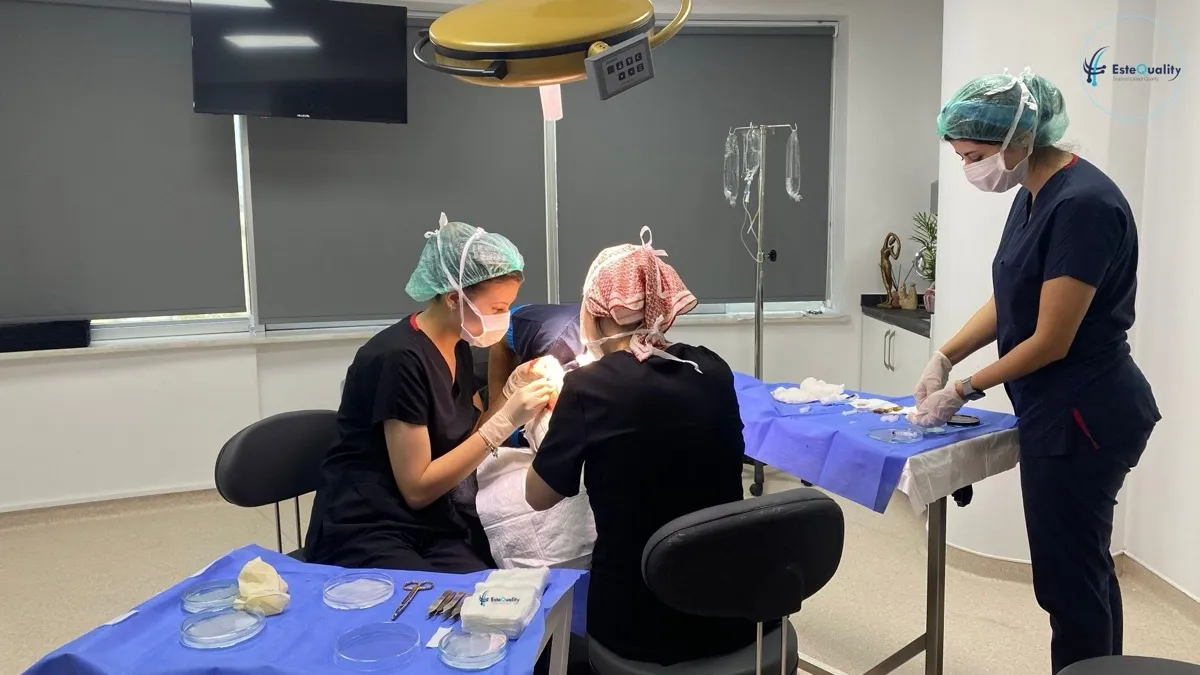
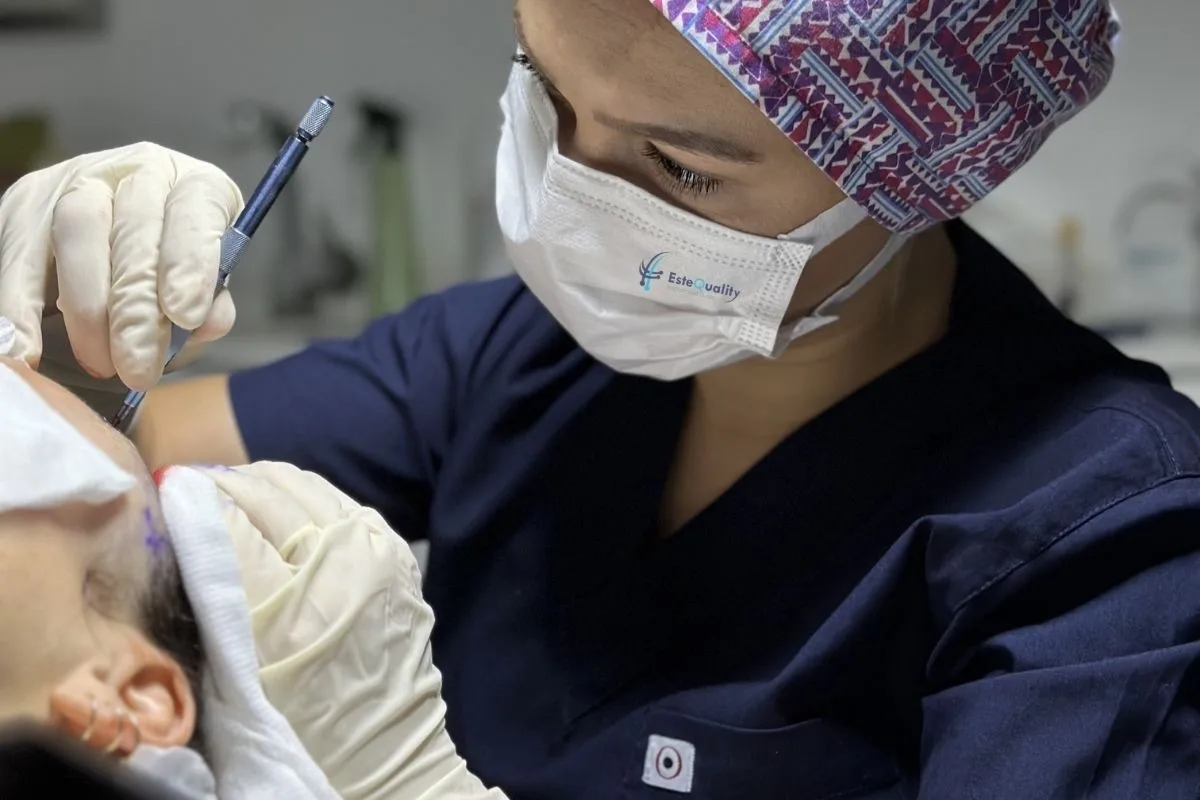
A sapphire FUE session runs in three stages, under local anesthetic.
- Harvesting. Follicular units are taken from the donor area at the back and sides of the scalp, leaving small dot-shaped marks.
- Opening the channels with the sapphire blade. This is the defining step. The physician uses the sapphire tip to make the recipient sites at the correct angle, direction and depth, matching your natural growth pattern. The care taken here is what makes a hairline look real rather than planted.
- Placing the grafts. The harvested grafts are set into the channels prepared with the sapphire blade, following the map agreed at your consultation. A DHI implanter pen works differently — it opens the site and places the graft in one motion, without a separate channel step; the two workflows are compared on our DHI hair transplant page.
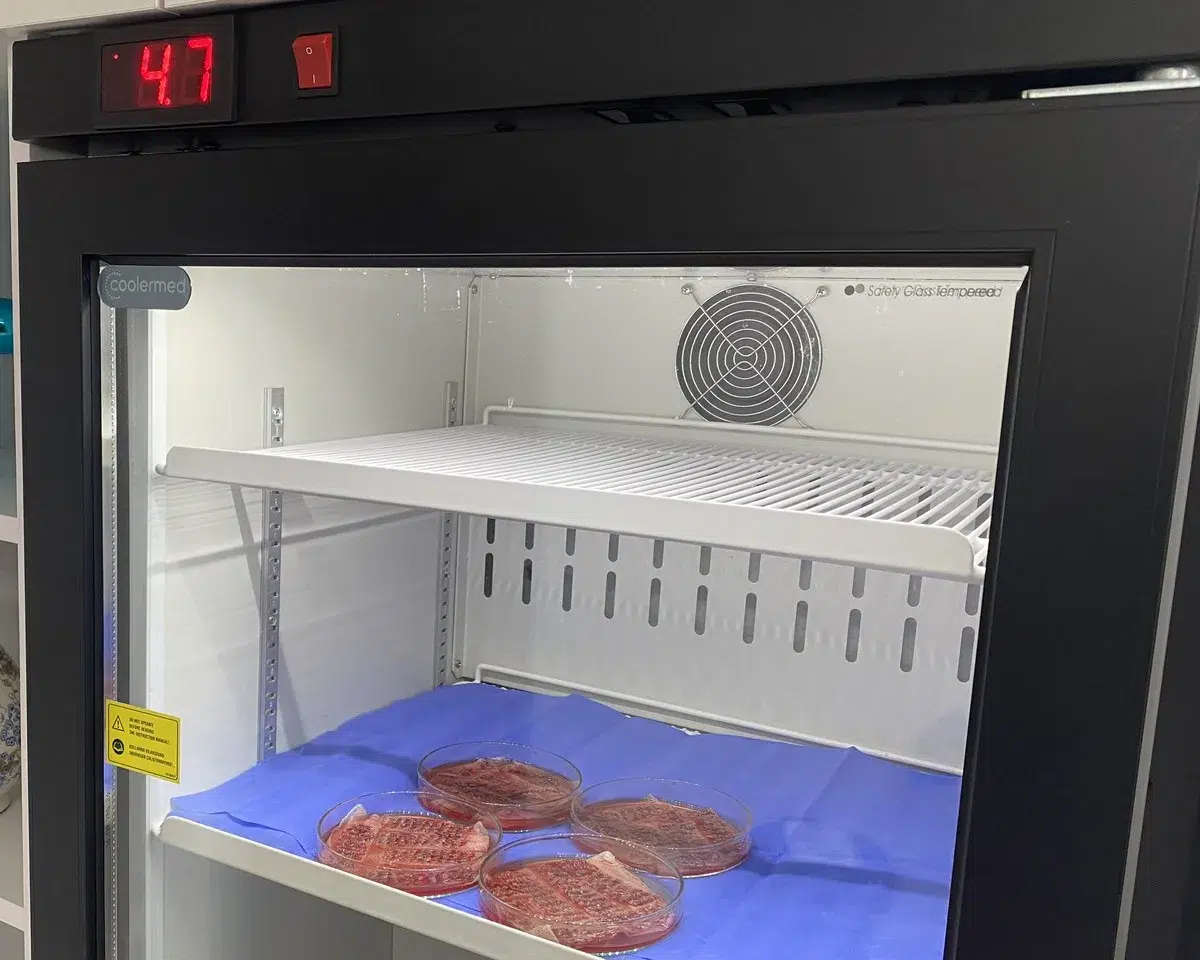
On the hospital day, the channel-opening stage is where most of the design happens: the pattern, angle and density of the channels are what your final hairline follows, so it is done slowly and checked as it goes. The session usually takes most of a day, depending on the number of grafts, under local anesthetic and with breaks. Between extraction and implantation, grafts are kept in chilled lactated Ringer’s solution at 4–5 °C, one of the standard holding solutions in hair transplantation, to help keep them viable while they are outside the body.
Sapphire FUE vs standard FUE and DHI
All three share the same harvesting step; the difference is in how the recipient sites are made and filled.
| Method | Recipient site | Notable for |
|---|---|---|
| Standard FUE | Channels opened with a steel blade | The established baseline |
| Sapphire FUE | Channels opened with a sapphire blade | Fine, consistent channels for precise work |
| DHI | An implanter pen opens the site and places the graft in one motion | Fine control over angle, often for smaller or unshaven areas |
No single option wins in every case. Sapphire FUE earns its place where clean, precise channel work across a broad area is the goal; a DHI implanter pen may take over where one-step placement and tight angle control matter more, such as smaller or unshaven zones. Some plans combine the two. We match the approach to your case at the assessment instead of leading with a technique name.
In some previously treated recipient areas, the skin may become firmer and less elastic due to scar tissue and fibrosis. In these cases, the physician may prefer a standard FUE approach to manage tissue resistance more effectively during channel creation. The technique is selected after assessing the condition of the skin and any tissue changes caused by previous procedures.
Who is a good candidate?
Sapphire FUE suits most people who are candidates for a hair transplant at all: hair loss that has settled into a stable pattern, enough donor hair at the back and sides to cover the thinning areas, and realistic expectations. It is well suited to work across the hairline and mid-scalp.
It is less about who qualifies for sapphire specifically and more about whether a transplant suits you now. If your loss is still advancing quickly, if your donor supply is limited relative to the area, or if a medical cause of shedding has not been ruled out, we will say so; the blade does not change those fundamentals.
Common claims about sapphire FUE, checked
Sapphire FUE is marketed heavily, so it helps to separate what is fair from what is oversold.
- Sapphire means denser results. No: density comes from your donor supply and the physician’s plan, not from the blade. A finer channel can make neat placement easier, but it does not create density by itself.
- Sapphire is painless or scar-free. No procedure is either. It is done under local anesthetic, and like all FUE it leaves tiny dot marks in the donor area. For a more comfortable, pain-minimized experience, you may choose to have your hair transplant performed with sedation.
- Sapphire heals much faster. Not something to rely on; plan for the standard recovery.
- Sapphire is always the best technique. There is no always-best technique; the right one depends on your case, and sapphire and DHI are often combined.
If a quote leans on the blade as the headline reason to choose a clinic, ask what else is behind it: the physician, the plan, and the follow-up.
Recovery and results timeline
One claim specific to sapphire is worth checking: because the channels can be made smaller, some clinics promise noticeably faster healing. There is no strong evidence to count on that, so plan for the ordinary FUE path and treat quicker healing as a bonus if it happens; the blade changes the size of the openings, not the biology of regrowth.
The recovery timeline, the shedding-and-regrowth stages, and our 12-month follow-up and revision policy are the same across our techniques and are set out in full, with the post-operative care pack, on our hair transplant in Turkey page.
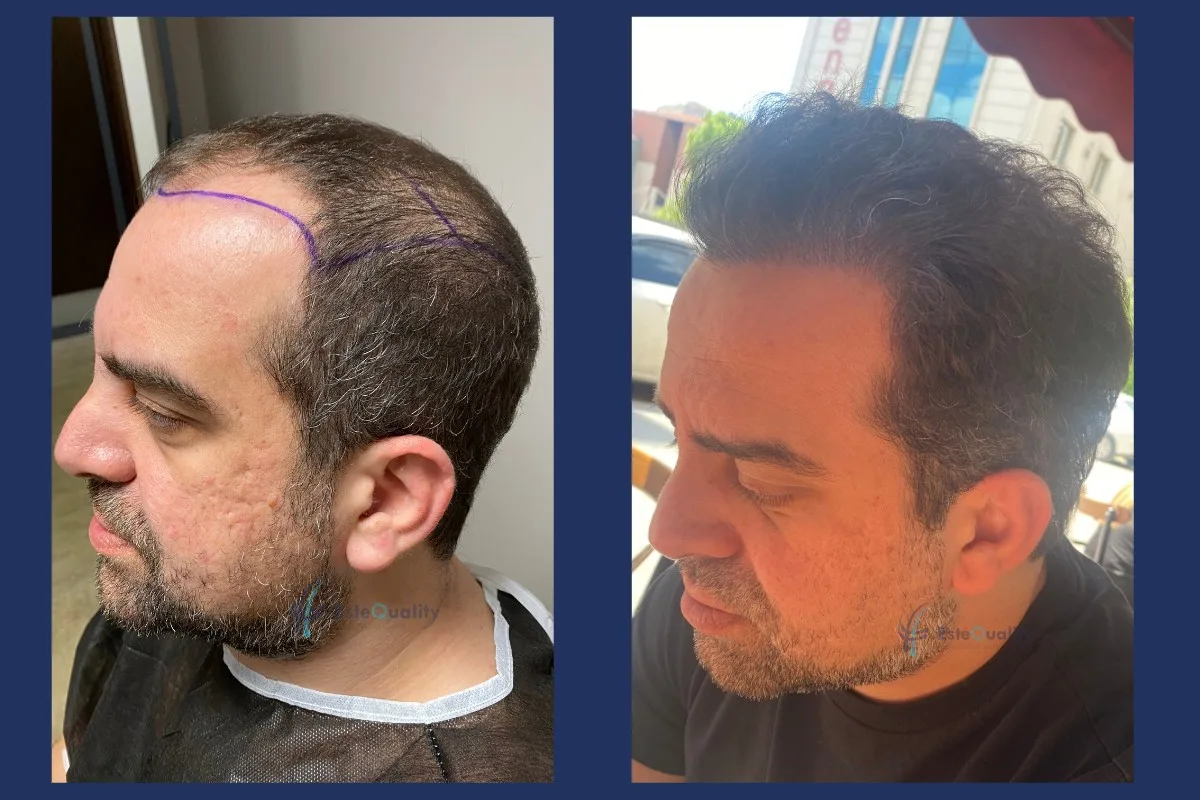
You can see settled Sapphire FUE results in our before-and-after gallery and read patient feedback on our hair transplant reviews page.
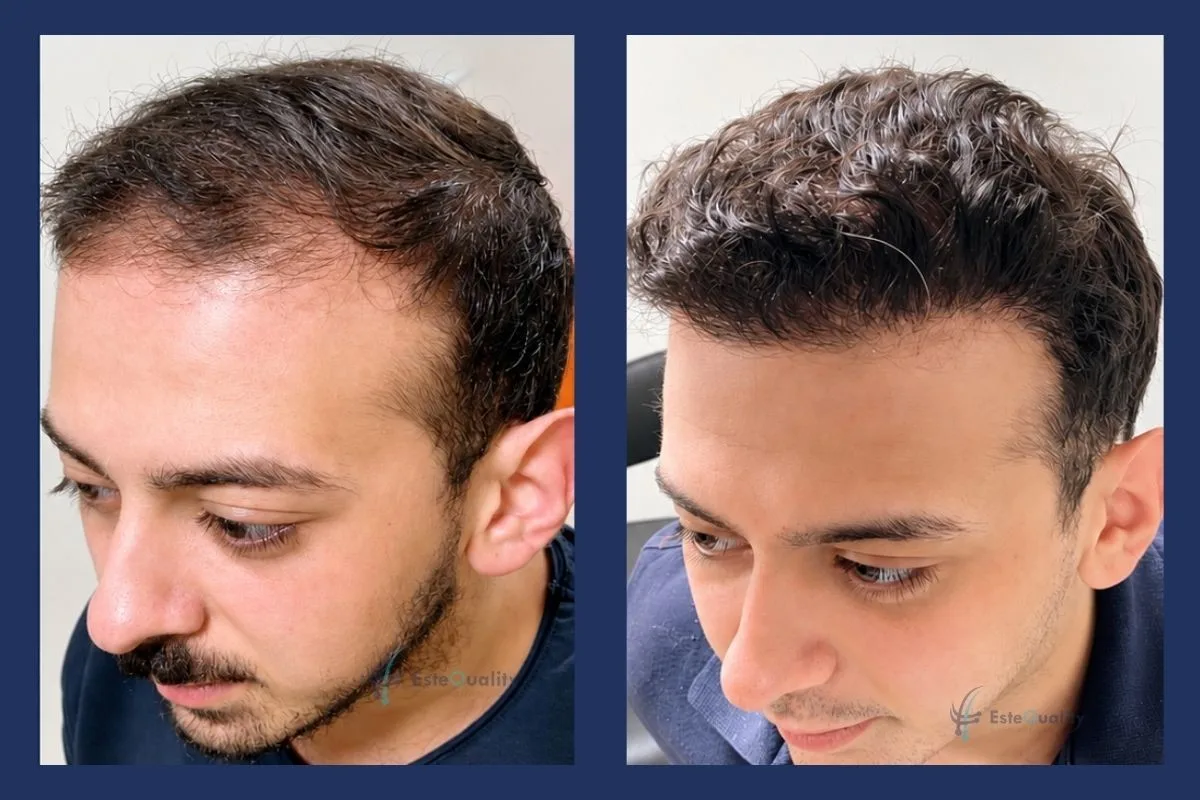
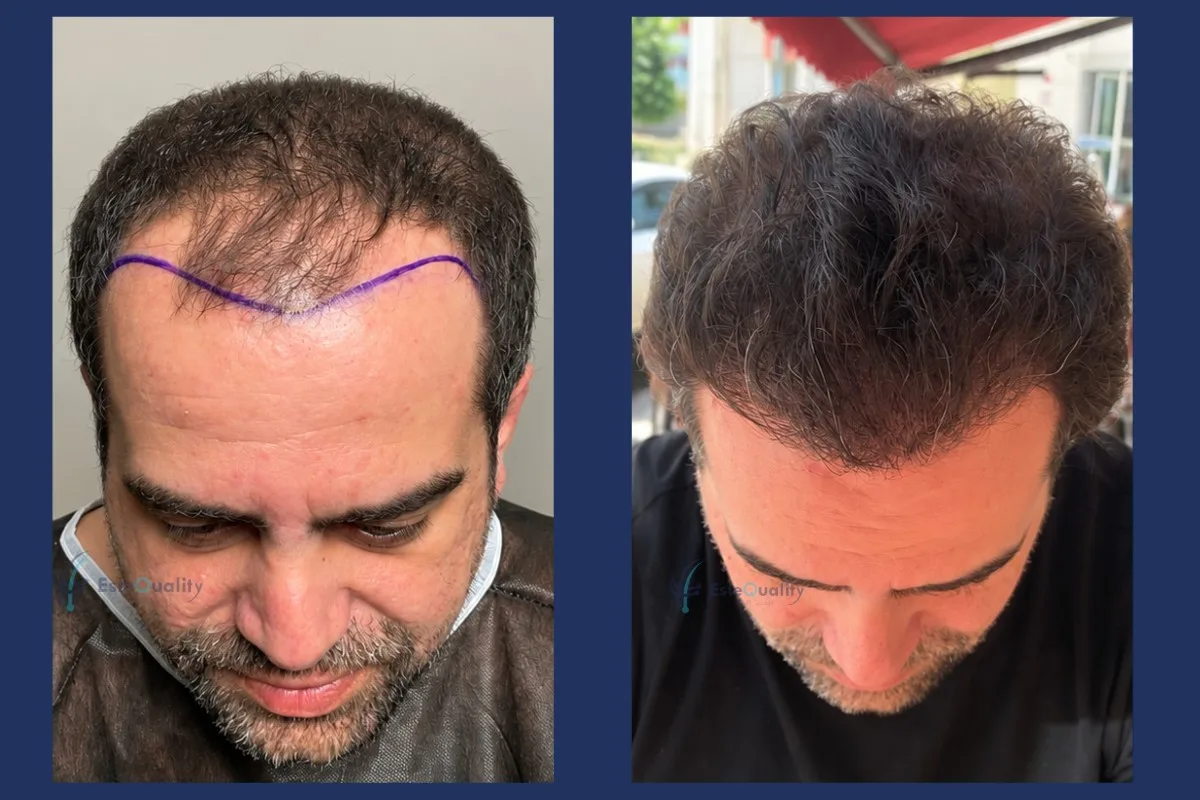
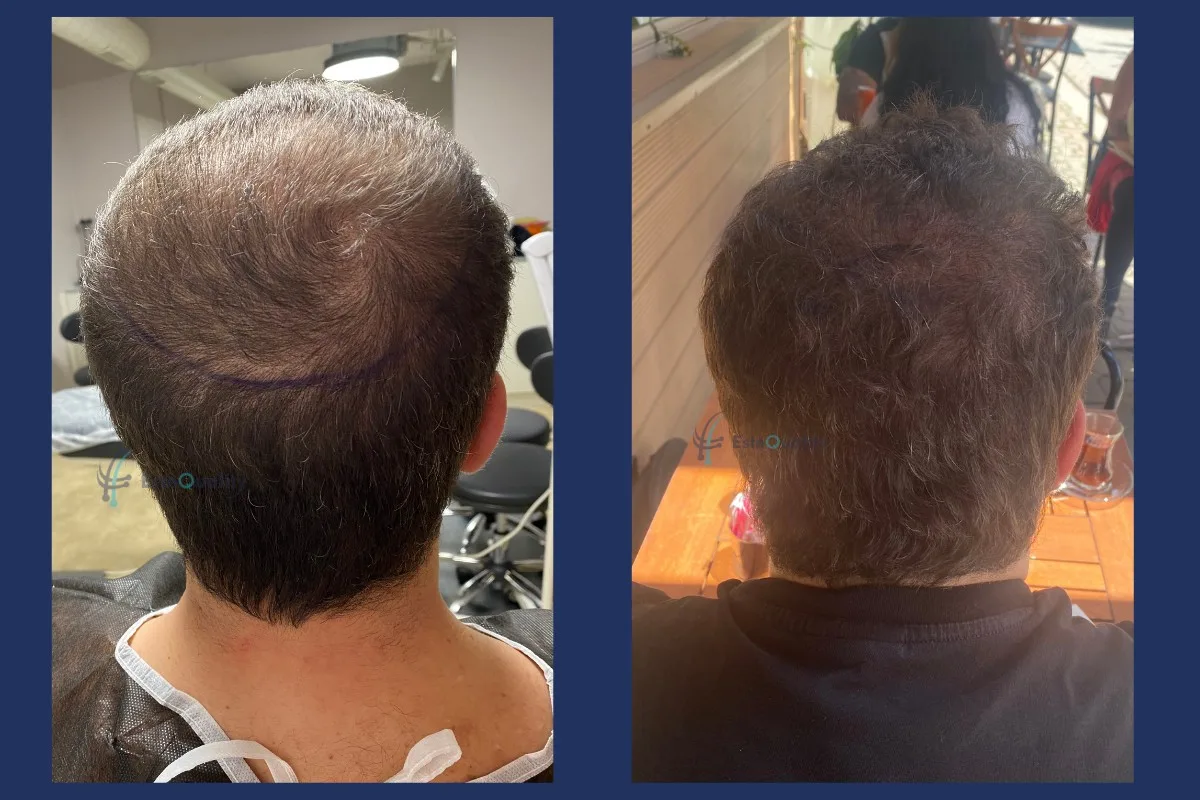
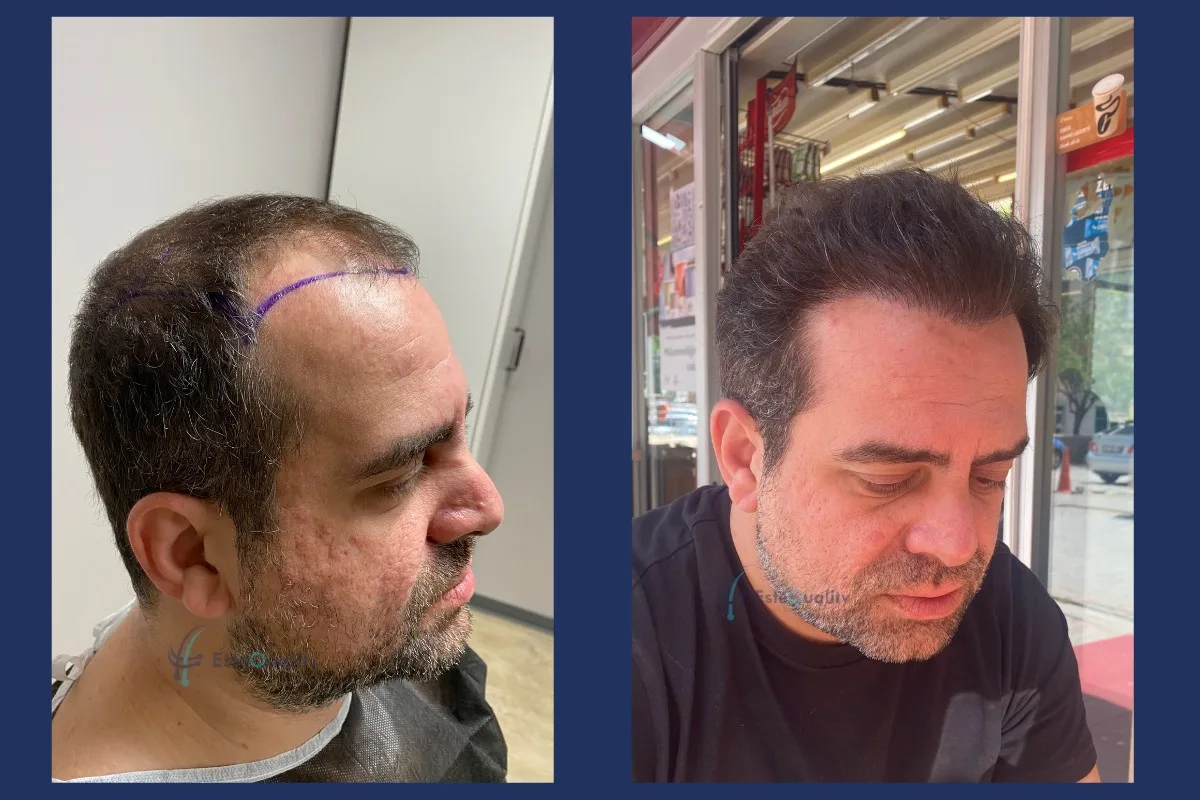
Cost
One thing to watch for: sapphire is sometimes billed as a pricey upgrade over basic FUE. We don’t work that way. The price follows the graft count and the package you choose, and the sapphire blade is simply the tool we use, not a line item that inflates the bill. In Turkey, the procedure alone starts from €1,700, while an all-inclusive package (accommodation and transfers included) runs from €2,100 to €4,200, updated September 2026. Our full package ranges and what each tier covers sit on the hair transplant packages in Turkey page; for a figure matched to your own case, message us on WhatsApp.
Sapphire FUE in Turkey and how care is supervised
Turkey is more affordable than treatment at home, largely because clinic running costs are lower here. With a technique that rests on precise channel work, though, what matters most is the physician and the plan, not the location. Under the leadership of a plastic surgery specialist (plastic, reconstructive and aesthetic surgery), the planning and hairline design are carried out by physicians certified in hair transplantation, inside a fully equipped hospital environment. The physician performs the donor extraction and channel opening; implantation is carried out by the trained team under physician supervision. Rather than repeat it here, the day-by-day stay in Istanbul, the screening, the operation report and the revision policy are all set out on our hair transplant in Turkey page.
Frequently asked questions
Is Sapphire FUE better than regular FUE?
It is a refinement of FUE, not a different surgery. The sapphire blade can make finer, more consistent channels, which can help with precise, natural placement, but graft survival and healing are broadly the same [2]. The physician’s skill matters more than the blade.
How much does a Sapphire FUE hair transplant cost?
The blade is not charged as an extra; your price tracks the graft count and package tier. Our published ranges and inclusions are on the packages page, and we give you a case-specific figure at the assessment.
What is ‘micro sapphire’ FUE?
Micro sapphire refers to using very fine sapphire tips to make especially small channels, for fine, detailed placement. It is a variation on the same technique, not a separate procedure.
Is Sapphire FUE painful?
Local anesthetic numbs the area, so you should not feel pain during the work itself; the main thing patients notice is that the day is long. Some tenderness afterward is normal and settles quickly.
Can Sapphire FUE be combined with DHI?
Yes. Some plans use sapphire channels across the broad area and a DHI implanter pen for finer detail; the two are complementary rather than rivals.
Sources
- Ahmad M. Effect of different shapes of recipient site creation micro-blades at varying angles and wound injury. Journal of Cosmetic Dermatology. 2021;20(11):3610–3615. PubMed.
- Balik O. Determination of scalp vascular topography by laser Doppler flowmetry and comparison of vascular damage by different blades in hair transplantation. Journal of Craniofacial Surgery. 2023;34(8):e803–e806. PubMed.


