
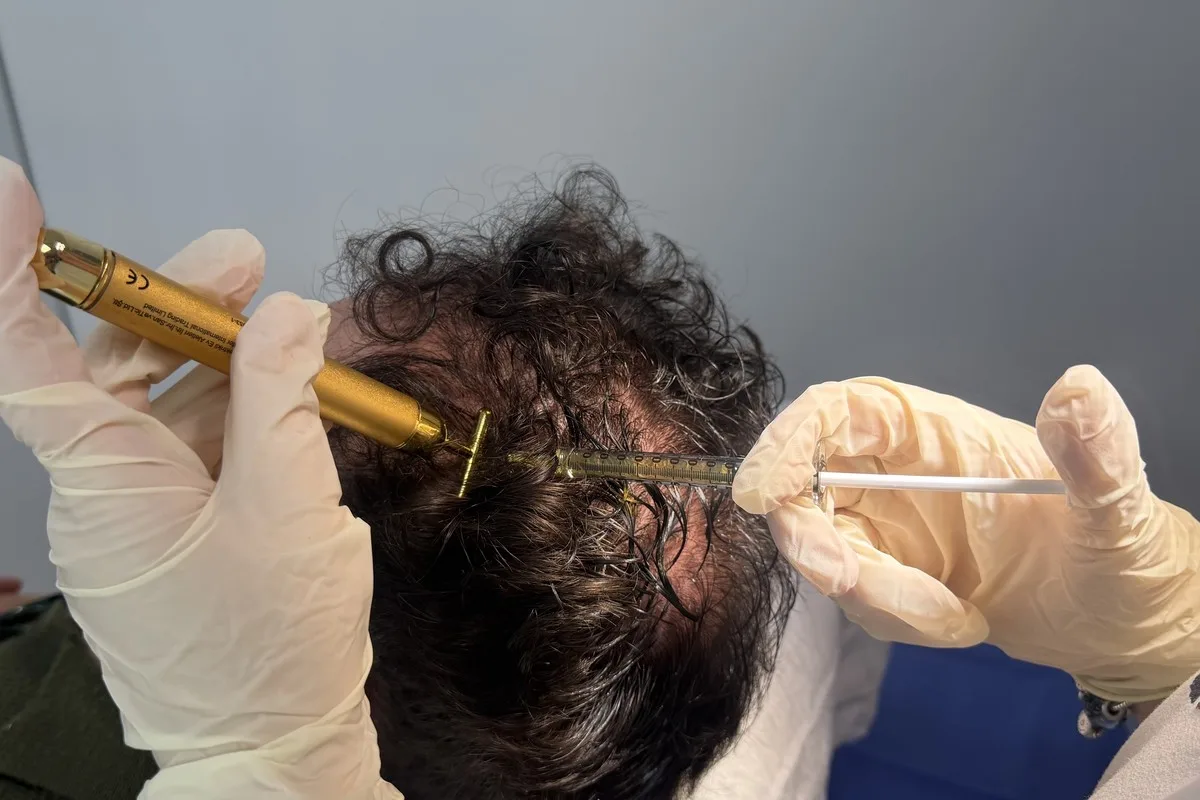
Supportive hair treatments, in plain terms
These are supportive, non-surgical treatments for the scalp. They are used to support the scalp and the follicles you still have, often alongside a hair transplant or a wider plan, rather than as a replacement for one [1]. None of them regrows hair in an area that is already bald; that is what a transplant does. Outcomes vary from person to person, and we assess which, if any, suit your case at the consultation. We do not promise a specific result from any of them, and we do not present one as better than another [3].
- Since 2016, caring for international patients
- Specialist-led, under the leadership of a plastic surgery specialist (plastic, reconstructive and aesthetic surgery), planning and design are carried out by physicians certified in hair transplantation
- Hospital environment, procedures in a fully equipped hospital
- 12-month follow-up, with a clear revision policy
- Languages, English, Turkish, German, Russian, Romanian
PRP (platelet-rich plasma)
PRP is for patients supporting the scalp and existing follicles, often around a transplant; it is prepared from a small sample of your own blood and injected into the scalp [2]. It is included as part of our hair transplant procedure, and any effect builds gradually over the months after treatment rather than immediately.
How PRP is done at EsteQuality
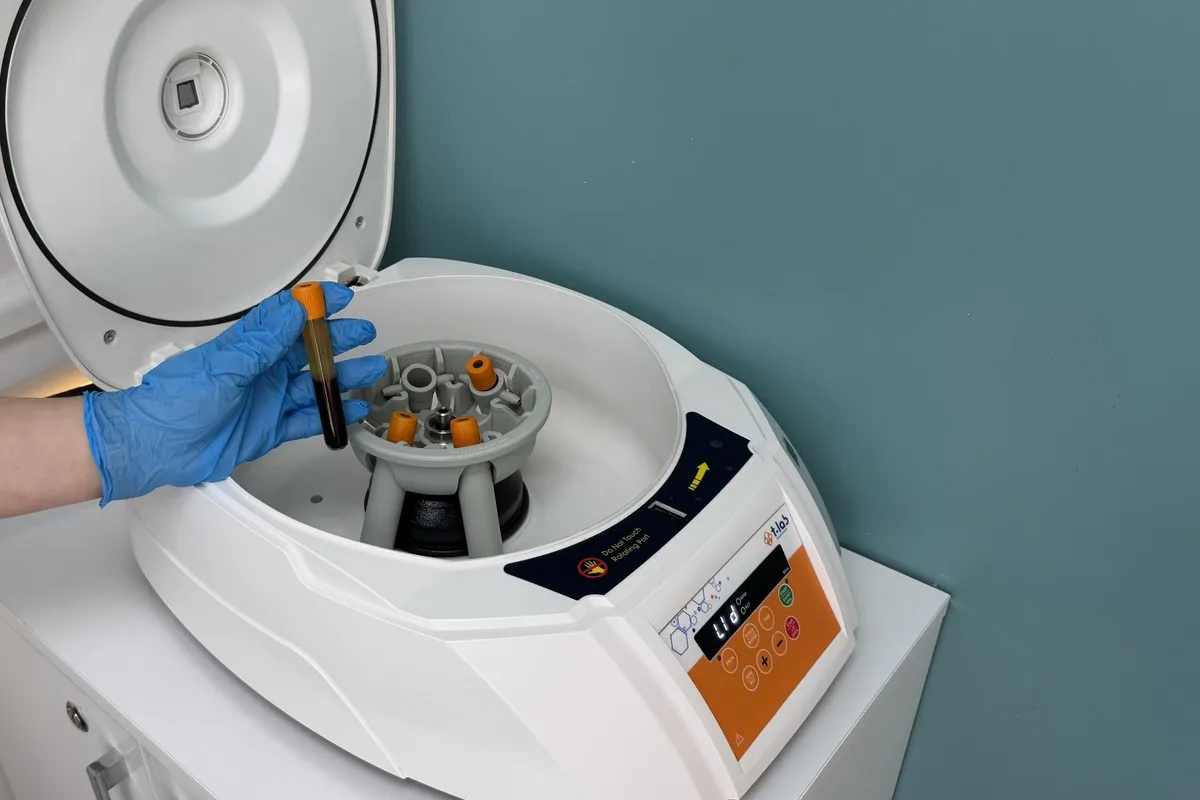
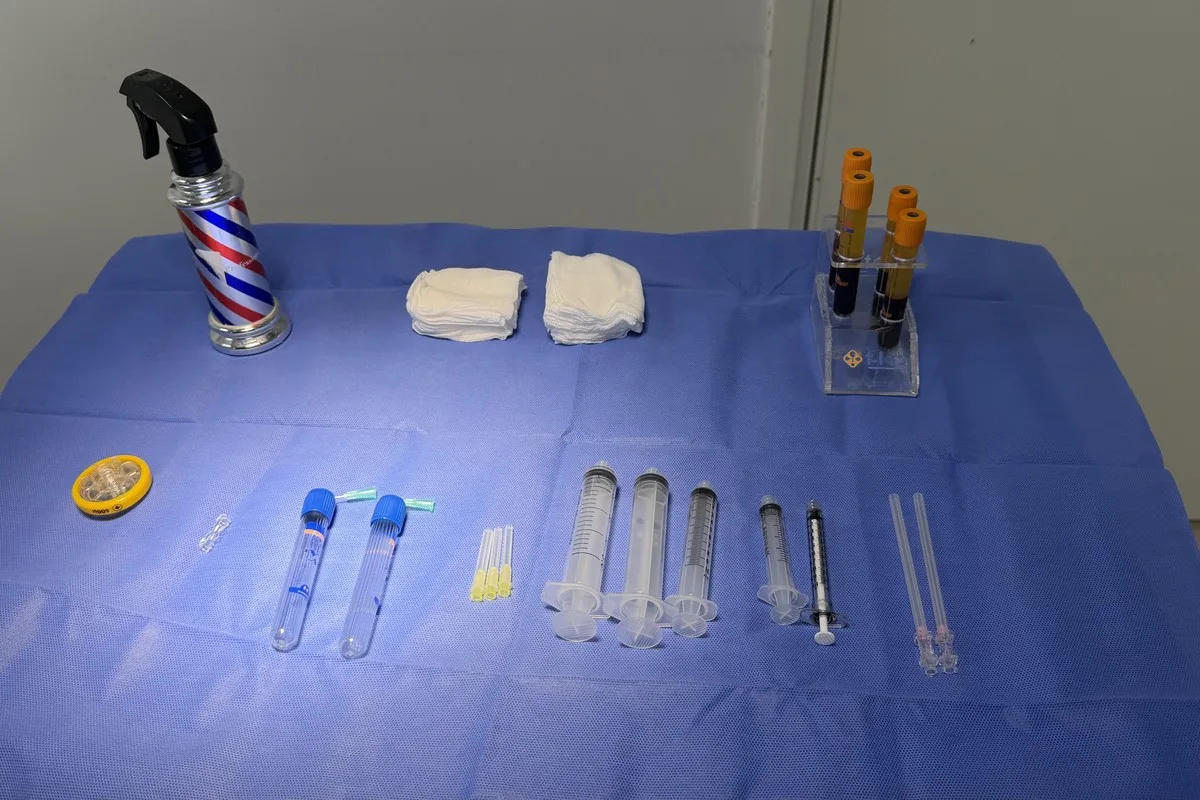
When PRP is part of a hair transplant, the blood sample taken for your pre-operative tests is used: after the transplant it is spun in a centrifuge to separate the platelet-rich plasma, and the plasma is injected into the scalp immediately after the procedure. Because the scalp is still anaesthetised, the injection itself takes about two minutes.
For patients with ongoing hair loss, or those who want PRP after a transplant, we recommend a course of at least three sessions, one month apart. For active shedding, one PRP session and one mesotherapy session alternated every two weeks is used to help settle the shedding.
Mesotherapy
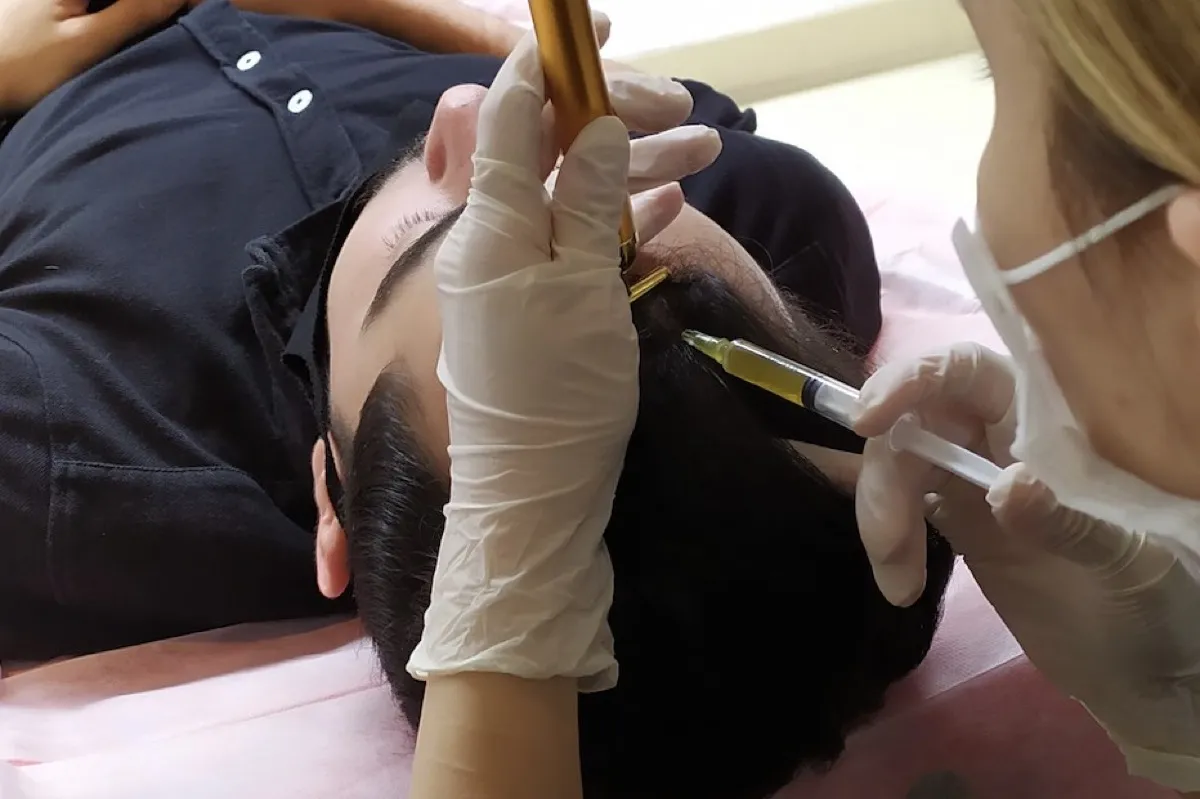
Mesotherapy suits patients who want to support hair over a course of sessions with a vitamin-and-nutrient mix injected into the scalp [1]. A growth-factor mesotherapy option uses a growth-factor preparation, and a home mesotherapy kit lets you continue between visits; any change is gradual over the course rather than after one visit. Mesotherapy: €150 per session; growth-factor mesotherapy: €200 per session; home mesotherapy kit: €150, updated September 2026.
Exosome therapy
Exosome therapy is for patients supporting the scalp with exosomes, small signaling vesicles applied over a plan set at the assessment [1]. There are three options depending on the source: human exosome (a ready product), €900; plant- or animal-derived exosome (a ready product), €700; autologous exosome (from your own blood), €400, updated September 2026; any effect is gradual and which option suits you is decided individually.
How autologous exosome is prepared
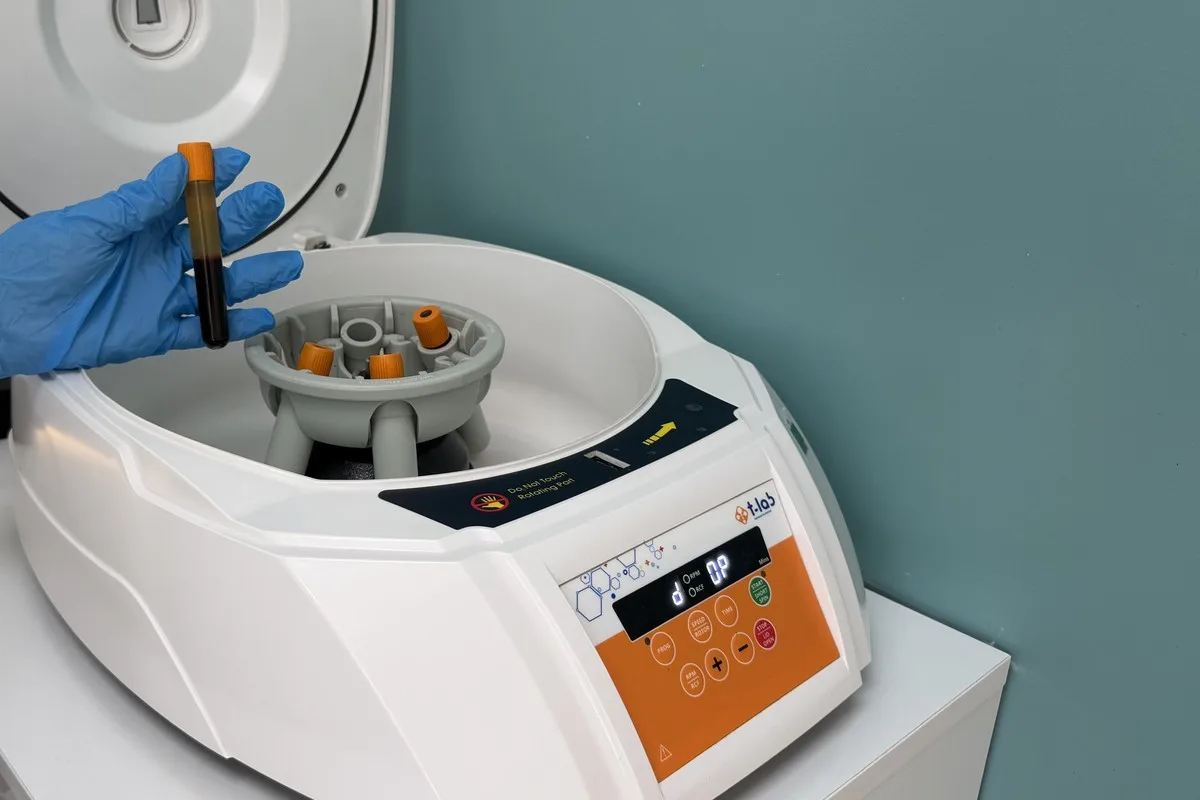
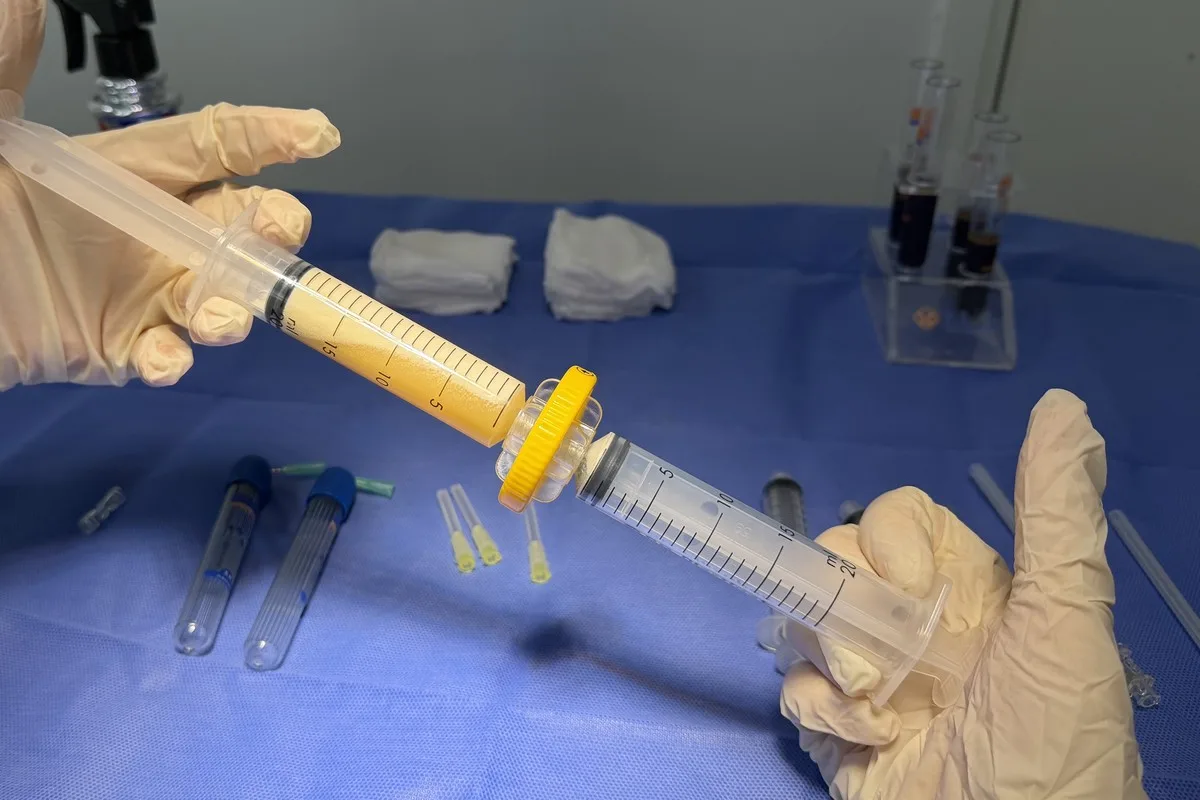
Autologous exosome starts the same way as PRP, with a small sample of your own blood. After centrifugation the plasma is passed through a filter that concentrates the exosome-rich fraction, transferred to a fresh syringe and applied to the scalp. Because it comes from your own blood there is no donor product. It is usually repeated every six months, and can be combined with a transplant on the same day.
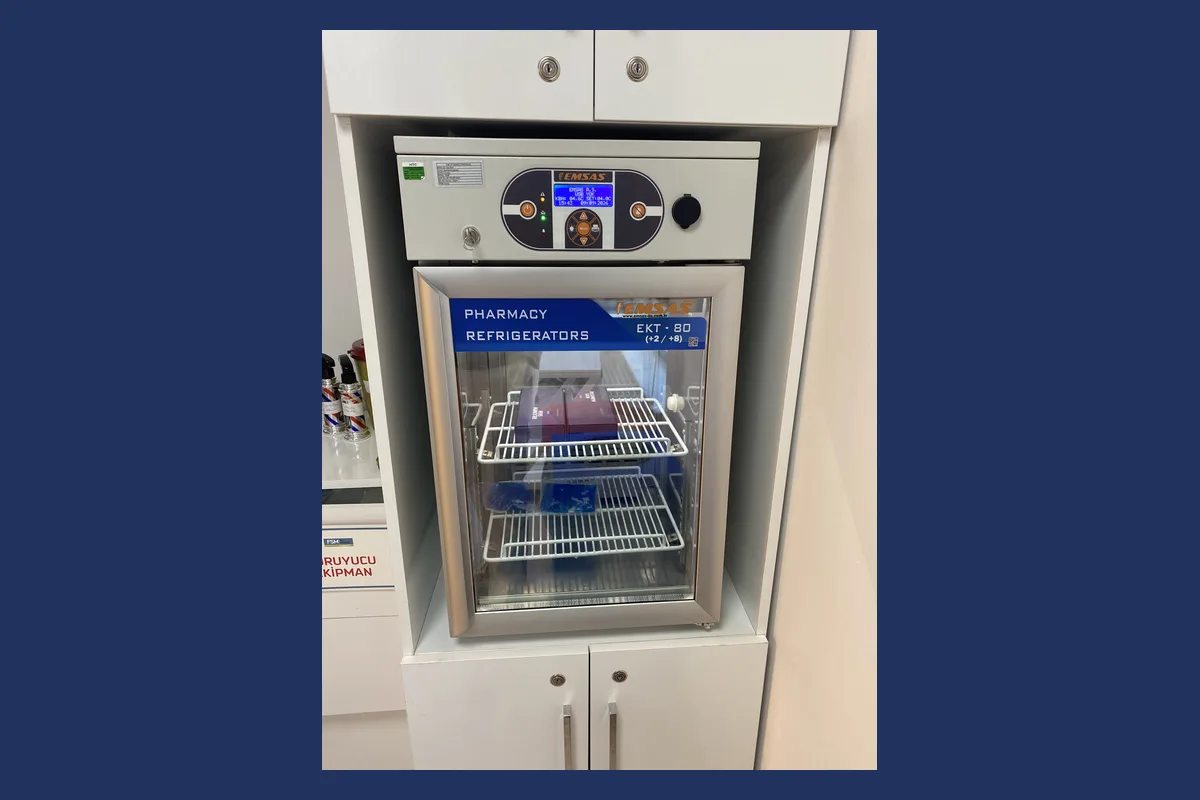
The ready human and plant- or animal-derived products involve no blood-preparation step: they arrive by cold chain, are kept in cold storage at the clinic, and are drawn up and applied to the scalp over the planned area. These are usually repeated once a year or once every two years. None of the three is a treatment for androgenetic hair loss on its own; they slow the process rather than stop it, and which option suits you is decided at the assessment [1].
Stem cell hair treatment
Stem cell hair treatment is for patients supporting the scalp with an autologous scalp micrograft mixed with PRP, done as a single session with a follow-up review [1]. Nothing is cultured in a lab; there are two options, manual autologous scalp micrograft with PRP, €400, and Rigenera Activa device-based micrograft, €1,000, updated September 2026. Full detail is on our stem cell hair treatment page.
Both options are usually repeated every six months. There is no minimum number of sessions for the exosome or micrograft options: patients who feel their hair has become stronger or fuller tend to continue at six-month, yearly or two-yearly intervals; those who do not, stop.
Low-level laser therapy (LLLT)
Low-level laser therapy is for patients supporting the scalp with low-dose red light, applied over a course of sessions to the areas of thinning [1]. It is a supportive, non-surgical option used alongside a wider plan rather than a standalone fix; low-level laser therapy: €50 per session, updated September 2026, and how many sessions suit you is decided at the assessment.
Vitamin support
A vitamin course is for supporting general hair and scalp health as part of aftercare, taken over a longer period rather than in a single visit [3]. It is not a treatment for pattern hair loss on its own; a one-year vitamin supply is €200, updated September 2026.
Compare the treatments at a glance
| Treatment | What it is | Sessions | Price | Pairs with |
|---|---|---|---|---|
| PRP | Your own blood, injected to support follicles | Included in a transplant; standalone by plan | Included with transplant | Transplant, other treatments |
| Mesotherapy | Vitamin-and-nutrient micro-injections | A course of sessions | €150/session (growth-factor €200; home kit €150) | PRP, aftercare |
| Exosome therapy | Exosome signaling vesicles | By plan | Human €900 / plant-animal €700 / autologous €400 | Transplant, PRP |
| Stem cell (scalp micrograft) | Autologous scalp micrograft with PRP | Single session | Manual €400 / Rigenera Activa €1,000 | Transplant, PRP |
| Low-level laser therapy | Low-dose red light to the scalp | A course of sessions | €50/session | Mesotherapy, aftercare |
| Vitamin support | Vitamin course (aftercare) | 1-year supply | €200 | All |
Blood tests in the assessment of hair loss
Assessing hair loss means looking beyond the scalp at the systemic, hormonal and nutritional factors that can contribute to it. After the type of loss, how long it has been going on and how it started, your medical history, medications, diet and a scalp examination have been reviewed, laboratory tests can be planned where they are needed [4][5].
In diffuse, sudden or unexplained hair loss, iron deficiency, thyroid disorders and certain vitamin or mineral deficiencies are investigated. A full blood count, ferritin and thyroid function are the most commonly used tests; vitamin D, vitamin B12, folate and zinc are added according to the history, the type of loss and the clinical findings [4][5][6][7].
If the tests show iron, ferritin, vitamin or mineral deficiency, or another medical condition that may be contributing, that condition needs to be assessed and treated first or alongside any hair treatment. Where a treatable cause is present, scalp treatments or a transplant on their own do not remove it.
Tests that may be part of the basic assessment: full blood count; ferritin; serum iron and iron-binding capacity; TSH, with free T3 and free T4 where needed; 25-OH vitamin D; vitamin B12; folate; zinc [4][5][6][7].
Additional tests where clinically indicated: in women whose hair loss is accompanied by irregular periods, hirsutism, acne or other signs of androgen excess, a hormonal work-up may be needed, with total testosterone, SHBG, DHEA-S, prolactin and other hormonal tests according to the clinical picture [8][9]. Where an autoimmune condition is suspected, ANA and further autoimmune tests may be added; a large series of telogen effluvium patients evaluated ferritin, blood count, B12, vitamin D, folate, zinc, thyroid function and ANA [6].
Not every patient needs the same wide panel. Which tests are requested is decided individually, according to the type, duration and onset of the hair loss, age, sex, diet, medications, co-existing conditions and examination findings [4][5][8]. In patients planning a hair transplant, clotting tests and other pre-operative investigations are requested separately, according to general health, medications and the pre-operative medical assessment.
When surgery is the answer
These treatments are supportive; they can accompany a plan but do not replace a hair transplant where the aim is to add hair to an area that is already bald. If that is your situation, the procedure that restores coverage is a transplant, and the hub’s job here is to point you to the right page: our hair transplant in Turkey page for how a transplant works, and the technique pages, DHI hair transplant, Sapphire FUE hair transplant, and beard to scalp hair transplant, for the options. We look at your case at the consultation and recommend only what fits, or tell you if none is needed. Our hair transplant packages set out what an all-inclusive surgical plan includes.
Recovery and aftercare
These are low-downtime treatments; any redness or tenderness at injection sites settles quickly. The general aftercare guidance, the 12-month follow-up and the revision policy that apply across our treatments are set out in full on our hair transplant in Turkey page.
Sources
- ISHRS, Regenerative and adjunctive therapies in hair restoration (PRP, mesotherapy, exosome and micrograft as supportive, not curative). https://ishrs.org/patients/
- AAD, Platelet-rich plasma (PRP) for hair loss: what it is and what to expect. https://www.aad.org/public/diseases/hair-loss/treatment/prp-hair-loss
- NHS, Hair loss (causes, treatments and when to seek advice). https://www.nhs.uk/conditions/hair-loss/
- Jackson AJ, Price VH. How to diagnose hair loss. Dermatol Clin. 2013;31(1):21–28. doi:10.1016/j.det.2012.08.007. PMID 23159173.
- Shrivastava SB. Diffuse hair loss in an adult female: approach to diagnosis and management. Indian J Dermatol Venereol Leprol. 2009;75(1):20–27. doi:10.4103/0378-6323.45215. PMID 19172026.
- Yorulmaz A, Hayran Y, Ozdemir AK, et al. Telogen effluvium in daily practice: patient characteristics, laboratory parameters, and treatment modalities of 3028 patients. J Cosmet Dermatol. 2022;21(6):2610–2617. doi:10.1111/jocd.14413. PMID 34449961.
- Tamer F, Yuksel ME, Karabag Y. Serum ferritin and vitamin D levels should be evaluated in patients with diffuse hair loss prior to treatment. Postepy Dermatol Alergol. 2020;37(3):407–411. doi:10.5114/ada.2020.96251. PMID 32792884.
- Carmina E, Azziz R, Bergfeld W, et al. Female pattern hair loss and androgen excess: a report from the Multidisciplinary Androgen Excess and PCOS Committee. J Clin Endocrinol Metab. 2019;104(7):2875–2891. doi:10.1210/jc.2018-02548. PMID 30785992.
- Sardana K, Muddebihal A, Sehrawat M, Bansal P, Khurana A. An updated clinico-investigative approach to diagnosis of cutaneous hyperandrogenism in relation to adult female acne, female pattern alopecia & hirsutism. Expert Rev Endocrinol Metab. 2024;19(2):111–128. doi:10.1080/17446651.2023.2299400. PMID 38205927.


