

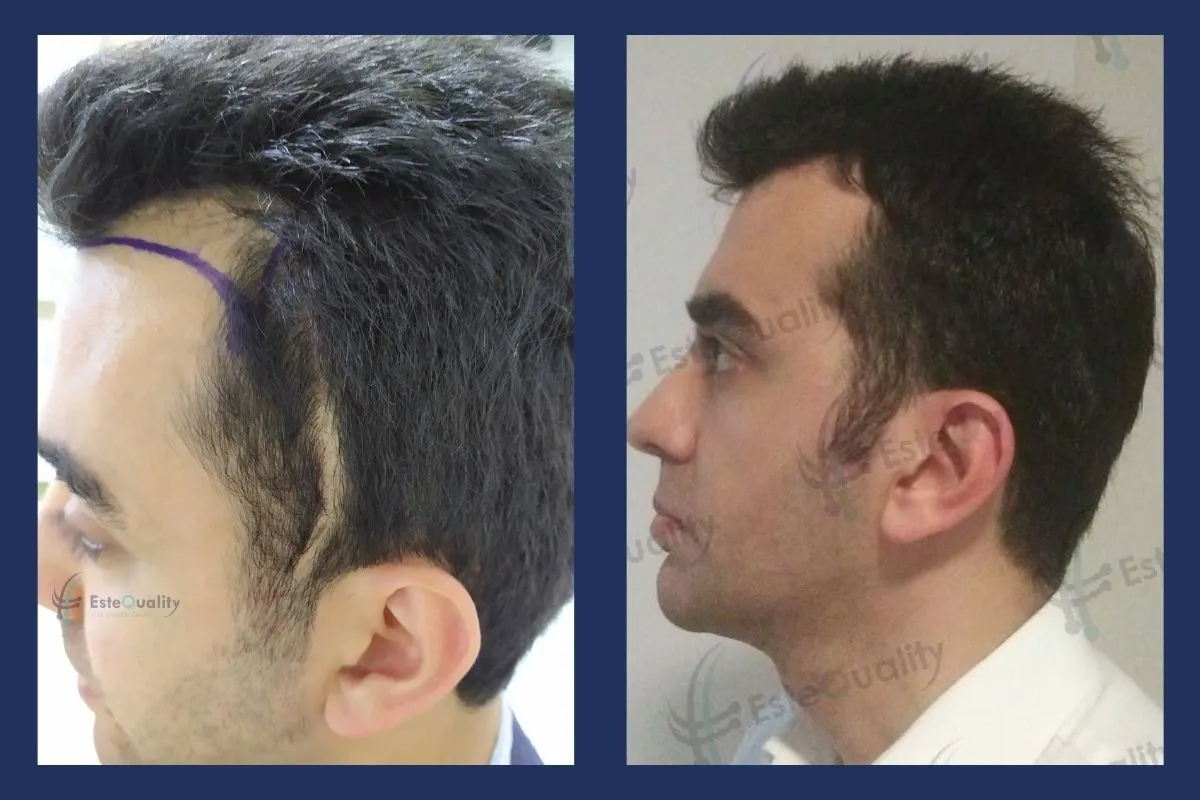
What is a hair transplant scar?
A hair transplant scar is the mark left in the donor area (and sometimes the recipient area) after grafts are moved. Every hair transplant leaves some scarring, because the skin is broken to take and place follicles; the question is how visible it is and whether it can be improved. Most people searching for scar repair have either a wide line from an older strip procedure or scattered marks from extraction, and they want to know what can be done now.
At EsteQuality, we repair scars by transplanting hair into them, placing new follicles into the scar (FUE into the scar) so hair grows through it and softens the mark. Other approaches exist too, surgical revision, scalp micropigmentation (SMP) and laser, and this page explains all of them honestly, including which we do and do not offer, so you can choose the right path for your scar.
EsteQuality has cared for international patients since 2016, with scar work carried out in a fully equipped hospital environment under the leadership of a plastic surgery specialist and a 12-month follow-up; the full clinical and supervision detail is on our hair transplant in Turkey page.
Why hair transplant scars form (FUE vs FUT)
Scarring depends mostly on how the grafts were taken. The two methods leave very different marks [1].
- FUT (follicular unit transplantation), or “strip” removes a strip of scalp from the back of the head, which is then stitched closed. This leaves a single linear scar across the donor area. It can be fine and hidden by surrounding hair, or wide and visible if healing was poor or the scalp was under tension.
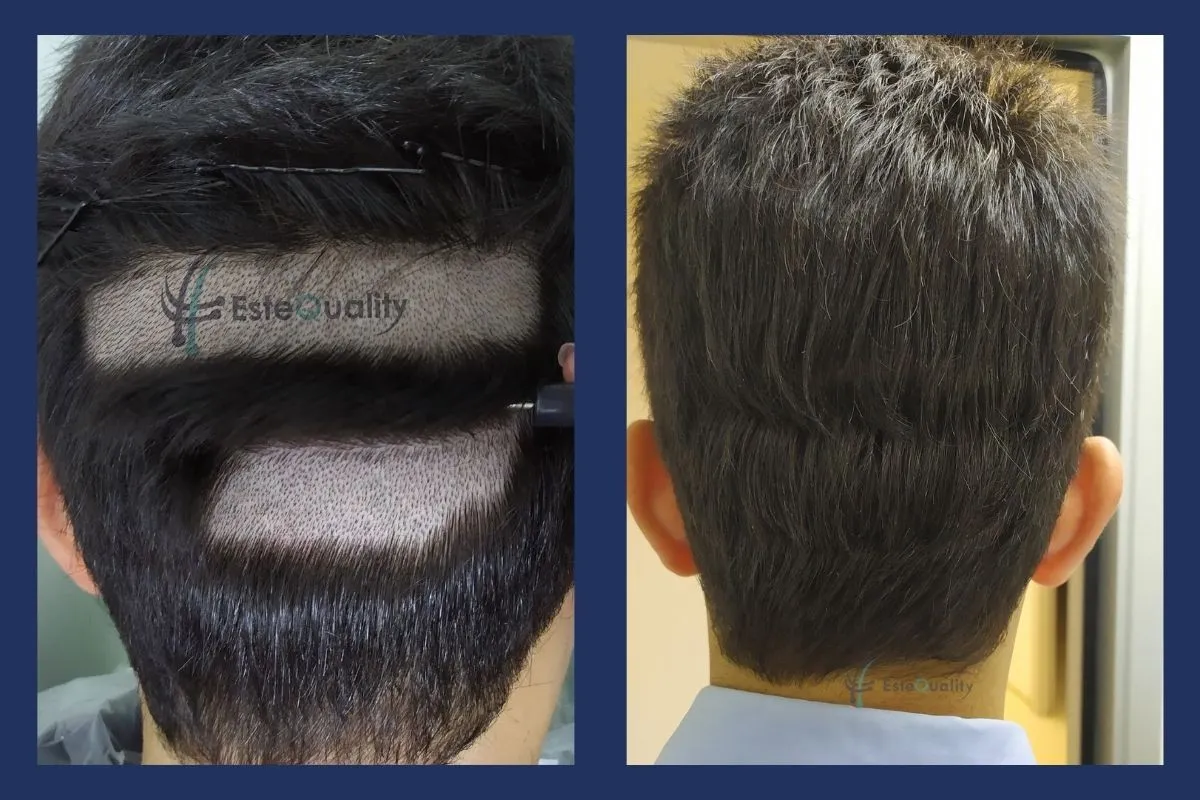
- FUE (follicular unit extraction) removes follicles one at a time, leaving many tiny dot-shaped scars. This scattered, dot-pattern mark is what most people mean by an FUE hair transplant scar. Individually these are small, but a large session (or repeated harvesting of the same area) can thin the donor and make the dots more noticeable.
How a scar heals also depends on your skin, the tension on the wound, and whether there was any infection. Some people are simply more prone to wide or raised scars, and a few form thick, raised keloid or hypertrophic scars that need their own treatment approach [1]. If you have scarred easily in the past, it is worth mentioning at your assessment, because it changes both the plan and what a repair can achieve. Knowing which type you have is the first step in choosing a repair.
Types of hair transplant scars
- Linear (FUT) scar, a line across the back of the scalp; the most common reason people seek revision.
- Dot (FUE) scars, many small round marks; usually only visible with very short hair or in an overharvested zone.
- Overharvested donor, where too many grafts were taken from one area, leaving a patchy, see-through look rather than a single scar.
- Recipient-area marks, less common, usually fading over time.
- Beard or body donor scars, small marks where beard or body hair was used as an extra donor source.
Methods to repair or conceal a scar
There is no single fix for every scar. The right method depends on the scar type, your skin, your donor supply, and how much hair you want through the area. In practice these approaches are used alone or in combination.
Transplanting hair into the scar (FUE into the scar). Placing new follicles directly into scar tissue can break up a linear scar and soften its edge [2]. It works best when the scar has a good blood supply; dense, tight scar tissue holds fewer grafts, so how many take varies with the scar tissue itself. This is the method we perform at EsteQuality. Grafts are placed with FUE, Sapphire FUE or DHI; the physician chooses according to the area and the scar tissue.
Scar revision (excision). A wide or raised linear scar can be surgically removed and the edges closed more carefully, sometimes using a trichophytic closure that lets hair grow through the line. This trades a wide scar for a thinner one rather than removing it entirely. We do not offer this at EsteQuality; if it is the better option for your scar, we say so at the assessment and you can seek it separately.
Scalp micropigmentation (SMP). Tiny pigment dots are tattooed into the scalp to mimic hair follicles, camouflaging both linear and dot scars. SMP does not grow hair; it reduces the contrast between the scar and the surrounding scalp. We do not perform SMP. Where a repaired area still looks uneven after the hair has grown, we may suggest SMP as a separate, later step, done elsewhere.
Laser and other skin treatments. Fractional laser or steroid treatment can improve the texture and colour of a raised or discoloured scar, making it flatter and closer to the surrounding skin. These are supportive rather than complete solutions. We do not offer this at EsteQuality; if it is the better option for your scar, we say so at the assessment and you can seek it separately.
At EsteQuality the repair itself is done by transplanting hair into the scar; the other methods above are described so you understand the full picture and can combine them elsewhere if they suit your case.
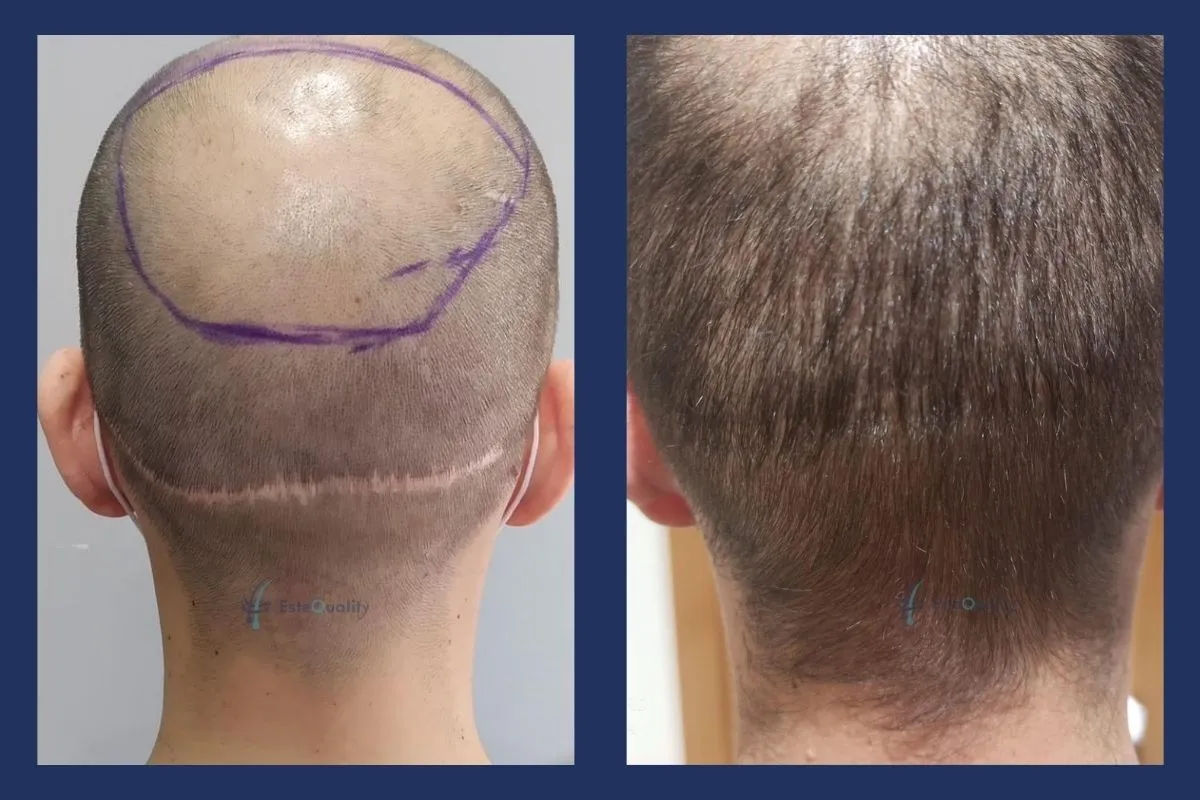
Can hair grow in scar tissue?
Yes, but less reliably than in normal scalp. Scar tissue has a poorer blood supply and is denser, so transplanted follicles survive at a lower rate than they would in healthy skin [2]. We implant at full density in one session. How many grafts take depends on the scar tissue itself, which is why we cannot promise a percentage; even where survival is lower, the new hair softens and camouflages the scar so it is much harder to see.
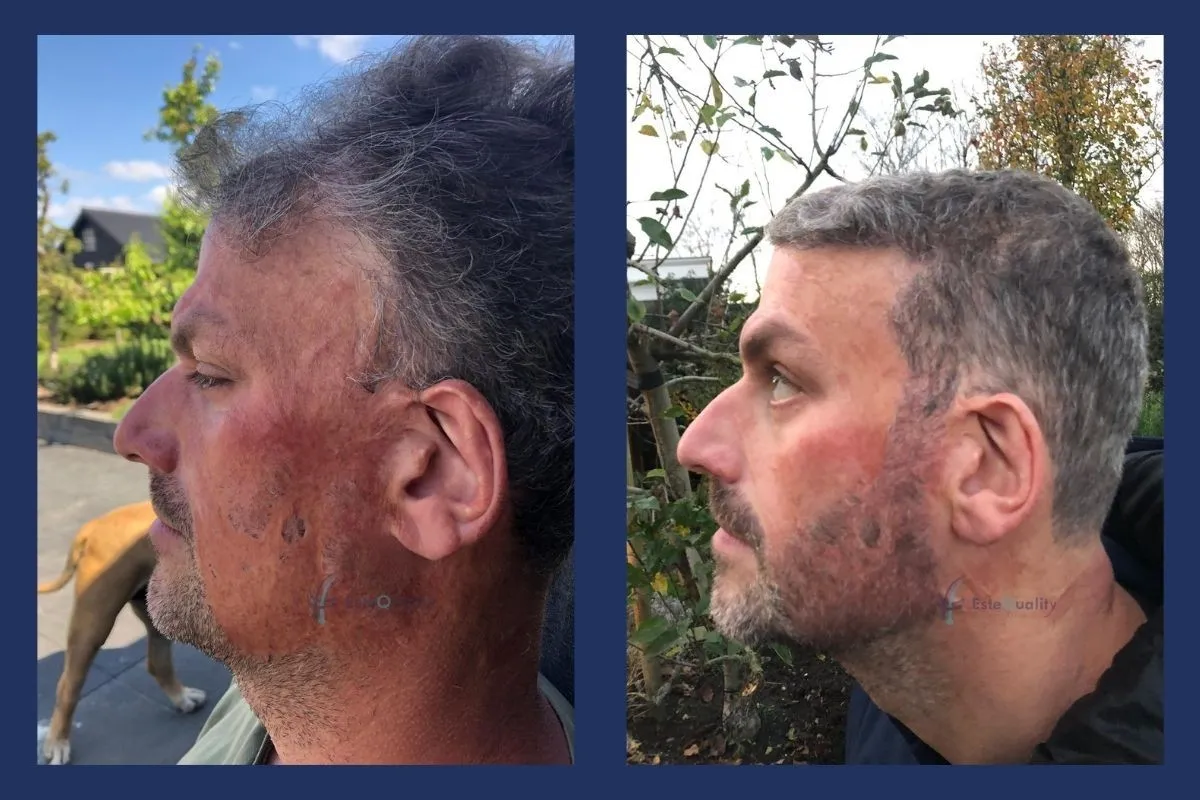
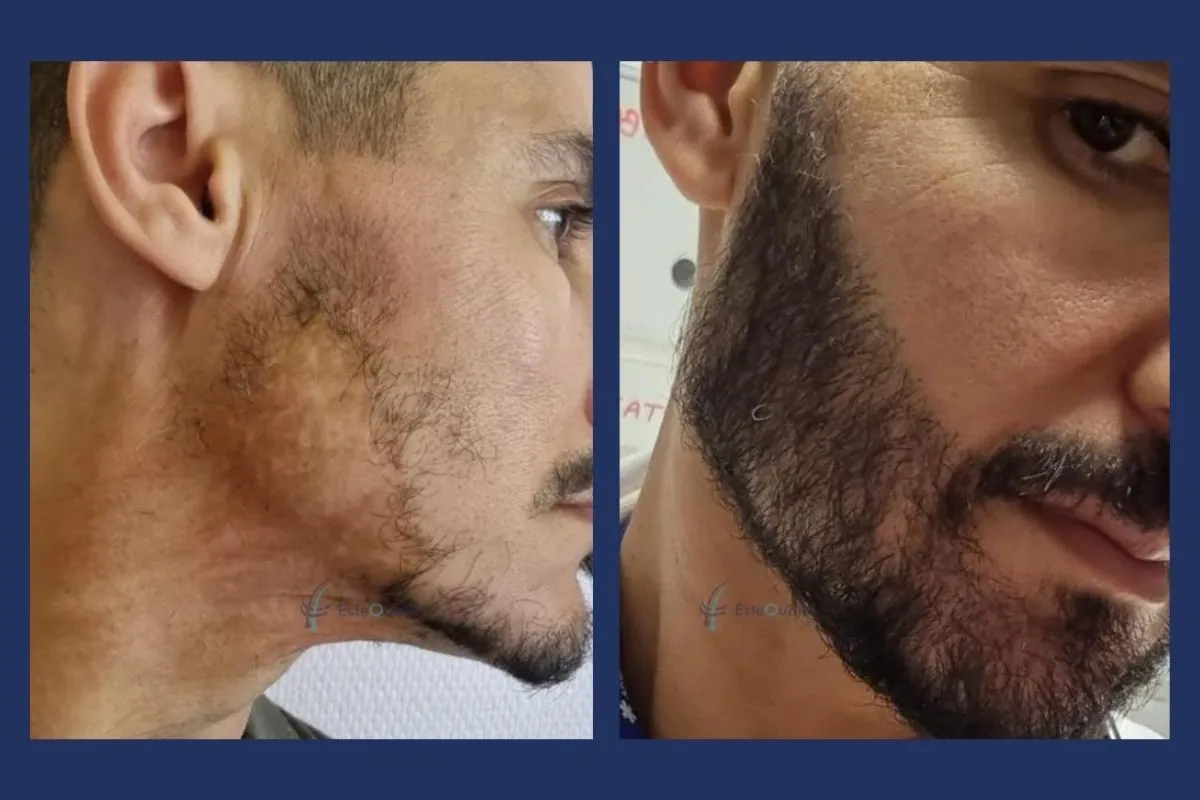
What results can you expect?
It helps to be clear about what “repair” means, because it is rarely a return to untouched skin. A realistic, good outcome is a scar that is much harder to notice, a linear scar reduced to a fine, hair-covered line, or dot scars blended so evenly that a short haircut no longer reveals them. How close you get depends on the starting scar, your donor supply, and how your skin heals.
Results are also gradual. Hair transplanted into a scar follows the same growth cycle as any transplant: it sheds in the first weeks and regrows over the following months, with the settled result at around 9 to 12 months [2]. SMP is visible immediately but usually needs a top-up session as the pigment settles. We show you comparable before-and-after cases at the assessment so your expectations are set against real outcomes, not a promise.
When is a scar ready for repair?
Timing matters. A fresh scar is still remodelling, and working on it too early can worsen the result. We wait until the scar has matured, at least 6 months, before transplanting into it, so the tissue is stable and its final width is known [1]. During that time, a silicone scar gel and PRP or mesotherapy may support the area. Your own timing is confirmed at assessment; an older, settled scar can usually be treated sooner in the planning process.
How to choose the right repair method
A few questions guide the choice:
- Is it a linear (FUT) or dot (FUE) scar?
- How much healthy donor hair do you have to spare?
- Do you want hair growing through the area, camouflage, or both?
- Is the scar raised, wide, or discoloured, or flat and pale?
A linear scar with good donor supply is well suited to transplanting hair into it, which is the repair we perform. Where a different approach (surgical revision, or SMP for a scar you keep covered with short hair) would genuinely serve you better, we tell you honestly at the assessment and you can arrange it separately. We assess the scar in person and set out what each option can and cannot achieve for your case.
Preventing scars in future transplants
If you are planning a transplant now, a few things reduce future scarring: choosing FUE over strip where appropriate, not overharvesting one donor area, careful graft placement, and following aftercare so the wounds heal cleanly [1]. No technique is scar-free, but a well-planned procedure keeps marks small and hidden.
Cost of scar repair
Scar repair is priced case by case, because a small linear revision and a full transplant-plus-SMP plan are very different amounts of work. The procedure alone starts from €1,700 and an all-inclusive package from €2,100 (up to €4,200), updated September 2026; scar-repair plans are quoted individually against that framework. See our hair transplant packages in Turkey page for the package detail, and message us on WhatsApp for a tailored plan.
How your treatment is supervised
Under the leadership of a plastic surgery specialist (plastic, reconstructive and aesthetic surgery), the planning and design are carried out by physicians certified in hair transplantation, inside a fully equipped hospital environment. Afterwards you receive a written report, a care pack, and our revision policy. The full patient journey in Istanbul, along with the day-by-day recovery timeline and our 12-month follow-up and revision policy, is set out in full on our hair transplant in Turkey page.
Frequently asked questions
Can a hair transplant scar be removed completely?
Rarely fully, but it can usually be made much less visible. At EsteQuality we do this by transplanting hair into the scar so hair grows through it; other approaches (surgical revision, SMP) can reduce it further and are options you can arrange elsewhere if they suit your case.
Does FUE leave scars?
Yes, but small ones, many tiny dot-shaped marks rather than a line. They are usually only visible with very short hair or where the donor was overharvested [1].
Can you transplant hair into a scar?
Often, yes. New follicles can be placed into scar tissue to break up the scar; we implant at full density in one session, and how many take depends on the scar tissue, so we cannot promise a percentage [2].
How long should I wait before repairing a scar?
At least 6 months, so the scar has matured and the tissue is stable before transplanting into it [1]. A silicone scar gel and PRP or mesotherapy may support the area in the meantime; an older scar can be assessed sooner.
Will hair grow normally in the repaired area?
Hair can grow through a repaired or revised scar, but density is usually lower than in normal scalp because of the reduced blood supply. We plan around that rather than promise full coverage [2].
Can a scar from another clinic be repaired here?
Yes. All of the scar and donor repairs we have performed so far have been for patients treated elsewhere; we assess the existing scar and donor supply as they are now and plan the repair from there, whatever technique was used originally.
Sources
- ISHRS, Hair transplant patient information (FUE vs FUT donor scarring, healing and scar maturation/timing). https://ishrs.org/patients/
- AAD, Hair loss: diagnosis and treatment (hair transplant, graft growth cycle and outcomes). https://www.aad.org/public/diseases/hair-loss/treatment/diagnosis-treatment


