
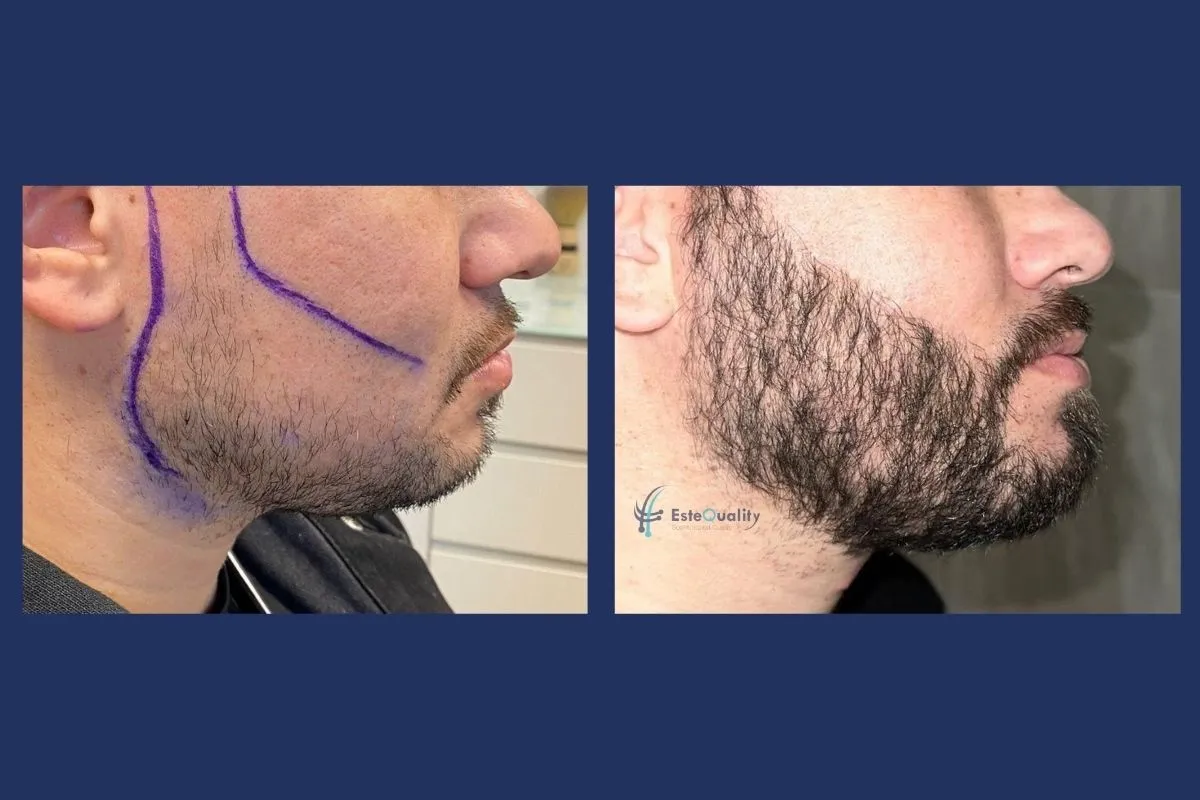
What is a beard transplant?
A beard transplant moves your own hair follicles, usually from the back of the scalp, into the beard area to fill patchy spots, thicken a thin beard, shape the jawline or cover a scar. The transplanted hairs keep growing where they are placed, so once they settle you can grow, trim and shave the beard normally [1]. It suits men whose beard is naturally sparse, uneven after scarring, or thin in places they would like to fill.
This page is about transplanting hair into the beard; if you want to use beard hair as a donor for your scalp, see our hair transplant from beard page.
You can call us or send your photos on WhatsApp for all the detailed information and whether your beard is suitable for beard transplant. Also you can check our packages for more information.
- Since 2016, caring for international patients
- Specialist-led, under the leadership of a plastic surgery specialist (plastic, reconstructive and aesthetic surgery), planning and design are carried out by physicians certified in hair transplantation
- Hospital environment, procedures in a fully equipped hospital
- 12-month follow-up, with a clear revision policy
- Languages, English, Turkish, German, Spanish, Russian, Romanian
Who is a good candidate?
A beard transplant suits you if your beard is patchy, thin or uneven and you have enough donor hair at the back of the scalp. It may be for you if you cannot grow a full beard, if a scar or burn left a gap, or if you want to add shape and density to the jaw, cheeks, moustache or chin. It is generally postponed if you have an active skin condition on the face or an untreated cause of hair loss, until that is assessed first [2]. We look at the beard and the donor together at the consultation and tell you honestly what is realistic.
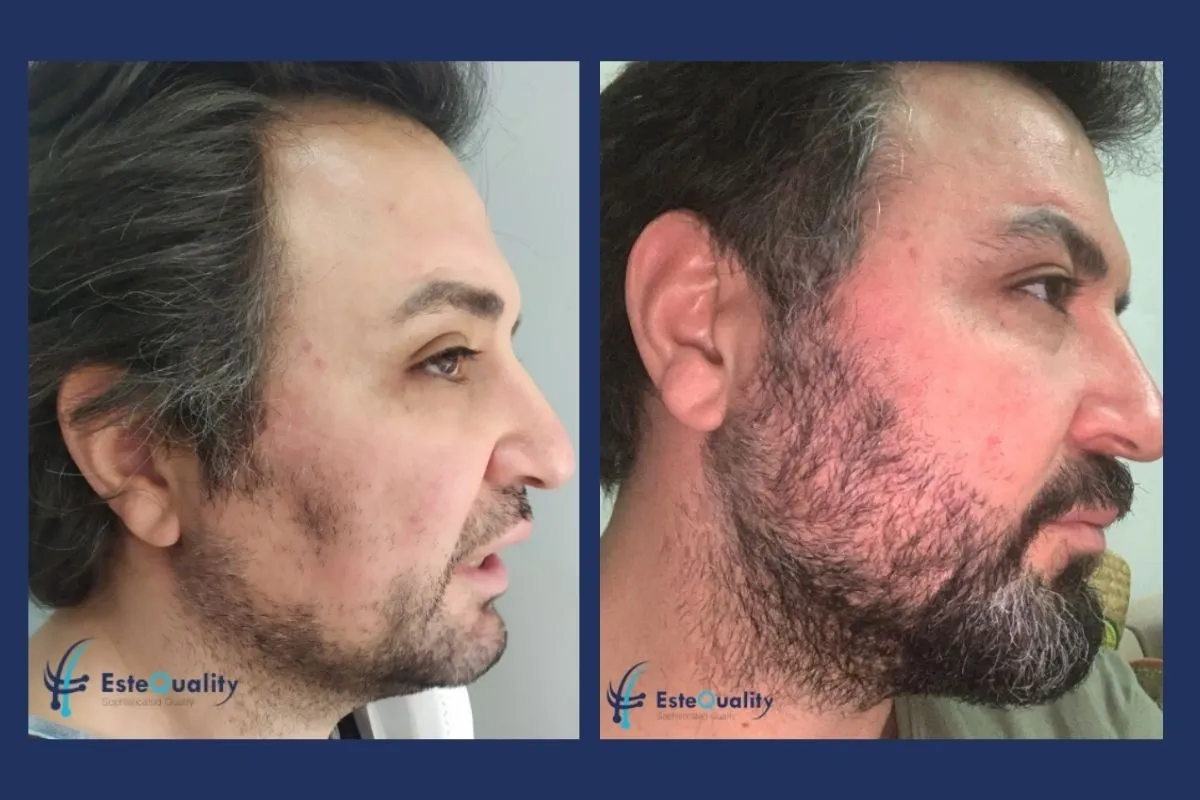
Beard transplant into scar tissue
A beard transplant can also cover scars on the cheeks, jawline or chin, including burn scars and scars left by injury or surgery. Scar tissue has a poorer blood supply than healthy skin, so graft survival is lower and less predictable; the physician assesses the scar’s depth and maturity before deciding how many grafts to place and at what density. Two of our beard-into-scar cases are documented with photos on our hair transplant scar repair page: 4,500 grafts placed into a mature burn scar on the cheek and jawline (Sapphire FUE, result at 10 months), and a 5,500-graft plan that covered both scalp and beard after a burn (FUE, result at 12 months). Results in scar tissue vary more than in healthy skin.
DHI, FUE or Sapphire: how the beard is created
The follicles are removed one at a time by follicular unit extraction (FUE) from the back of the scalp, where the hair is a good match for beard hair. They are then placed into the beard either with DHI (a Choi implanter pen that sets the angle and depth in one step) or through FUE channels, sometimes opened with a sapphire blade; the physician chooses according to the area and the design [1]. Beard work uses mostly single-hair grafts, placed at a very flat angle and in the natural growth direction of each zone, which is what makes a transplanted beard look natural rather than uniform. How these techniques differ in general is on our DHI hair transplant and Sapphire FUE hair transplant pages.
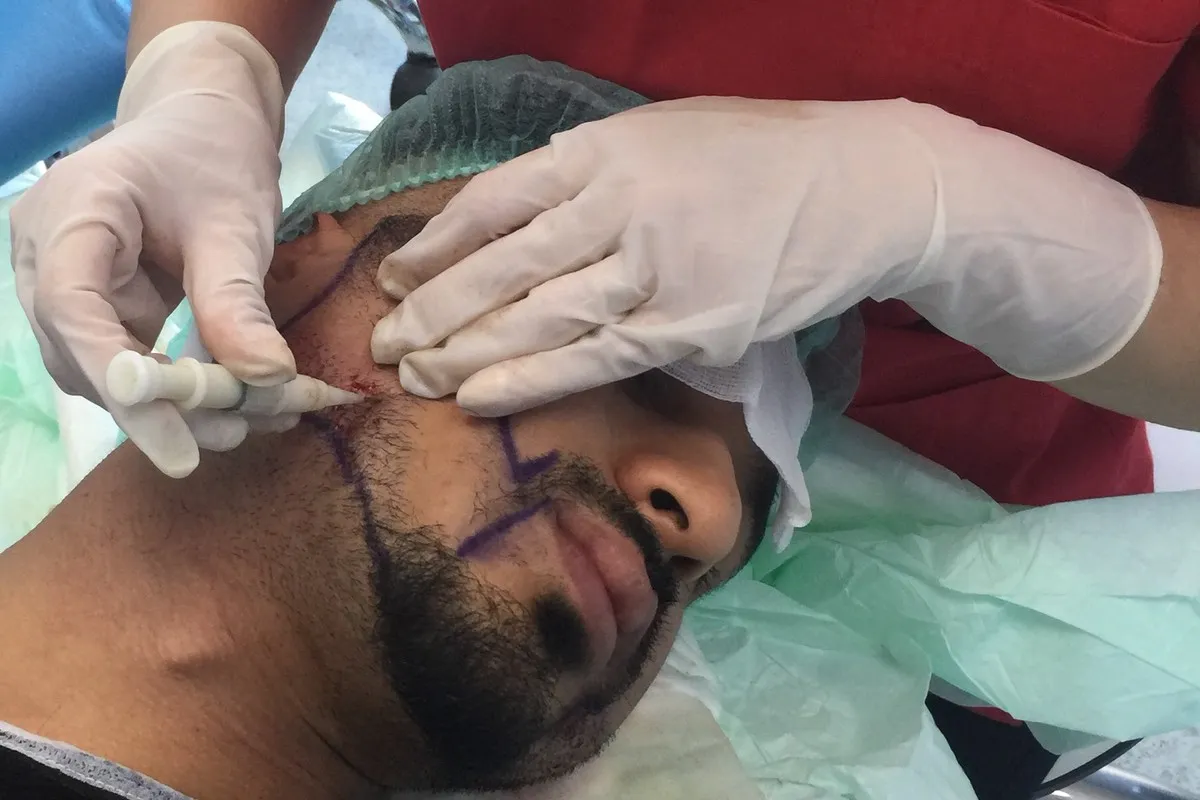
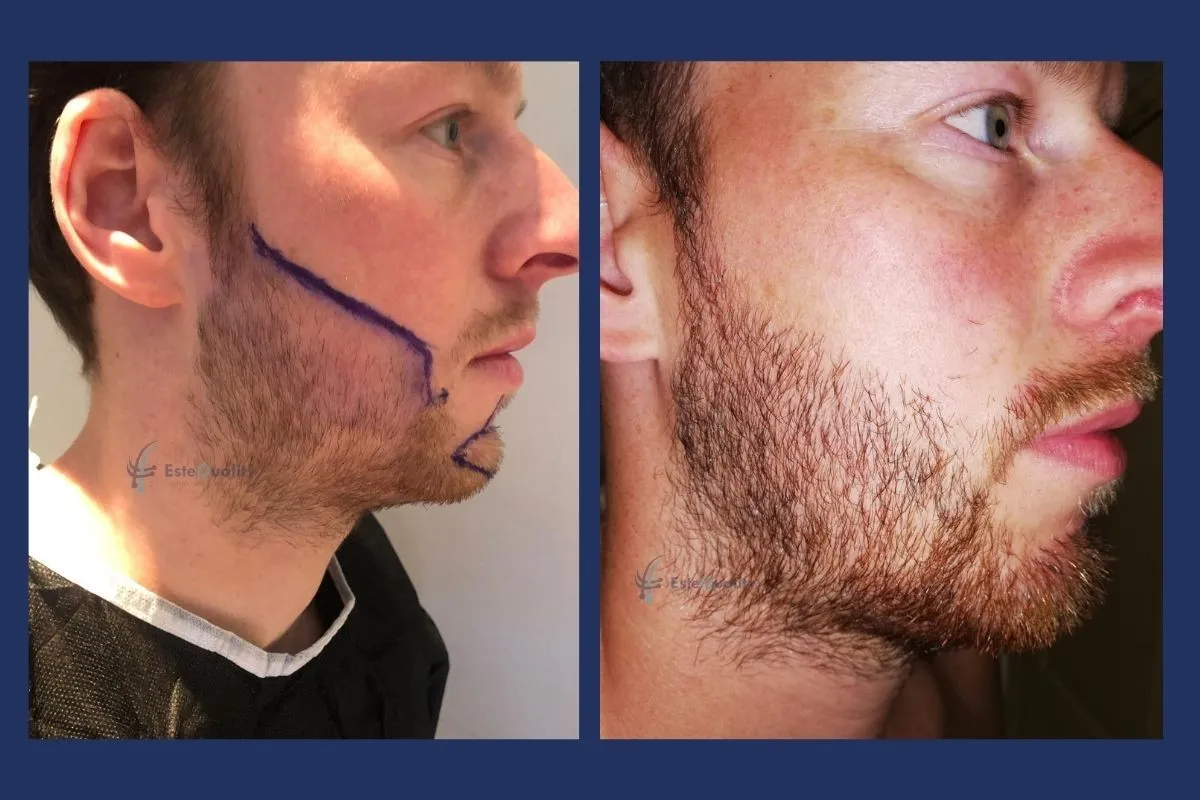
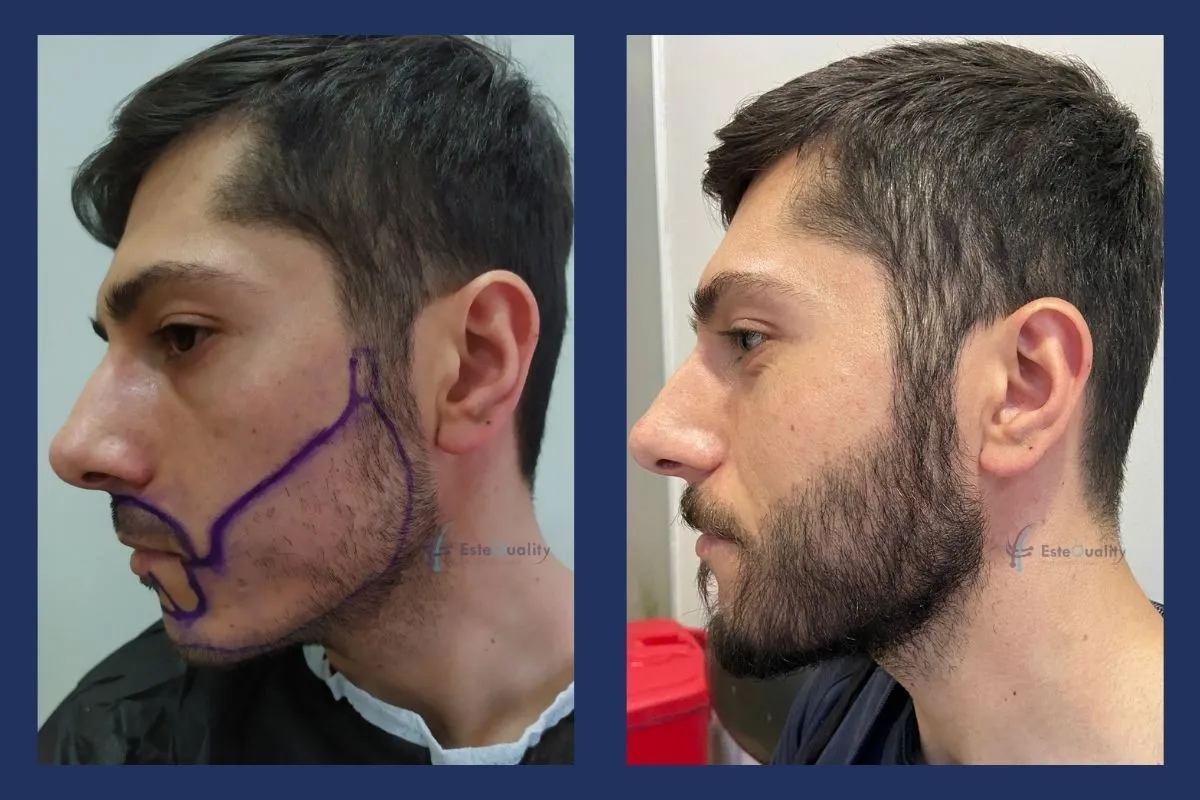
How the procedure works
The procedure is done under local anesthetic and usually takes a few hours, depending on the number of grafts.
- Design. We map the beard shape with you, agreeing the outline, density and where the gaps need filling.
- Donor extraction. Follicles are removed one at a time from the back of the scalp by FUE.
- Placement. Each graft is implanted into the beard at a shallow angle in the natural direction, one hair at a time.
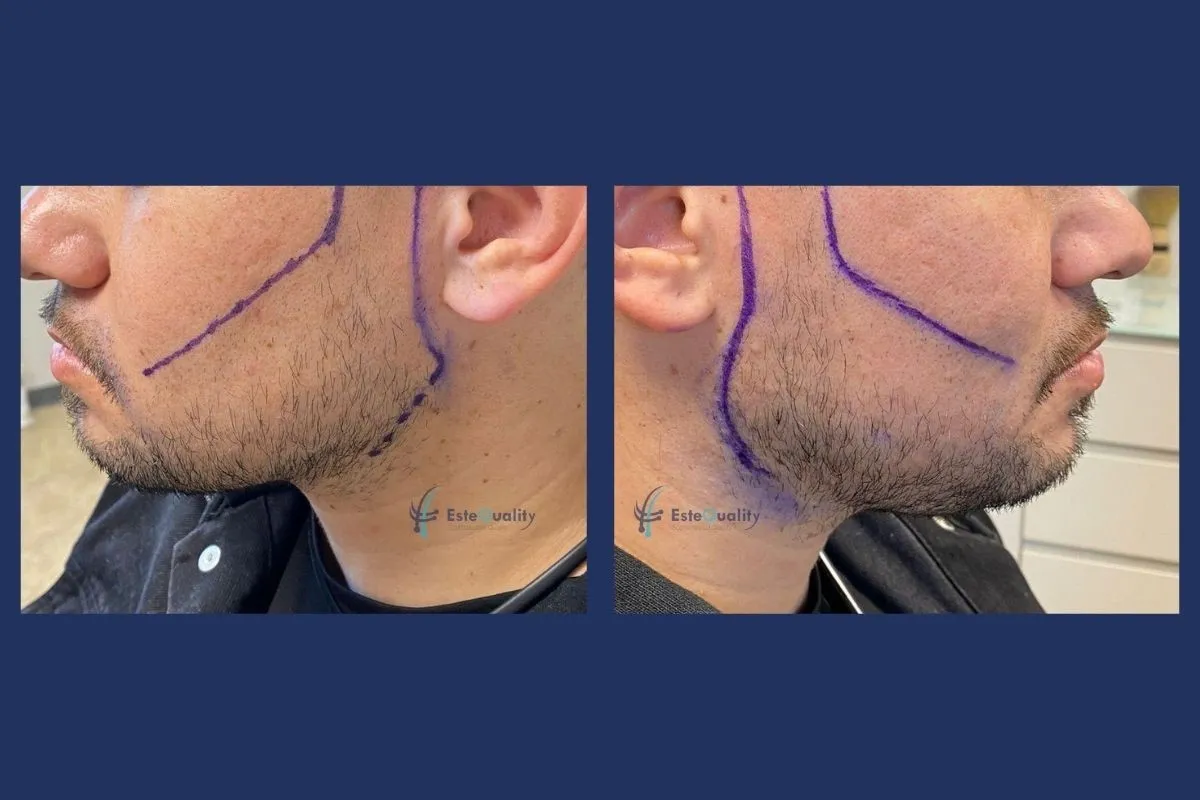
How many grafts you need depends on whether you are filling a specific zone or building a whole beard. A regional fill (cheeks, chin, sideburns or moustache) is typically 500 to 1,500 grafts, and a full beard 4,000 to 5,000 grafts, set to your individual design rather than a fixed number. The reason a full beard takes this many grafts is that at EsteQuality we also place grafts between your existing beard hairs, so that the new hairs and the beard you already have do not look different from each other; this is what gives a transplanted beard its natural appearance. Between extraction and implantation, grafts are stored in chilled lactated Ringer’s solution at 4–5 °C, one of the standard holding solutions in hair transplantation, to limit the time they spend outside the body.
Will I be shaved? The beard area itself is trimmed for the procedure, but the top of your head is not shaved. For smaller graft counts the donor follicles are taken from a narrow strip at the back of the scalp that stays hidden under the surrounding hair. For a large session of 3,000 to 5,000 grafts, the back and sides are shaved and only the top is left unshaved; this allows the grafts to be taken evenly across the whole donor area, so the donor looks better afterwards.
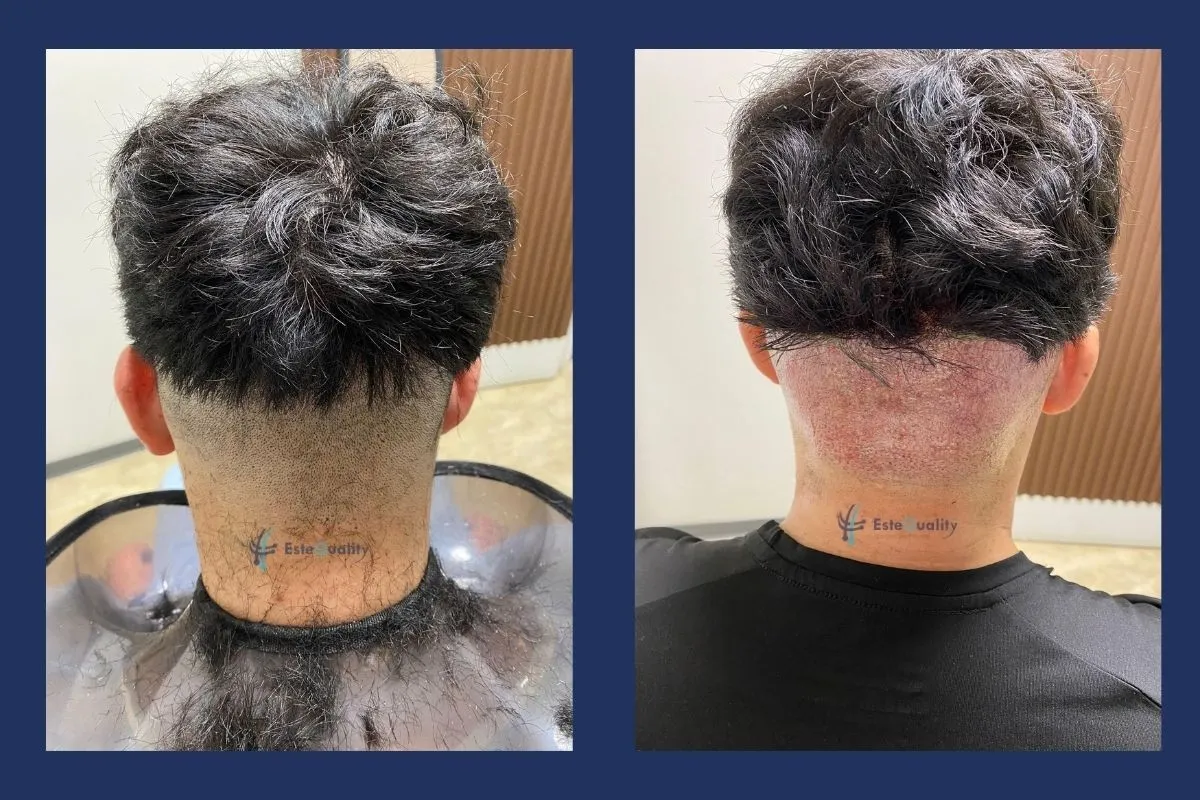
Recovery, day by day
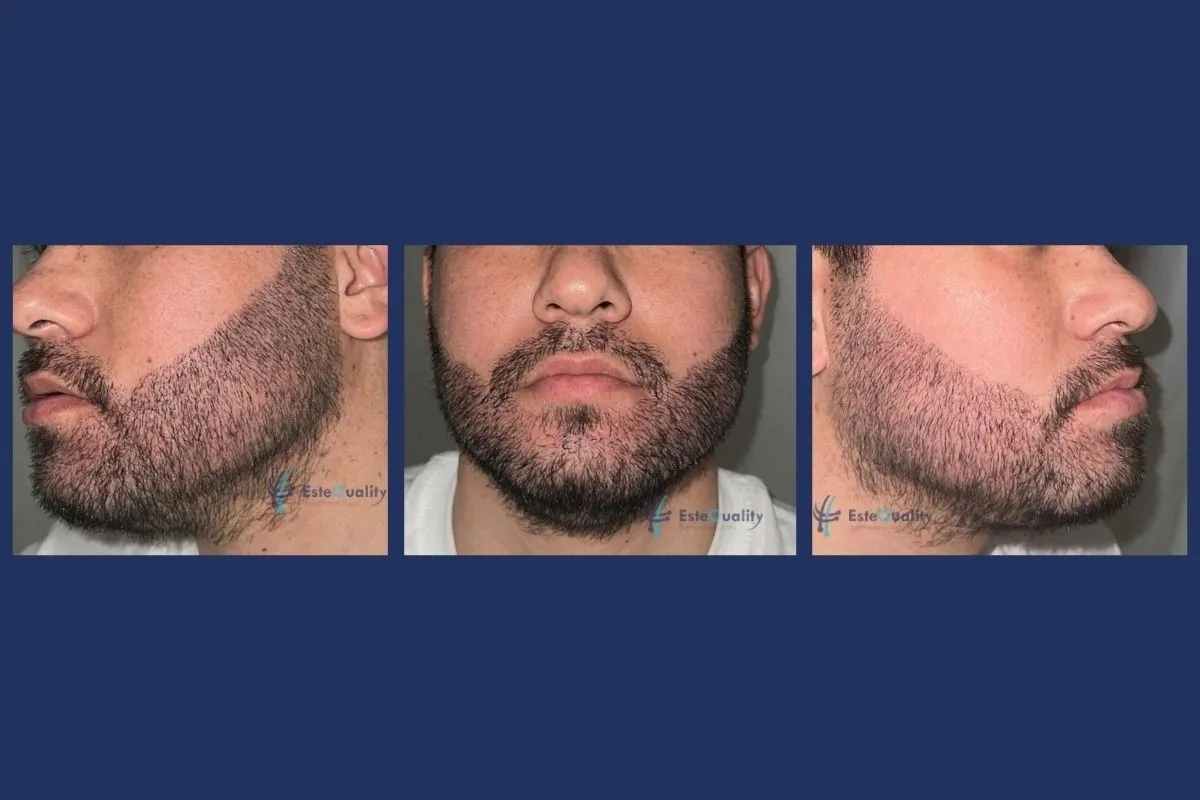
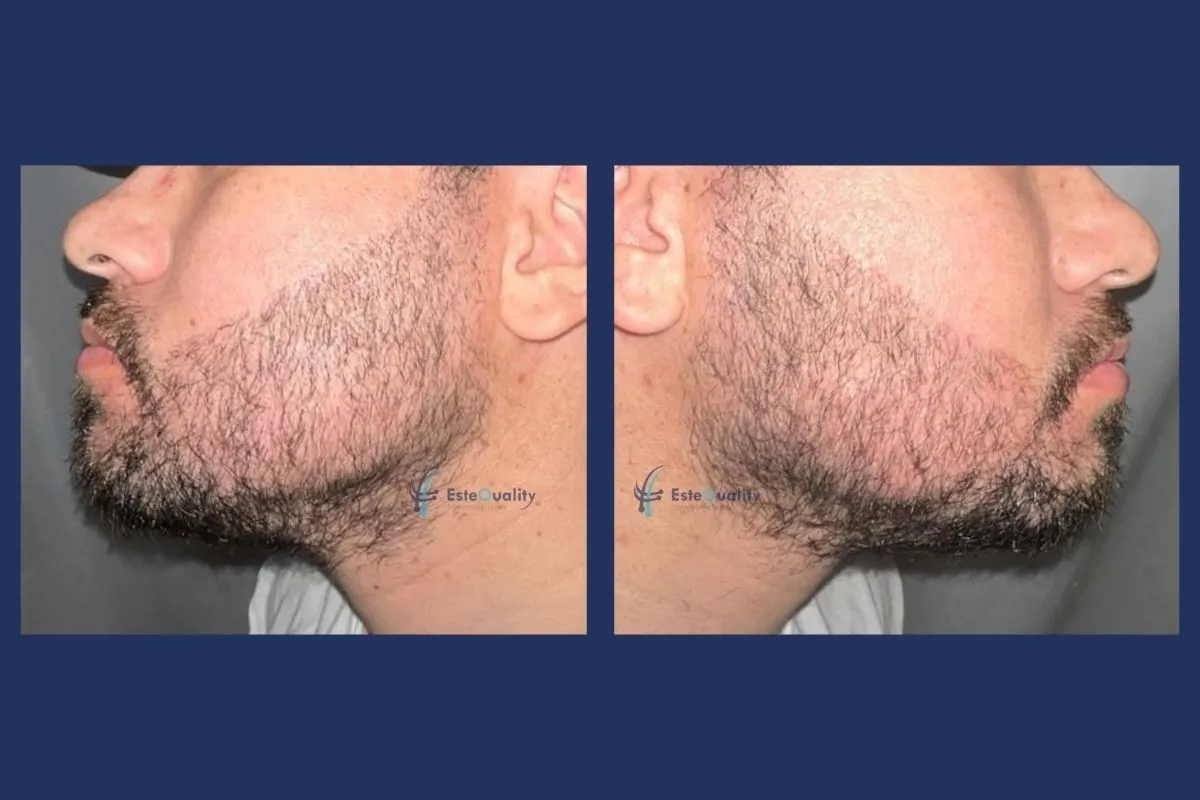
Beard transplant recovery is quick and mostly cosmetic. A rough guide [2]:
- Days 1–3: tiny crusts form around each graft, with some redness and mild swelling. You keep the area clean and dry as instructed and avoid touching it.
- Days 7–10: the crusts have all flaked away and the beard starts to look tidier.
- Days 20–30: the transplanted hairs begin to shed. This “shock shedding” is normal and expected, not a failed graft.
- Months 3–4: new hairs begin to grow through.
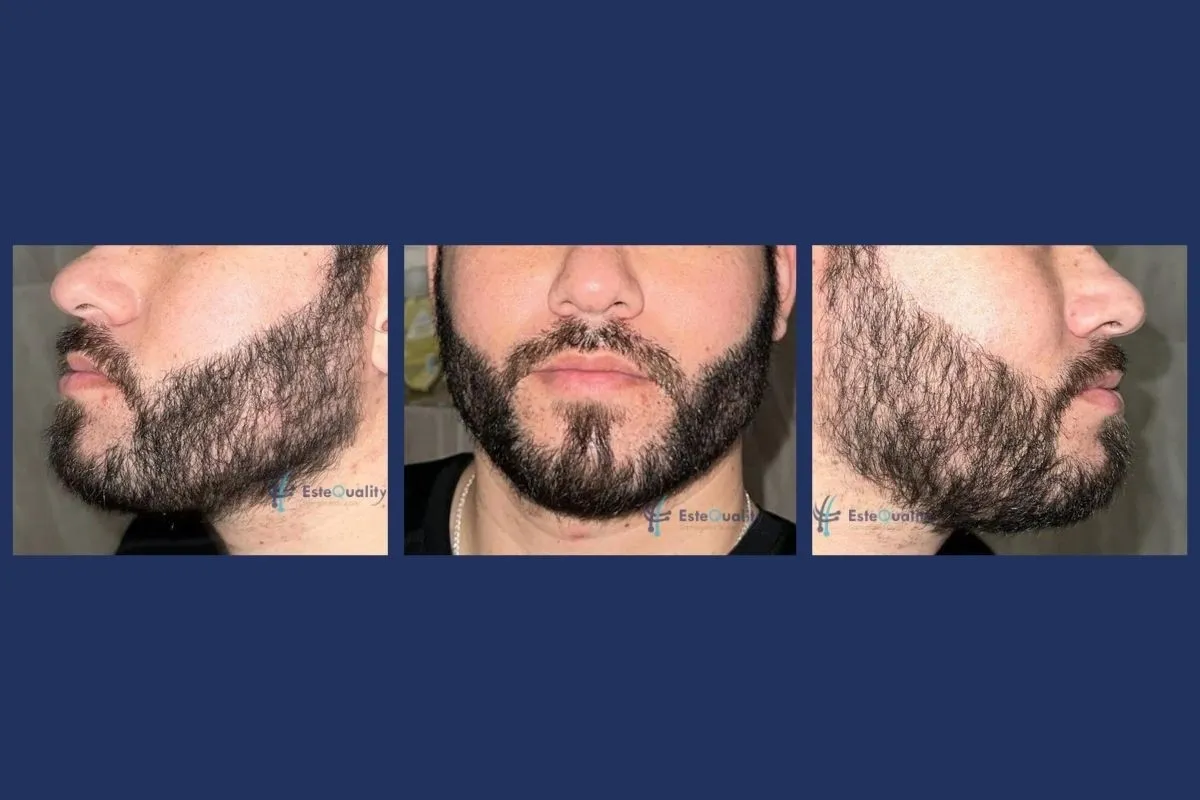
- Months 8–12: the beard thickens and settles into its final look, and you can shave and shape it normally.
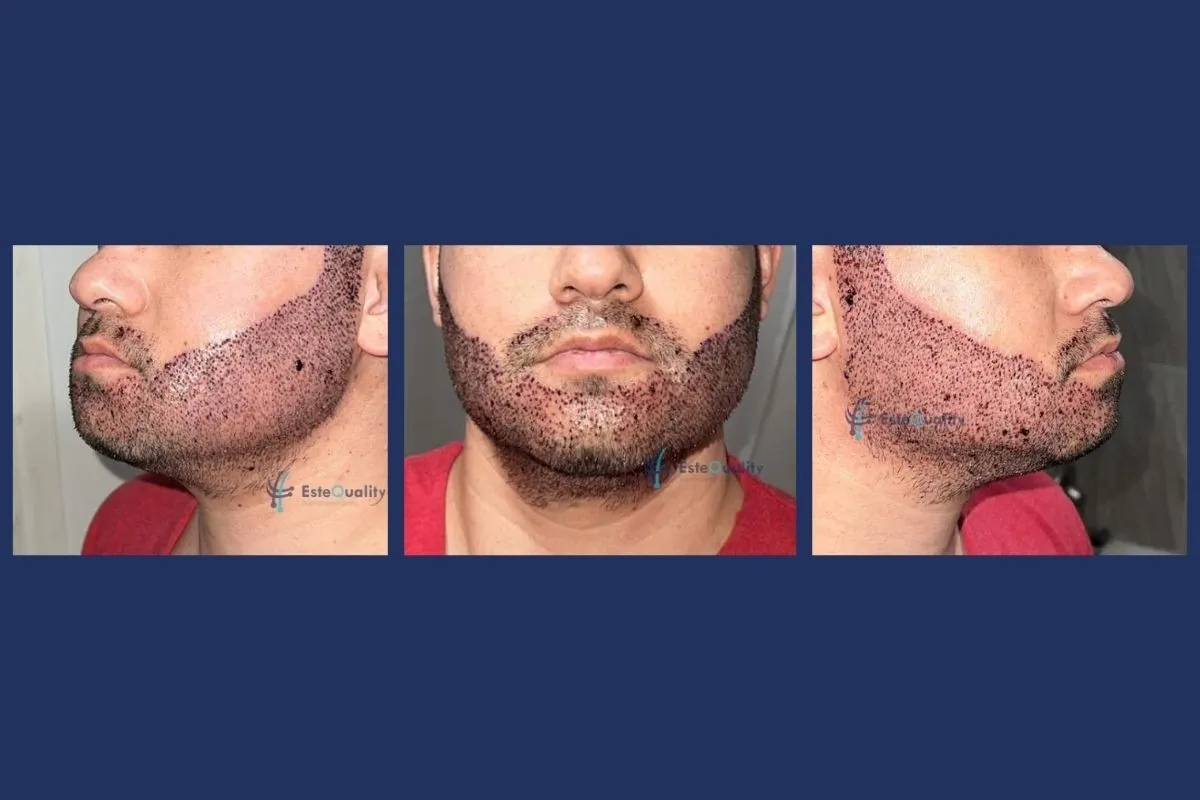
Time away from daily life is usually short; most people return to normal activities within five to nine days. For the first month, be careful with heavy sweating, saunas and direct sun on the face. You can trim the beard and the donor area with clippers or scissors about one month after the procedure; avoid razors for one year.
What results can you expect?
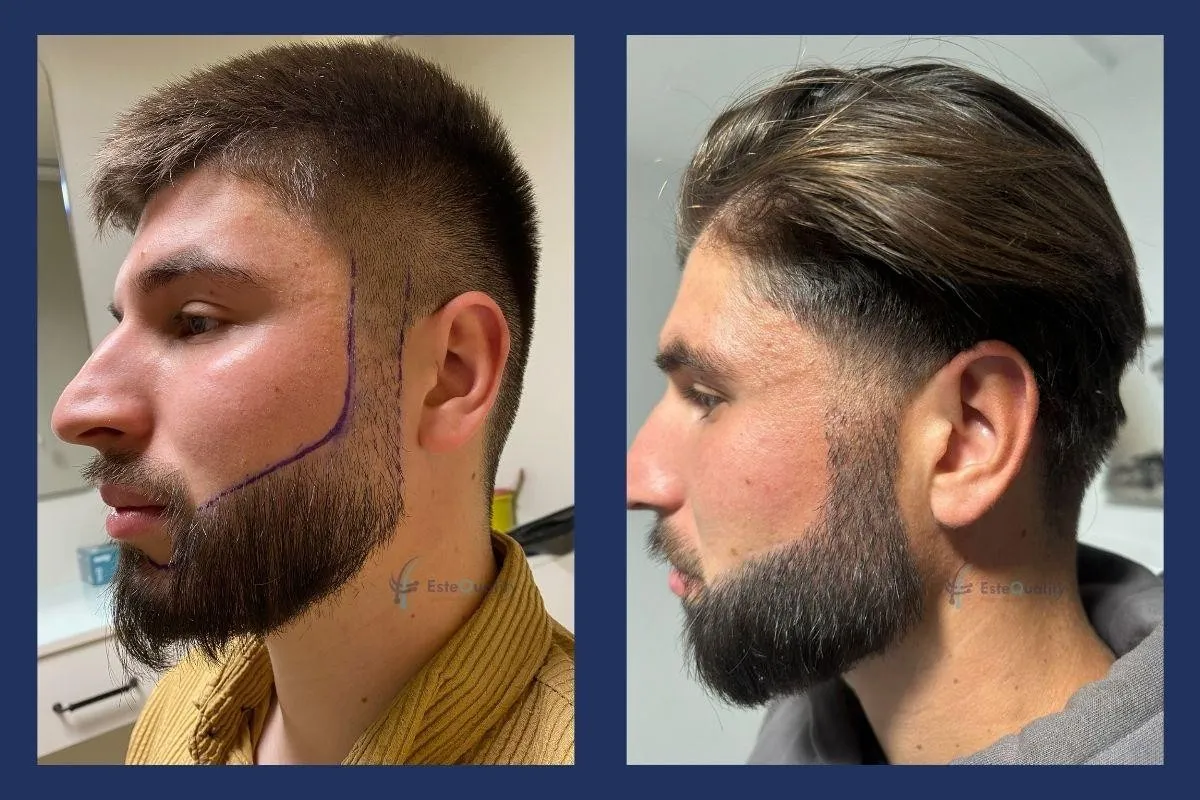
A good result is a fuller, even beard that grows like the hair around it and can be shaved and styled normally once settled [1]. Because the grafts come from the scalp, the beard hair grows like scalp hair and needs trimming as part of normal grooming. Density builds gradually over the months after the early shedding, so the true result is judged at around a year. We show you comparable before-and-after cases at the consultation so your expectations are set against real outcomes, not a promise.
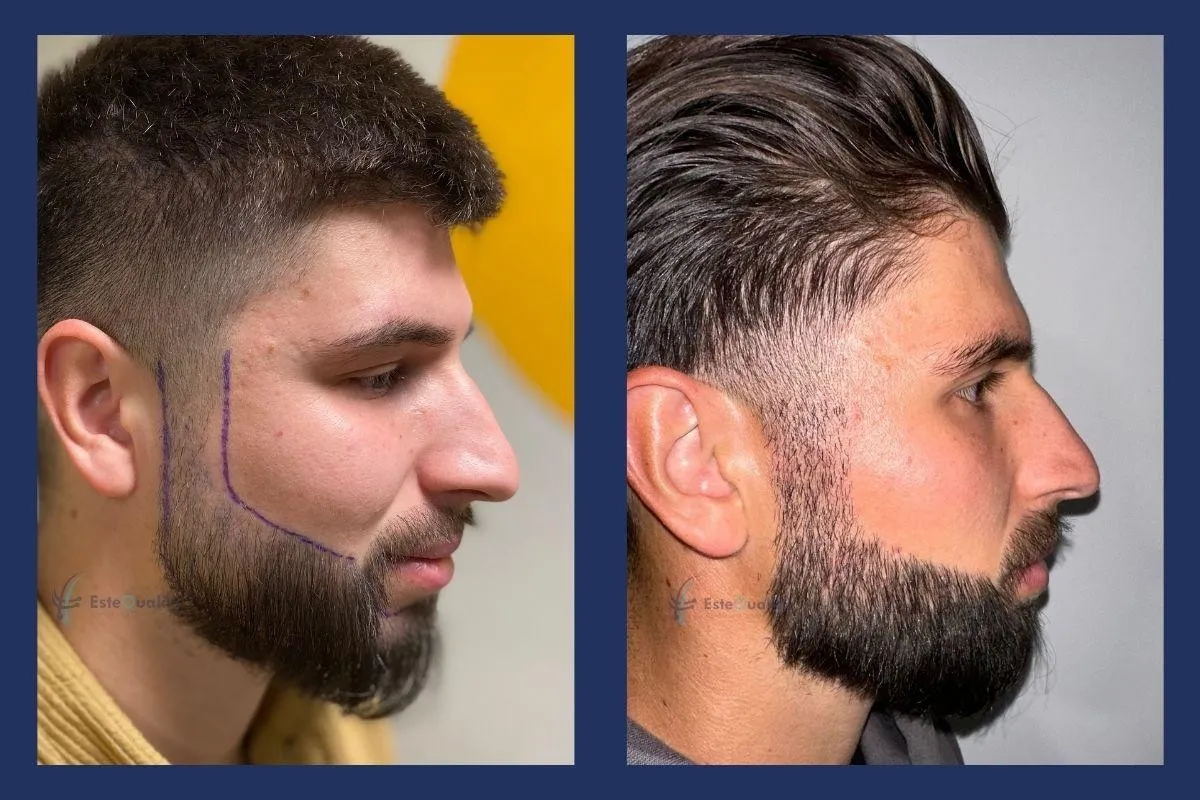
Side effects and what to expect
As with any transplant, rare risks include infection, folliculitis, small marks in the donor area and uneven growth that may need a touch-up; we go through these with you before the procedure.
Side effects are usually mild and short-lived: redness, small scabs, and some swelling of the face in the first days, and an occasional ingrown hair as the beard grows back, which usually settles on its own [2]. Numbness or tightness over the donor or beard can last a short while. As with any procedure there is some risk, and outcomes vary with your donor supply and how your skin heals; we set that out honestly at the assessment.
Cost of a beard transplant
A beard transplant is priced on the number of grafts and the package, the same ranges as a scalp transplant. At EsteQuality a procedure-only option (procedure and aftercare products) is €1,700 to €2,700; all-inclusive packages are €2,100 to €3,200 (Standard) and €3,100 to €4,200 (Comfort), updated September 2026, with the DHI option included within these ranges. For the full package detail see our hair transplant packages in Turkey page, and message us on WhatsApp for a tailored quote.
You can call us or send your photos on WhatsApp for all the detailed information and whether your beard is suitable for beard transplant. Also you can check our packages for more information.
How your treatment is supervised
Under the leadership of a plastic surgery specialist (plastic, reconstructive and aesthetic surgery), the design is carried out by physicians certified in hair transplantation, inside a fully equipped hospital environment. Afterwards you receive a written report, a care pack, and our revision policy. The full patient journey in Istanbul, the recovery timeline and our 12-month follow-up are set out on our hair transplant in Turkey page.
You can call us or send your photos on WhatsApp for all the detailed information and whether your beard is suitable for beard transplant. Also you can check our packages for more information.
Frequently asked questions
What does a beard transplant look like after 5 days?
At around five days the small crusts are still visible and the area may look red; any swelling has gone down by then. This is a normal part of early healing. The crusts shed completely between seven and ten days after the procedure [2].
What does a beard transplant look like after 1 week to 10 days?
By the end of the first week the small crusts have all flaked away and the redness is starting to fade; the beard area looks tidier. The transplanted hairs begin to shed between twenty and thirty days after the procedure, before regrowing [2].
Can I see before-and-after results?
Yes. Contact us and our medical consultants will show you before-and-after cases similar to your own, with the graft count and the time since the procedure, so your expectations are based on real results rather than a promise.
What about after 1 month?
Around days twenty to thirty the transplanted hairs shed, which is normal. At one month the area is settled but not yet growing new hair, and you can shave normally from this point; regrowth starts at around three to four months [2].
When will I see the final result?
After the early shedding, new hairs grow over the following months, with the beard thickening and settling at around eight to twelve months [1].
Does a beard transplant hurt?
It is done under local anesthetic, so you should not feel pain once the area is numb; you may feel the anesthetic injections. Afterwards the face can feel tight or tender for a day or two, which is usually controlled with simple pain relief [2]. The moustache area is more sensitive than the rest of the beard, so for patients who want the moustache treated we recommend sedation.
Are there side effects?
Usually mild and short-lived: redness, small scabs, some facial swelling in the first days, and the occasional ingrown hair as the beard grows back [2].
Is a beard transplant permanent?
Yes. The transplanted follicles keep growing in their new position, so the result is permanent; once settled you can shave and groom the beard normally [1].
Sources
- ISHRS, Hair transplant patient information (FUE, graft growth, facial/beard restoration). https://ishrs.org/patients/
- AAD, Hair loss: diagnosis and treatment (transplant recovery, shedding, side effects and outcomes). https://www.aad.org/public/diseases/hair-loss/treatment/diagnosis-treatment
- NHS, Hair loss (causes and when to seek advice). https://www.nhs.uk/conditions/hair-loss/
- Mayo Clinic, Hair loss (treatments and realistic expectations). https://www.mayoclinic.org/diseases-conditions/hair-loss/symptoms-causes/syc-20372926
RELATED SERVICES

DHI hair transplant, the most preferred in Europe, provides unshaven planting in sparse areas.


