Hair Transplant Before and After: Real Patient Results
Written by Çağrıbey İslamoğlu · Last updated 25 September 2026 · Editorial Policy
The photographs on this page are of real EsteQuality patients. Every case is logged internally with a code and kept only with the patient’s written consent; where a face is shown, that consent is on file.
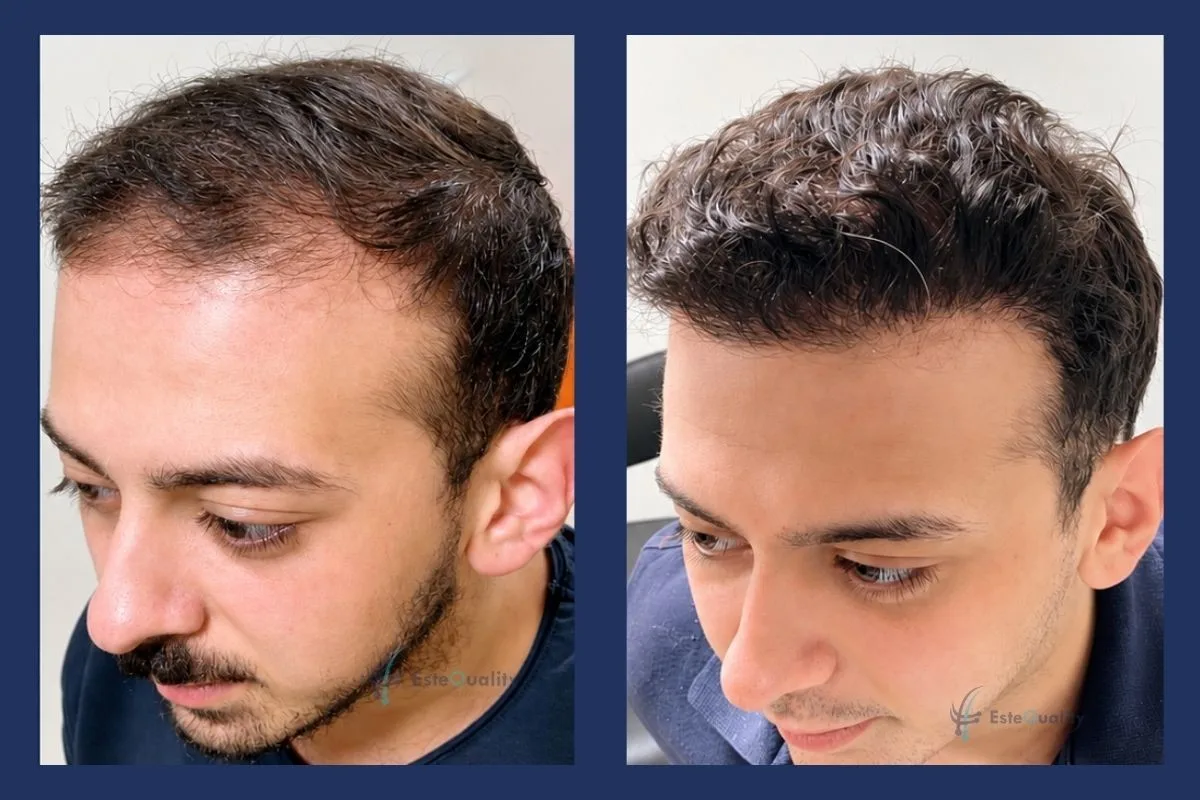
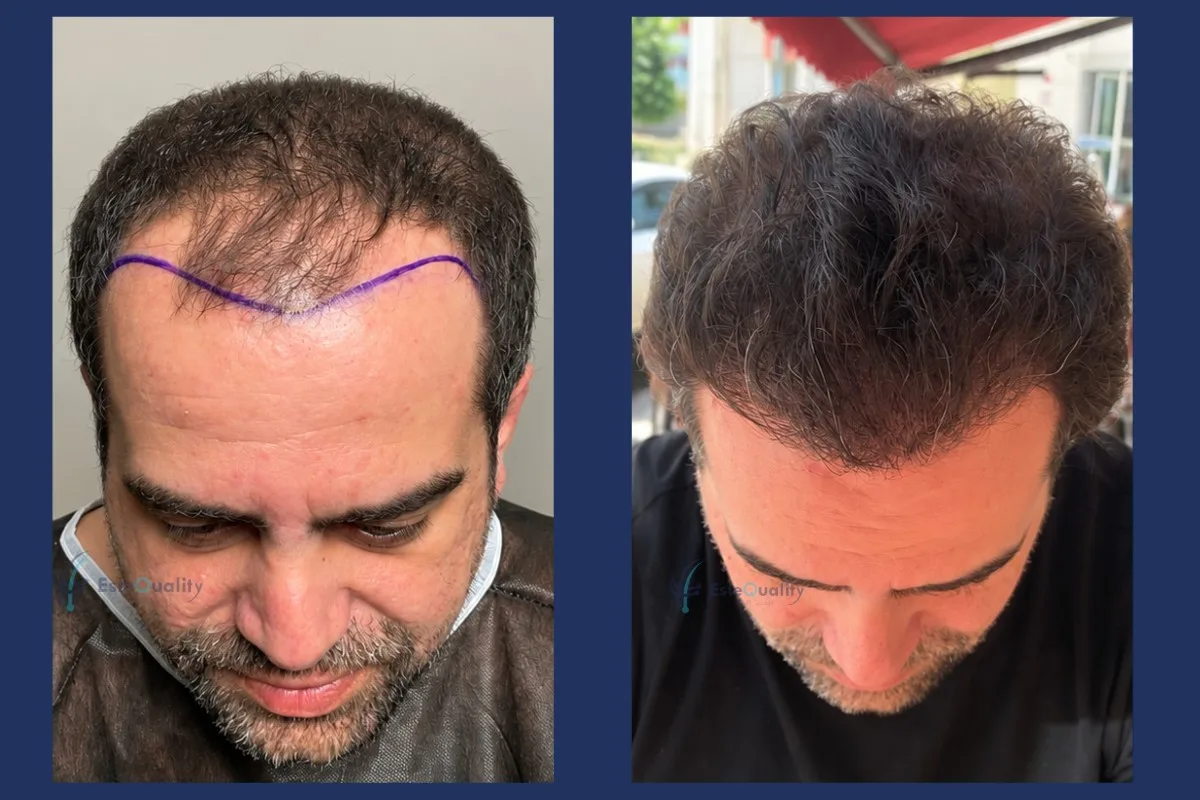
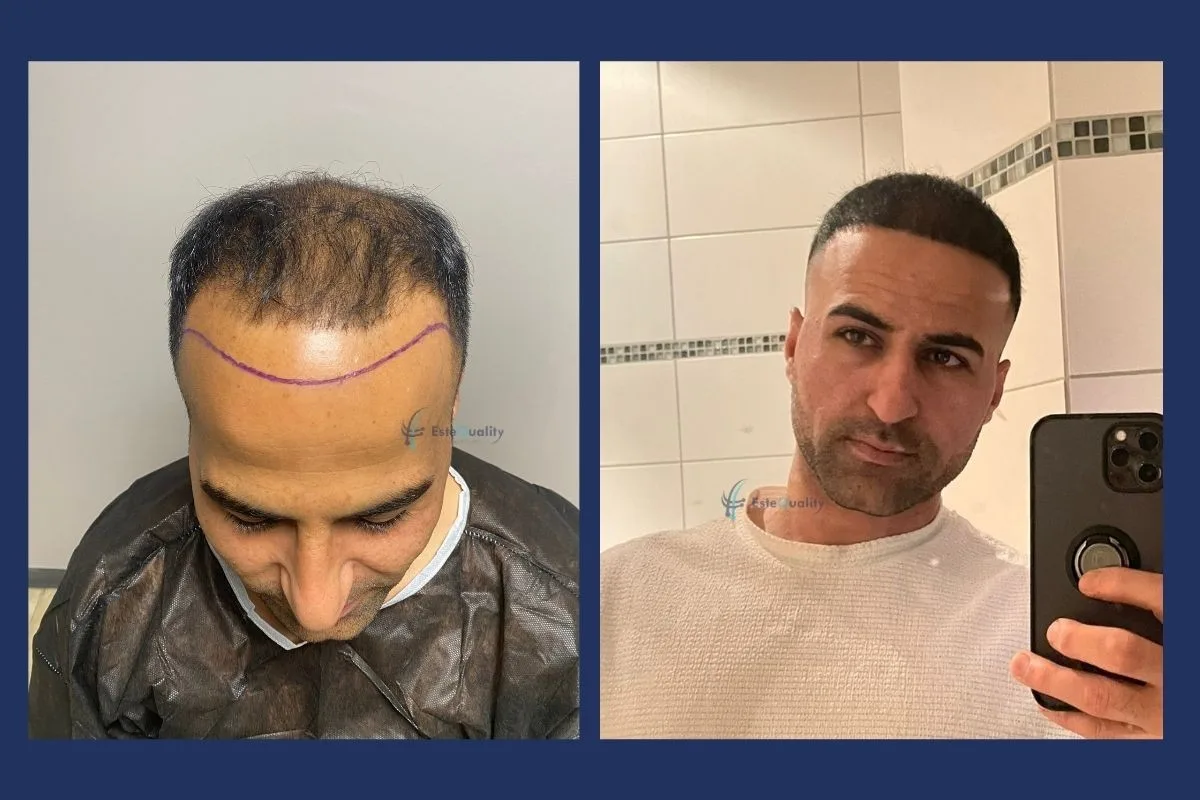
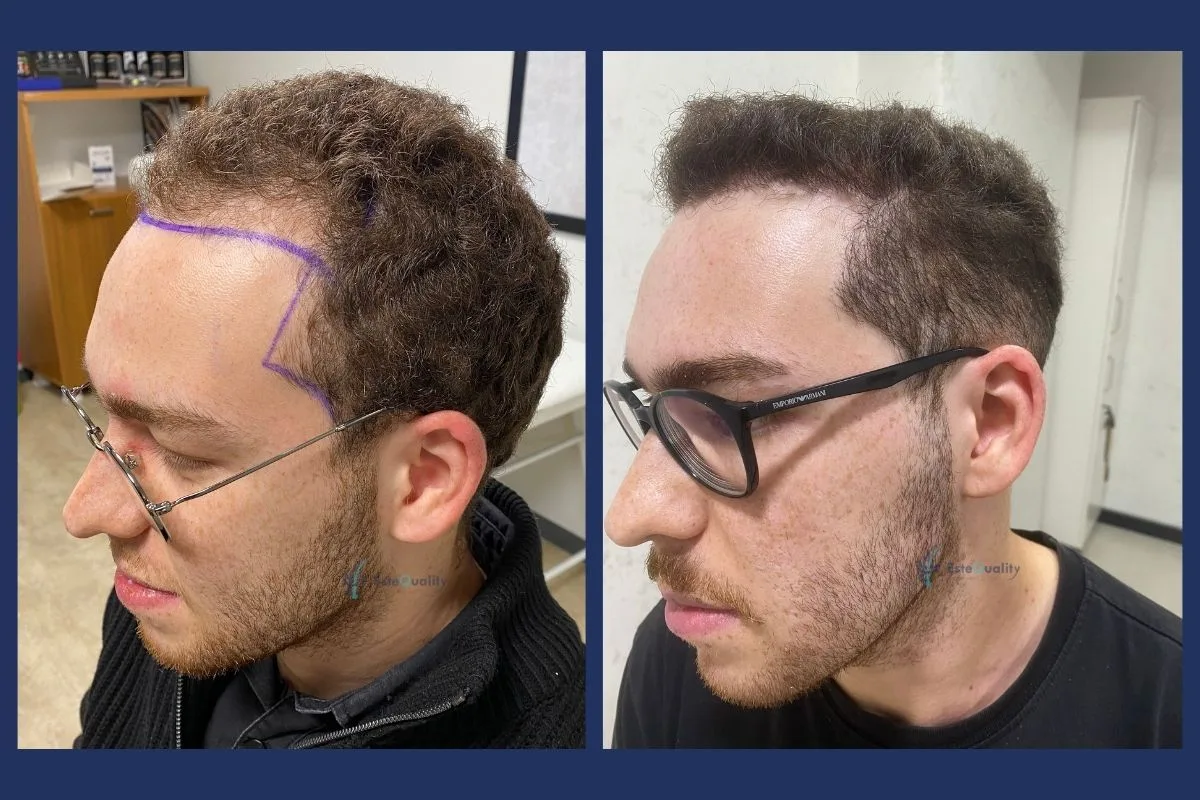
Results vary from person to person and depend on donor supply, the number of grafts and individual healing. The technique, graft count and the month each photo was taken are stated in the caption under each image.
Sapphire FUE uses a sapphire blade to open the recipient channels. See more on our Sapphire FUE page.
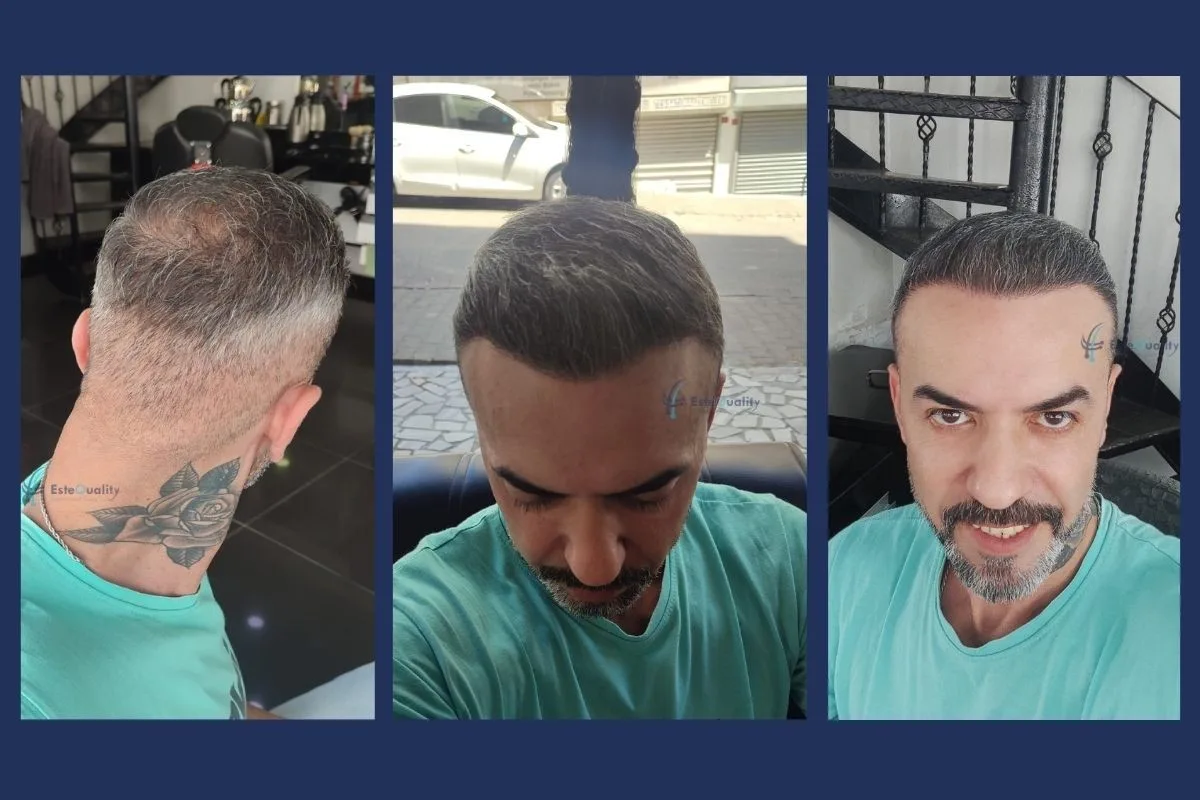
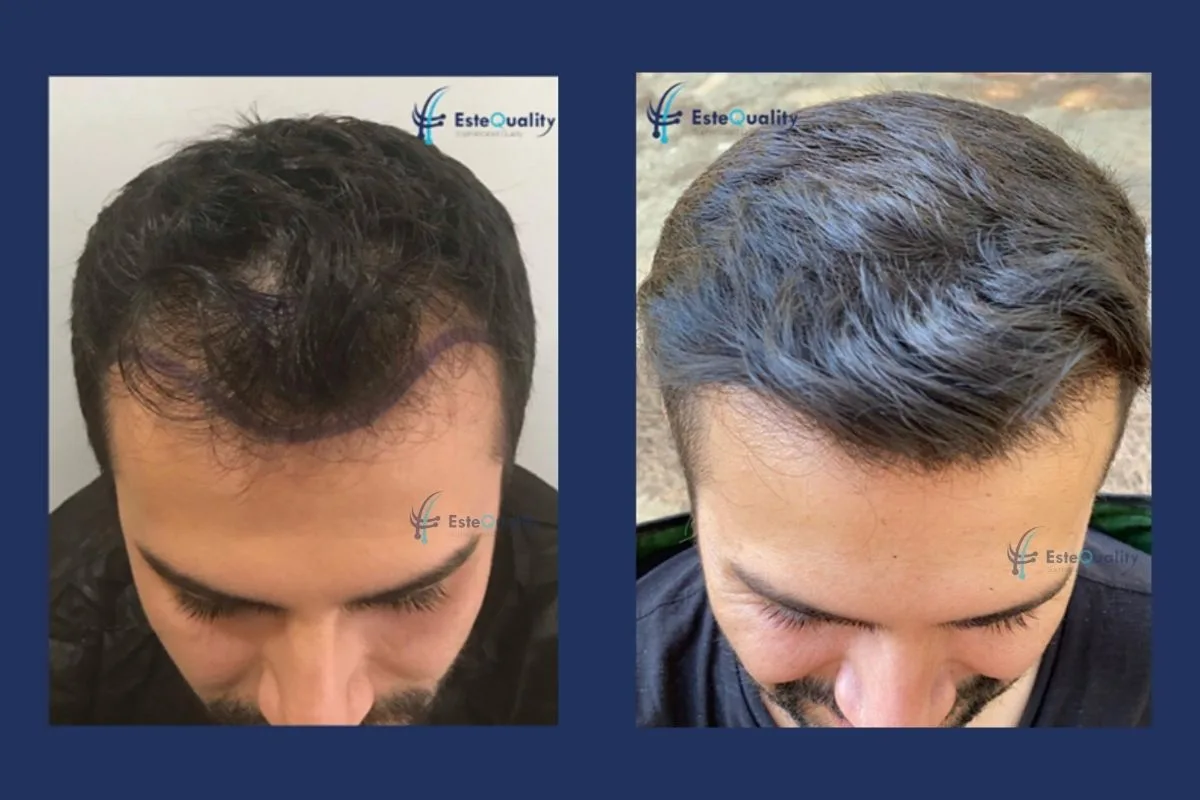
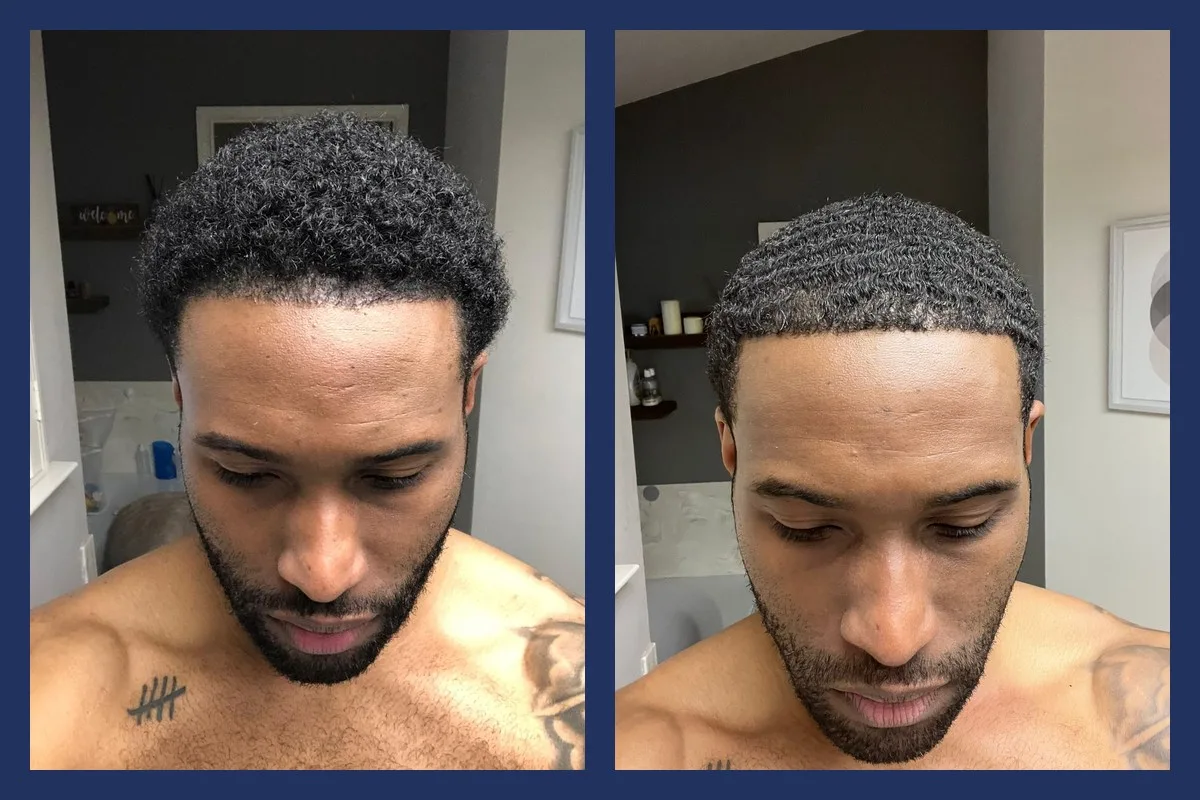
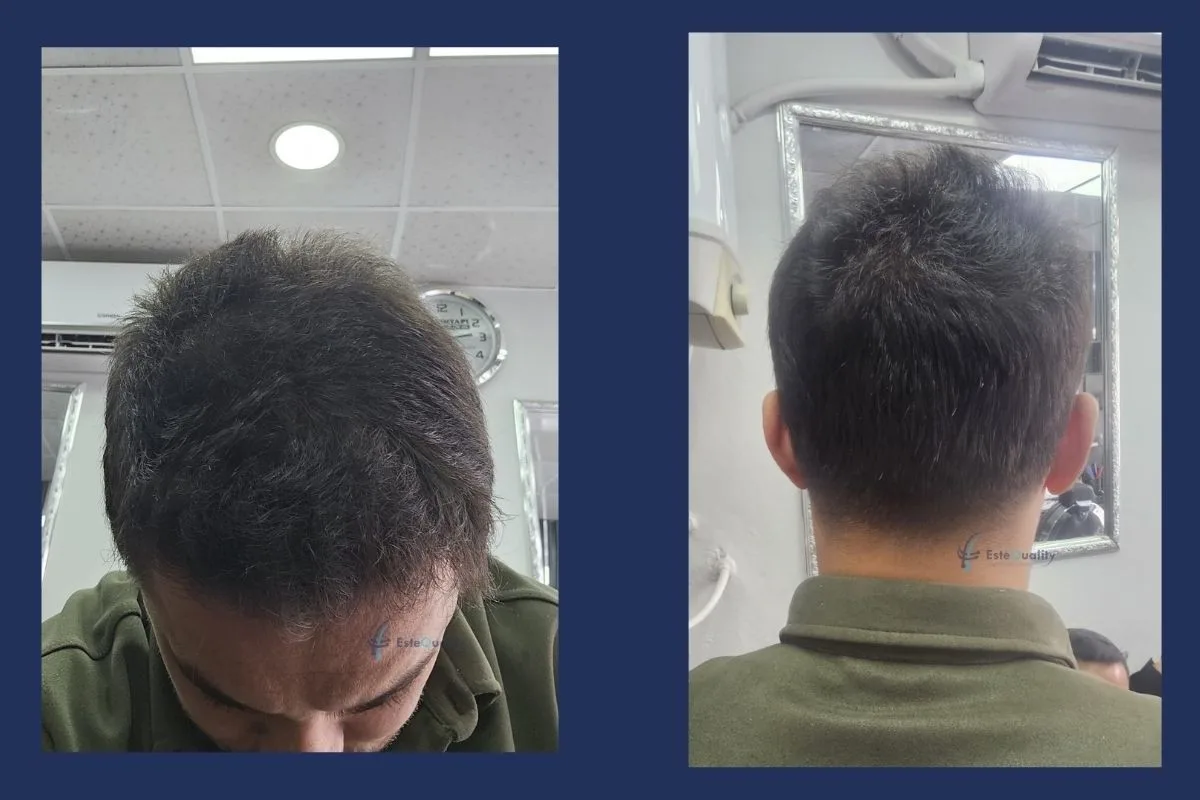
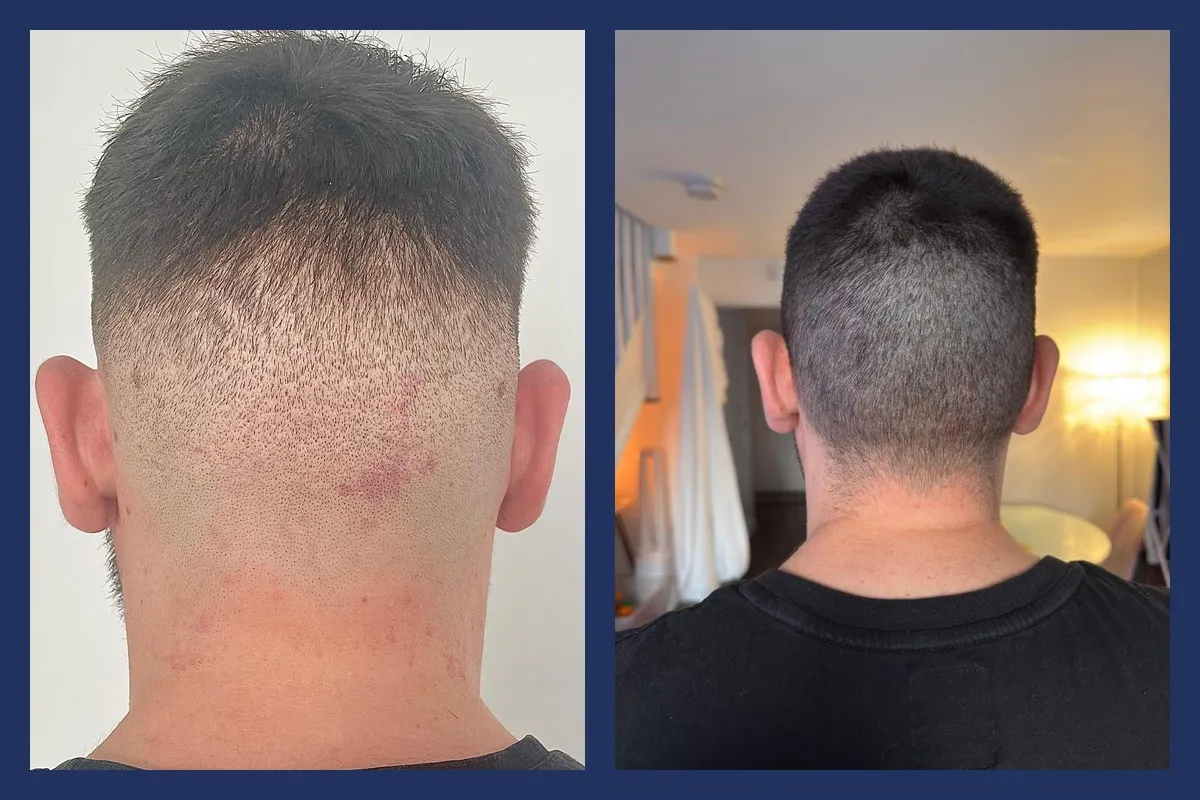
Patient in his 20s. 5,300 grafts, Sapphire FUE, hairline and frontal zone. Result at 9 months; density continues to improve until month 12. Read the full case on our hair transplant in Turkey page.Patient in his 30s. 7,000 grafts in a single session, Sapphire FUE, shaved. Result at 12 months. A graft count this high is only possible with an unusually dense donor area; it is not a target for most patients. Read the full case on our hair transplant in Turkey page.Patient in his 30s. 5,500 grafts, Sapphire FUE, hairline and full frontal-to-mid scalp. Worn short as a buzz cut at 9 months, which is the hardest style to hide a transplant under: density and hairline have to hold up without length. Patient's own mirror photo. See more on the shaved-head hair transplant page. Read the full case on our hair transplant in Turkey page.Patient in his 20s. 4,000 grafts, Sapphire FUE, with natural temple restoration and frontal hairline reconstruction. Result at 9 months. Read the full case on our hair transplant in Turkey page.6,000 grafts in one session, 1,700 of them from the beard, Sapphire FUE — a different patient from the donor case shown earlier. This was a second session: the patient had around 5,000 grafts elsewhere six years earlier, and what you see includes that earlier work. The graft number was only possible by counting the beard as a donor area alongside the scalp. Result at 6 months; density typically keeps building for up to around twelve months, though the course varies. A manual autologous scalp micrograft treatment with PRP was applied on the same day. Read the full case on our hair transplant from beard page.
DHI
DHI places each graft directly with an implanter pen. See more on our DHI page.
Unshaven work keeps the recipient hair long, so the result is less visible during recovery. See more on our unshaven page.
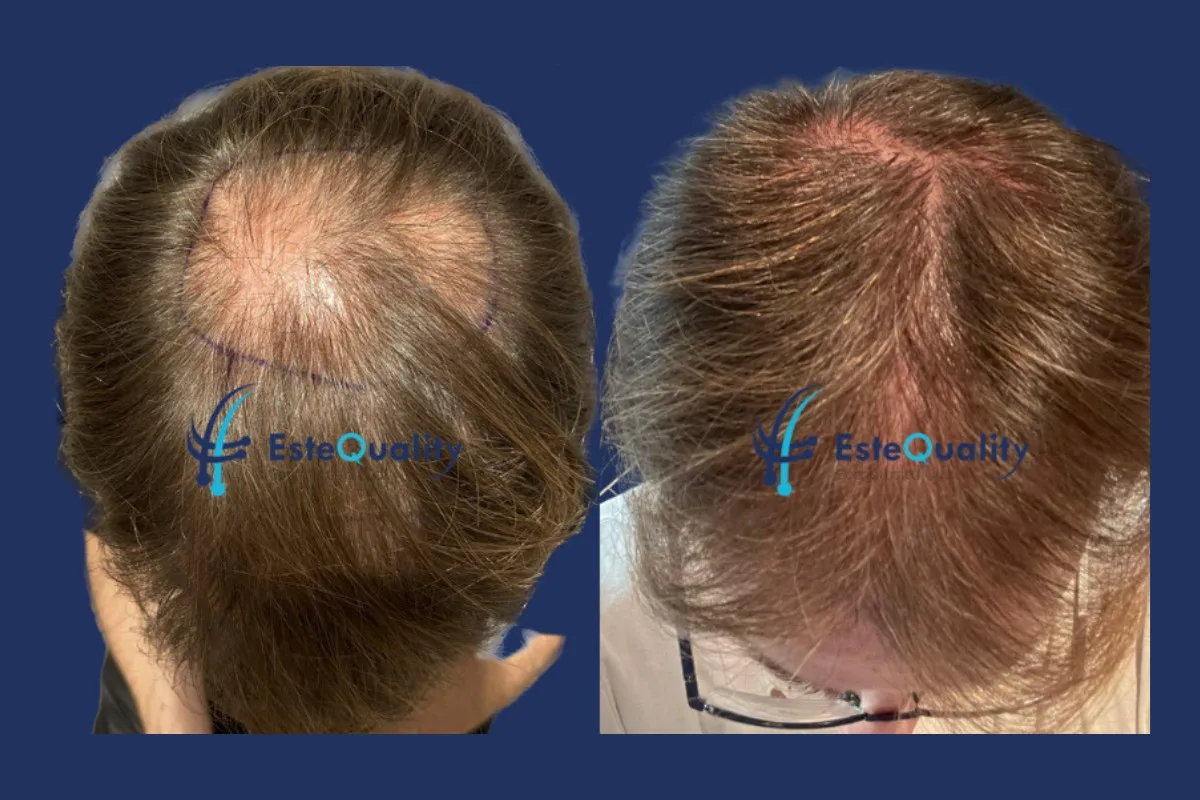
Patient in his 40s. 2,500 grafts, unshaven DHI, crown. Result at 11 months; crown density typically continues to improve until month 18. Mild redness in the after photo is sun exposure on a fair scalp, not a complication. Read the full case on our hair transplant in Turkey page.
Hair transplant from beard (beard-to-scalp)
Grafts are taken from under the chin and implanted into the scalp when scalp donor is limited. See more on our from beard page.
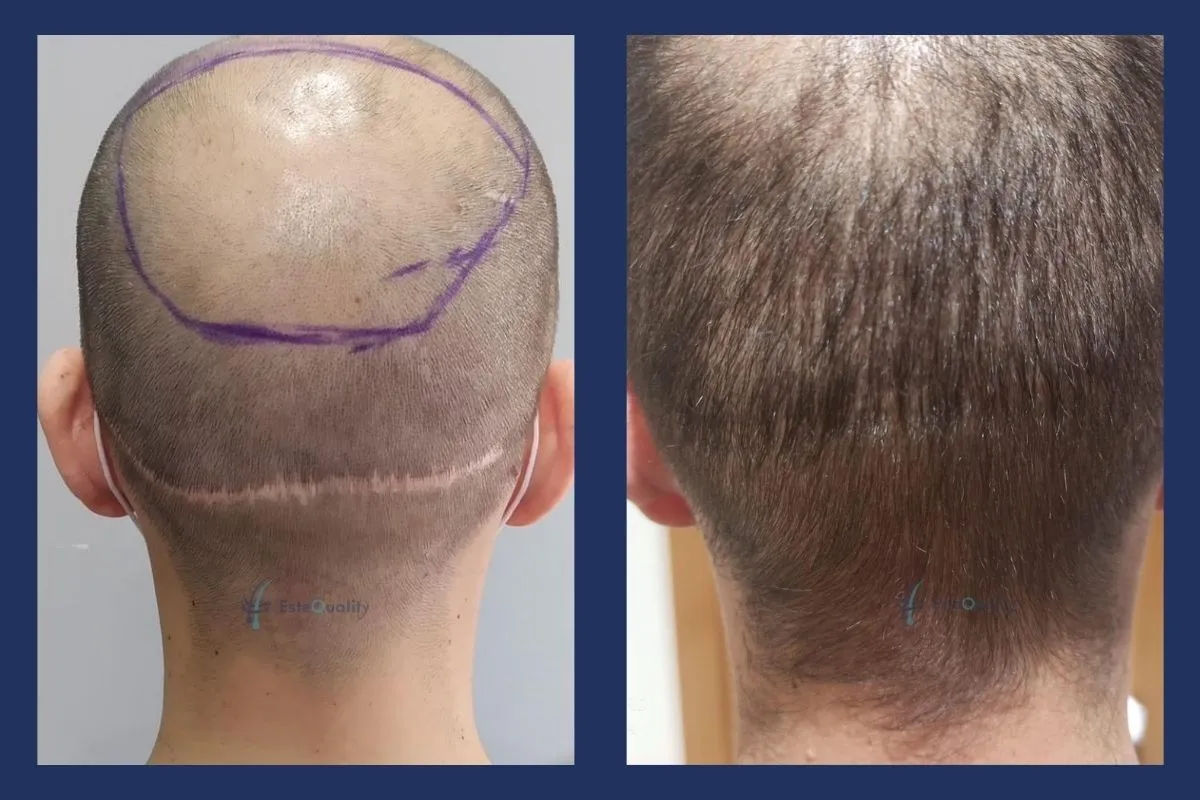
900 grafts, all taken from under the chin; scalp hair was not shaved or used as donor. Unshaven DHI was used to straighten a hairline left uneven by an earlier transplant elsewhere. The existing but weak frontal hair was supported with a regenerative treatment in the same plan. Patient's own mirror photos; haircut differs between the two. Result at 8 months. Read the full case on our hair transplant from beard page.1,700 grafts, all taken from under the chin and implanted with unshaven DHI. The sparse area circled during planning has filled in, and the implanted zone at the top blends with the surrounding hair rather than standing out. Because no grafts were taken from the head, there are no extraction marks anywhere on the scalp. Result at 9 months. Read the full case on our hair transplant from beard page.
Beard transplant
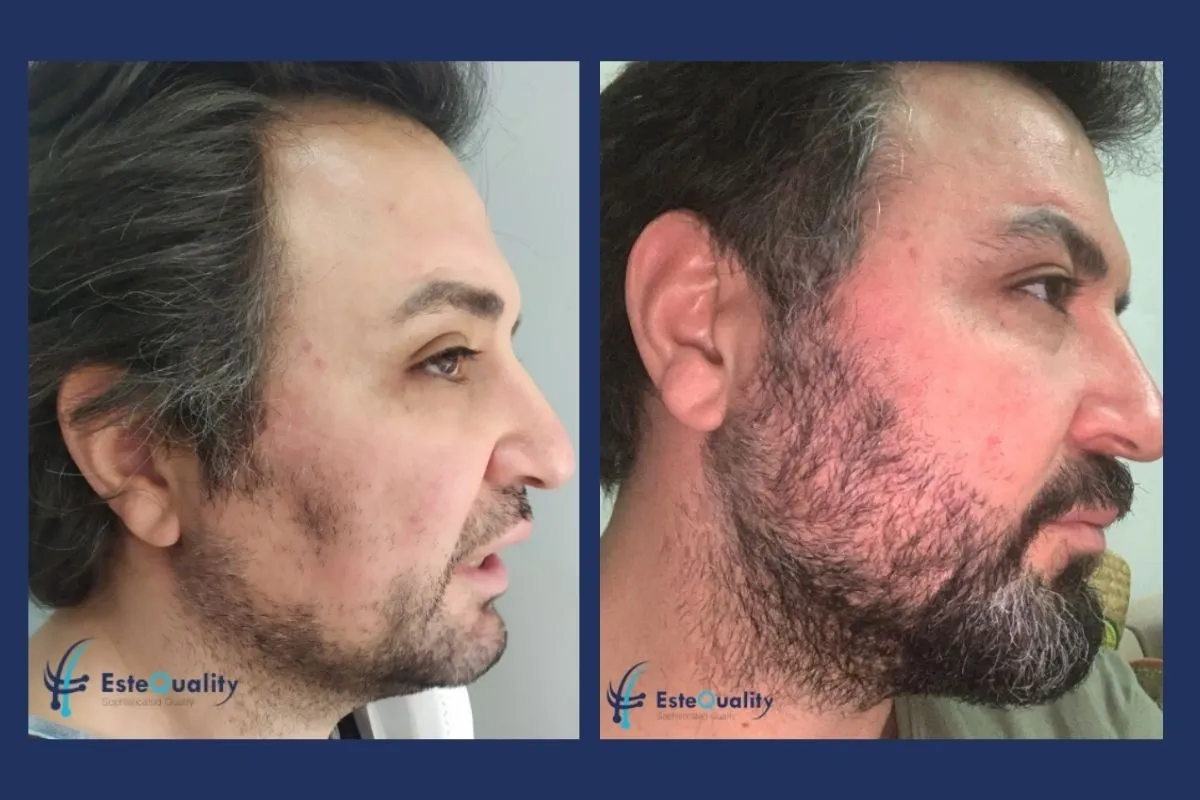
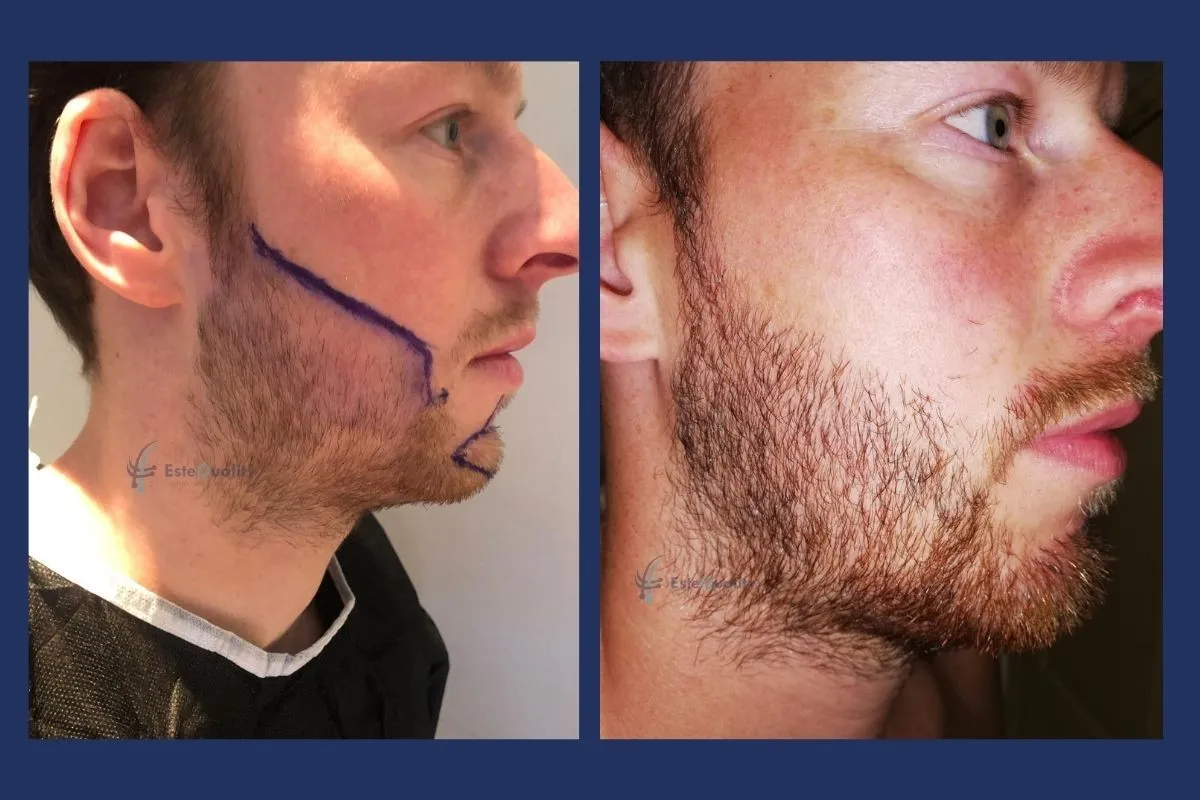
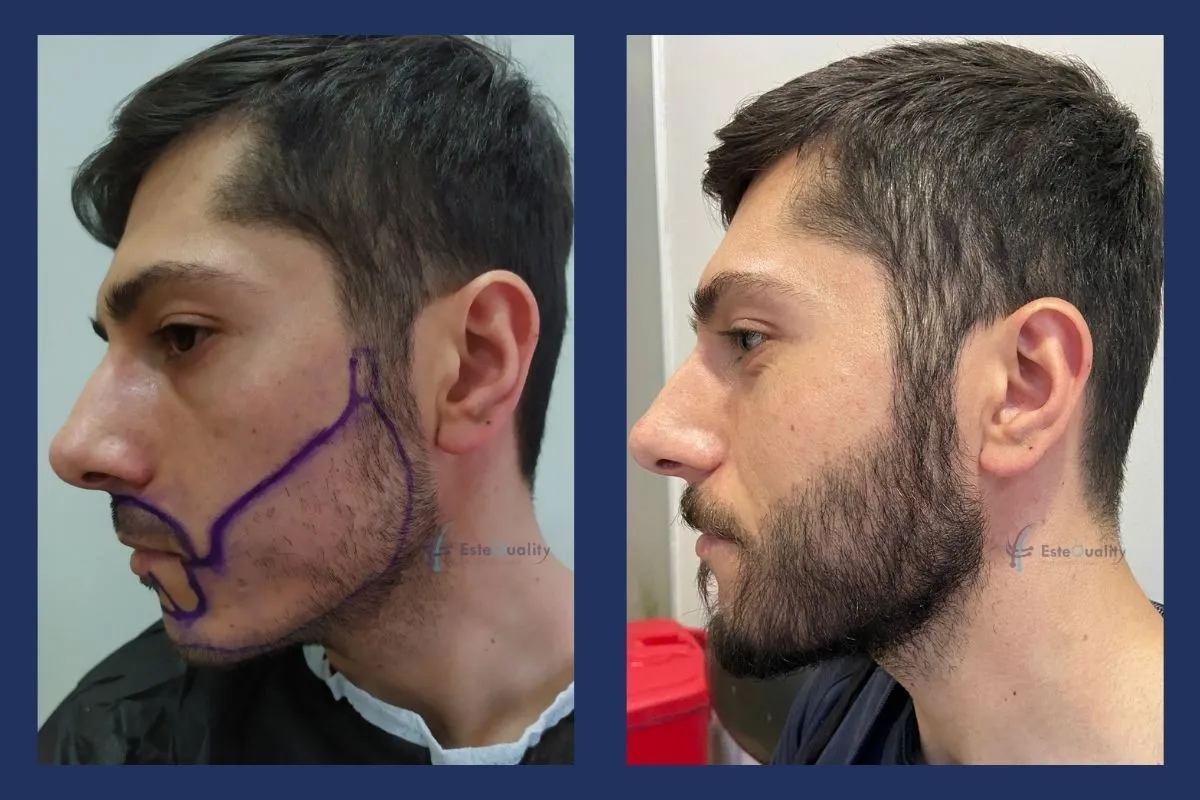
Facial beard restoration along the cheek and jawline. See more on our beard transplant page.
Hair transplants for women, mostly unshaven at the hairline and temples. See more on our hair transplant for women page.
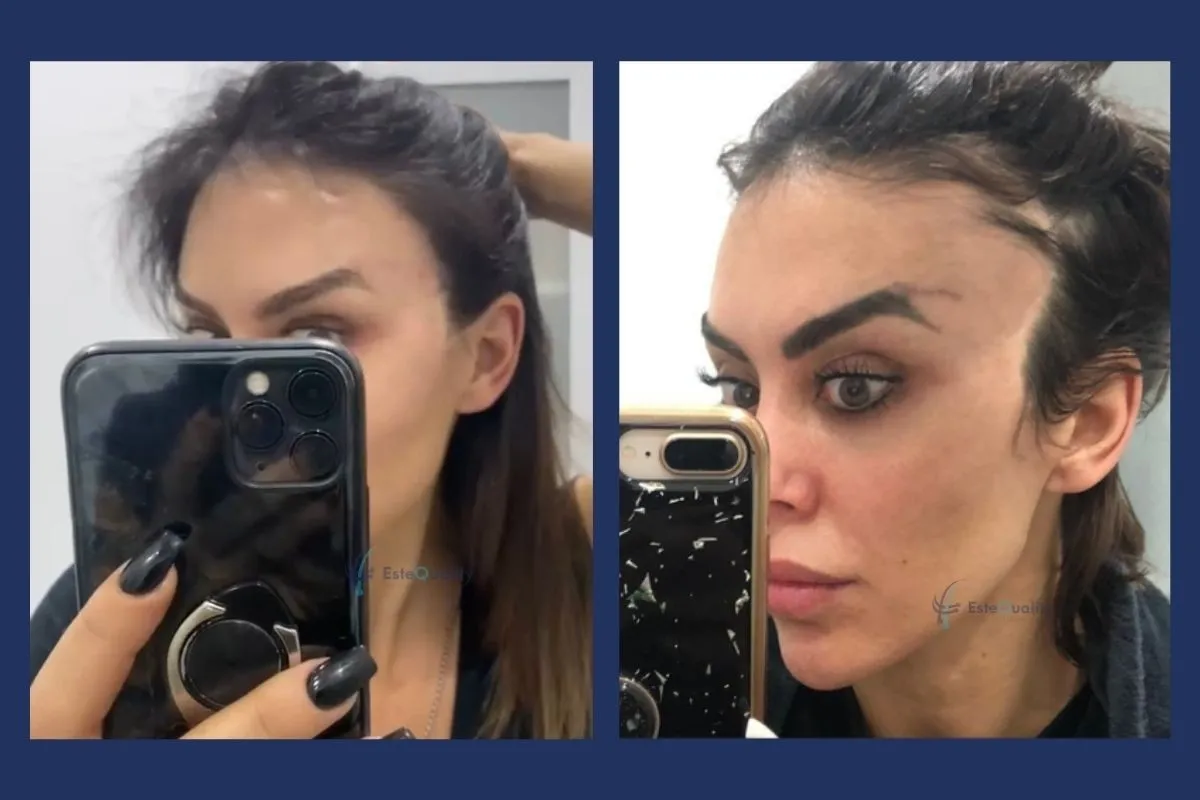
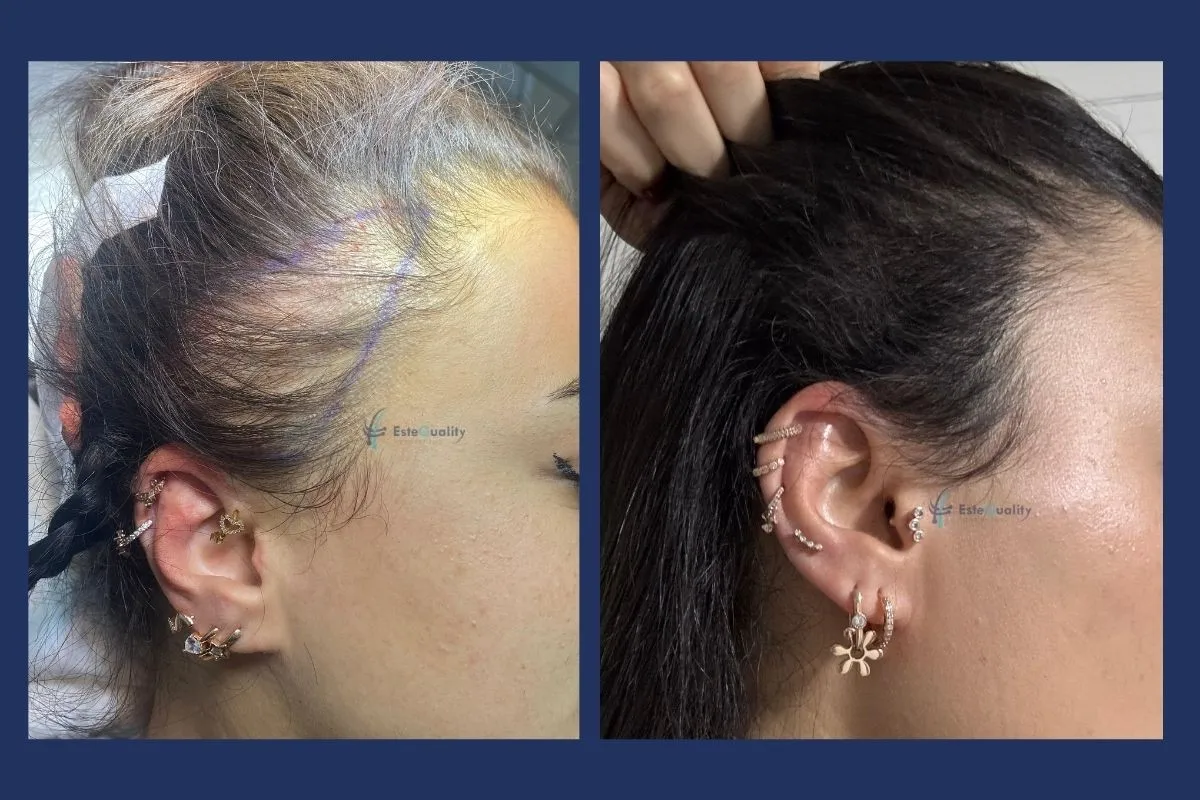
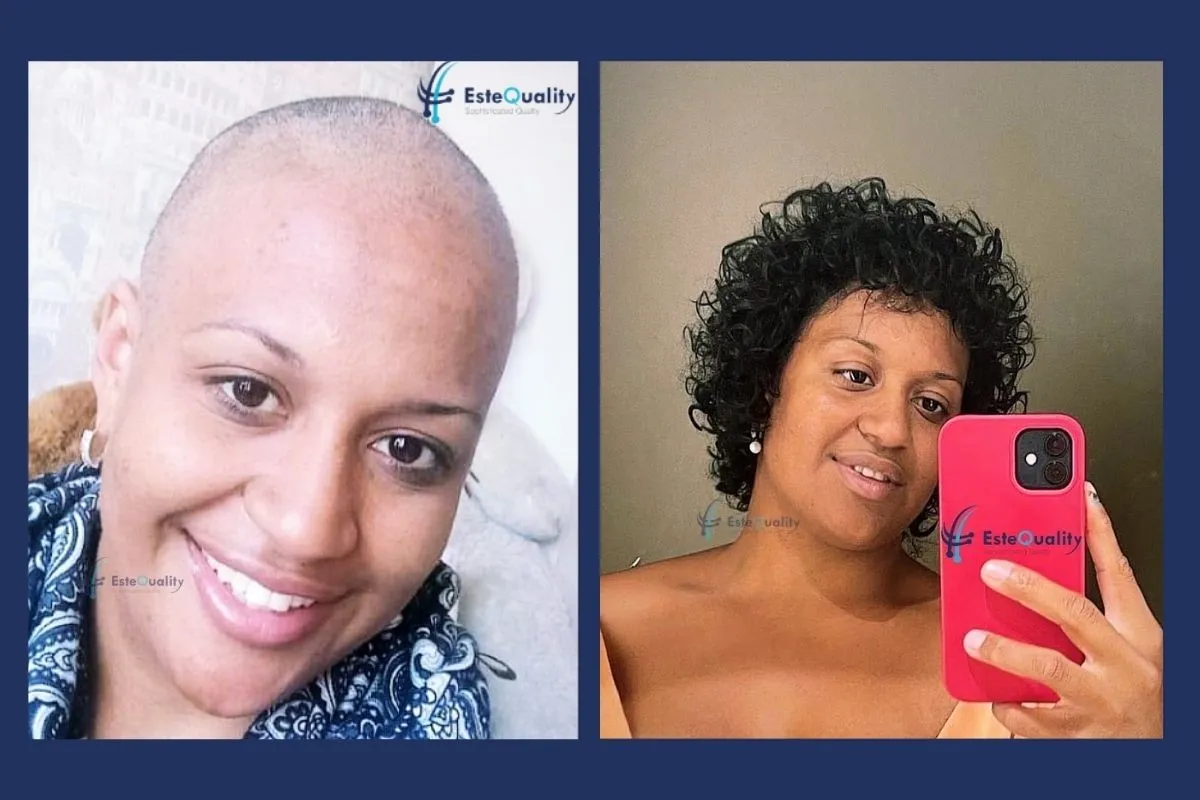
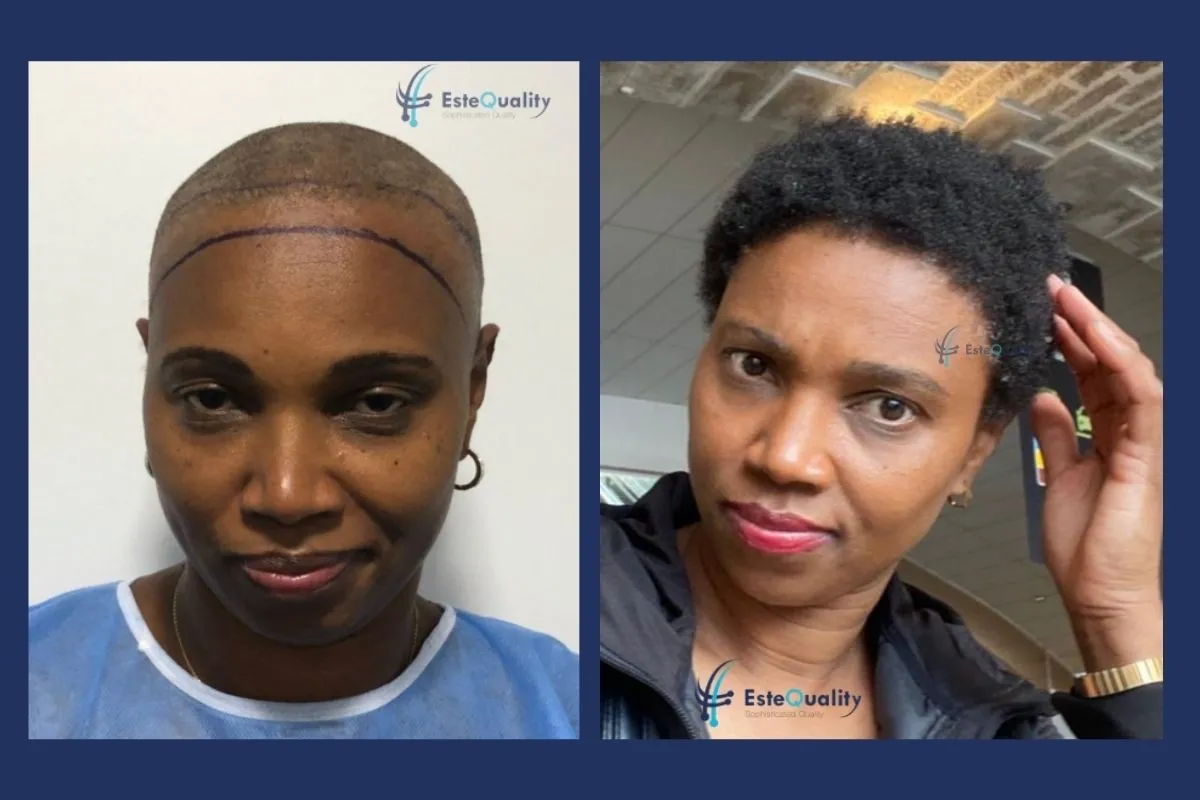
2,300 grafts, unshaven DHI. Facelift incisions can shift or thin the temple and sideburn hairline; here the hairline was rebuilt over the scar without shaving the surrounding hair. Patient's own mirror photos, before and at 12 months. Read the full case on our hair transplant for women page.2,500 grafts, unshaven DHI. Years of tight ponytails, buns or a firmly tied headscarf can pull the hairline back at the temples and above the ears (traction alopecia). The line was rebuilt without shaving; the after photo, at 6 months, is taken with the hair lifted to show the new temple. The pulling habit has to change too, or the loss returns. Read the full case on our hair transplant for women page.5,200 grafts, Sapphire FUE, shaved procedure. Diffuse, male-pattern loss in a woman in her 50s; she had been keeping her hair very short because of it, which is what the before photo shows. Result at 18 months. Shaved FUE is chosen over unshaven DHI when the area to cover is this large; unshaven is not always the right option. Read the full case on our hair transplant for women page.4,500 grafts, Sapphire FUE, shaved procedure, with most of the grafts placed at the hairline and the rest spread across the top. Before photo taken on the day of the procedure with the new hairline drawn. Result at 12 months, worn short and natural. Afro-textured hair gives good visual density per graft, but the curl makes extraction more demanding; it is planned accordingly. Read the full case on our hair transplant for women page.
Donor area repair
Rebuilding an overharvested or damaged donor area, often with beard grafts. See more on our donor area repair page.
1,700 grafts taken from the beard and implanted into the damaged scalp donor with DHI. Result at 12 months. The before photo is in clinic light, the after photo is the patient's own. Read the full case on our donor area repair page.
Scar repair
Placing grafts into surgical, burn or FUT scar tissue. See more on our scar repair page.
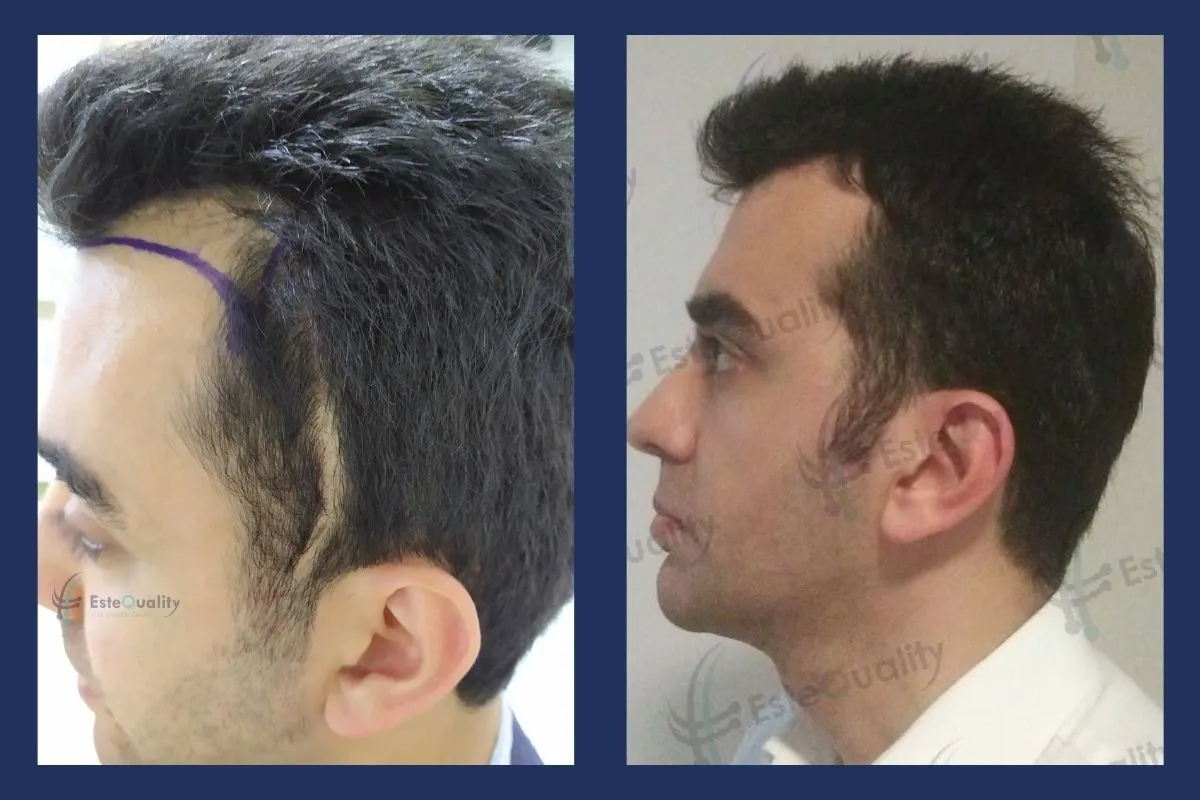
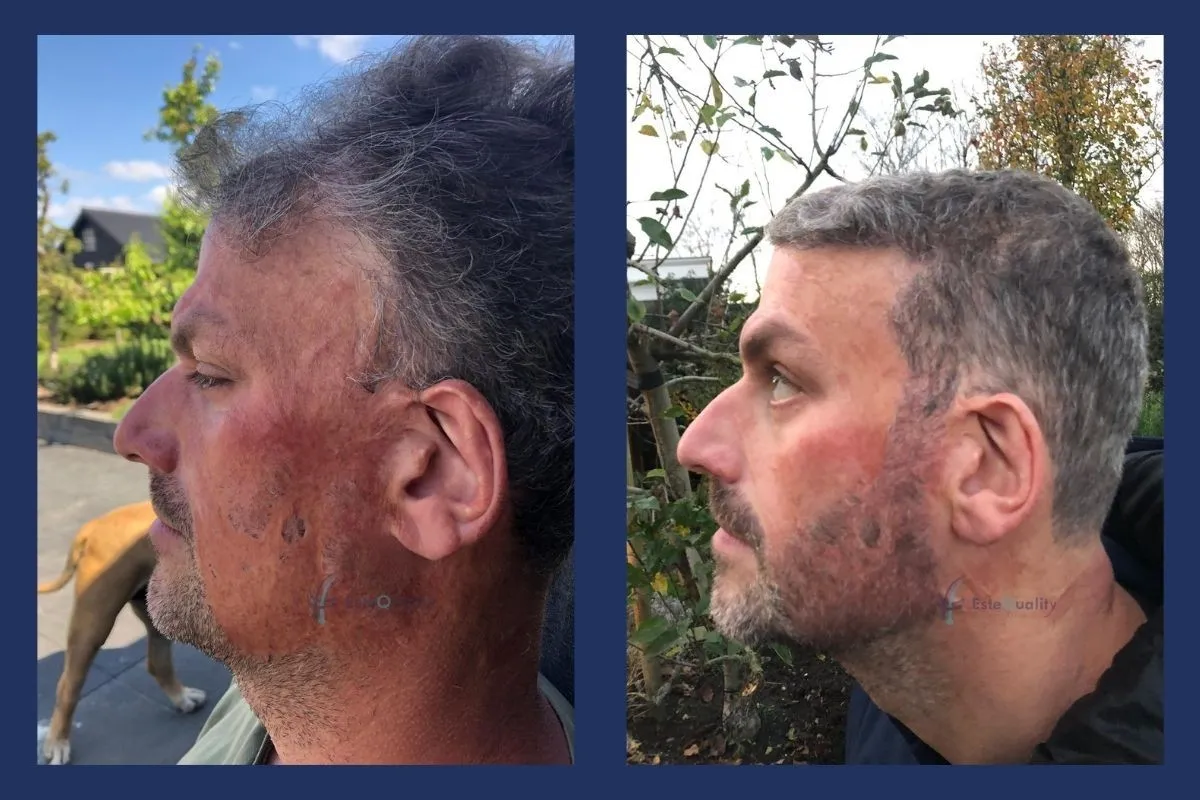
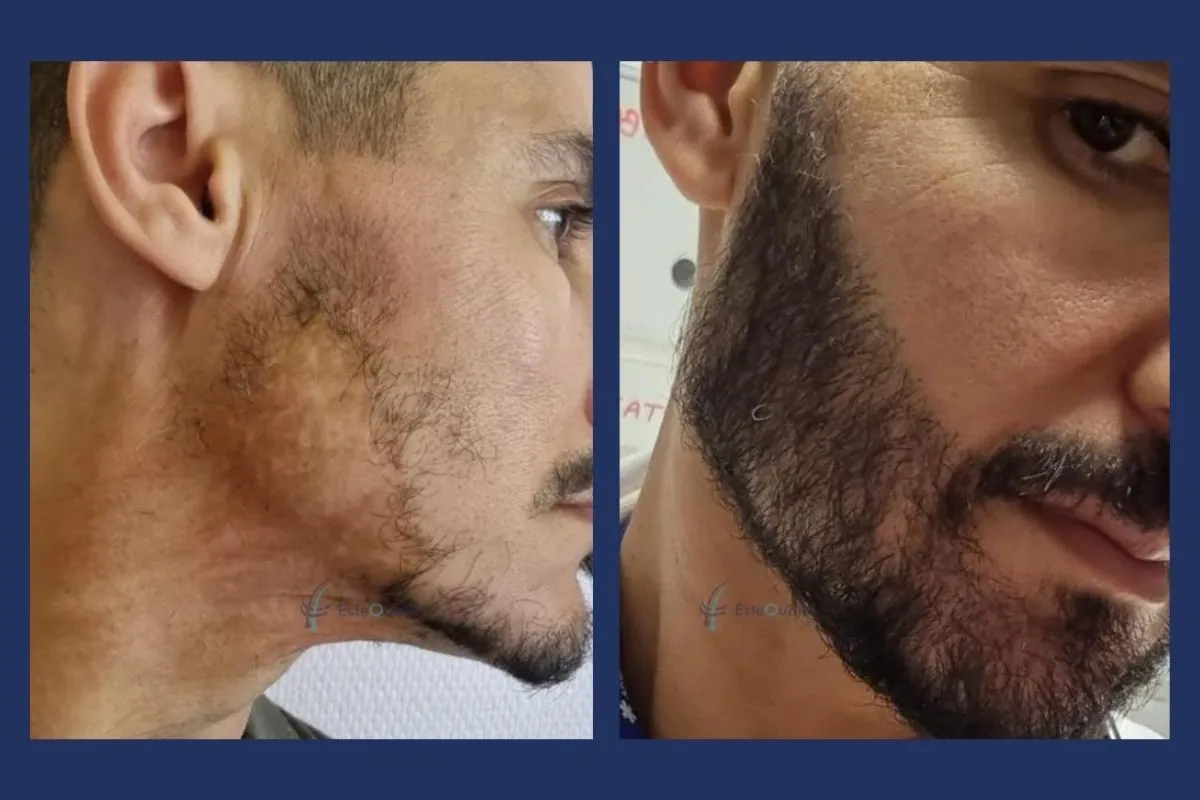
1,900 grafts, unshaven DHI, at 8 months. In this case an old surgical scar at the back was covered and the hairline rebuilt in the same session; the side view shows the hairline (the scar area is shown further down the page). The two photos were taken in different lighting; results vary. Read the full case on our scar repair page.Same session, 3,950 grafts in total: the frontal zone was the priority, 400 grafts were placed into the old FUT strip scar, and the crown (marked) received only limited coverage because donor supply was finite. At 11 months the scar line is no longer visible. Read the full case on our scar repair page.5,500 grafts, FUE, hair and beard in one plan. Scar tissue from burns has reduced blood supply, so graft survival is lower and less predictable than in healthy skin; density was planned accordingly and reviewed at 12 months. Individual results vary and depend on scar depth and maturity. Read the full case on our scar repair page.4,500 grafts, Sapphire FUE, placed into mature burn scar tissue on the cheek and jawline. After photo is a closer framing of the same side. Graft survival in scar tissue is lower than in healthy skin and varies by scar depth; this result is at 10 months. Read the full case on our scar repair page.