
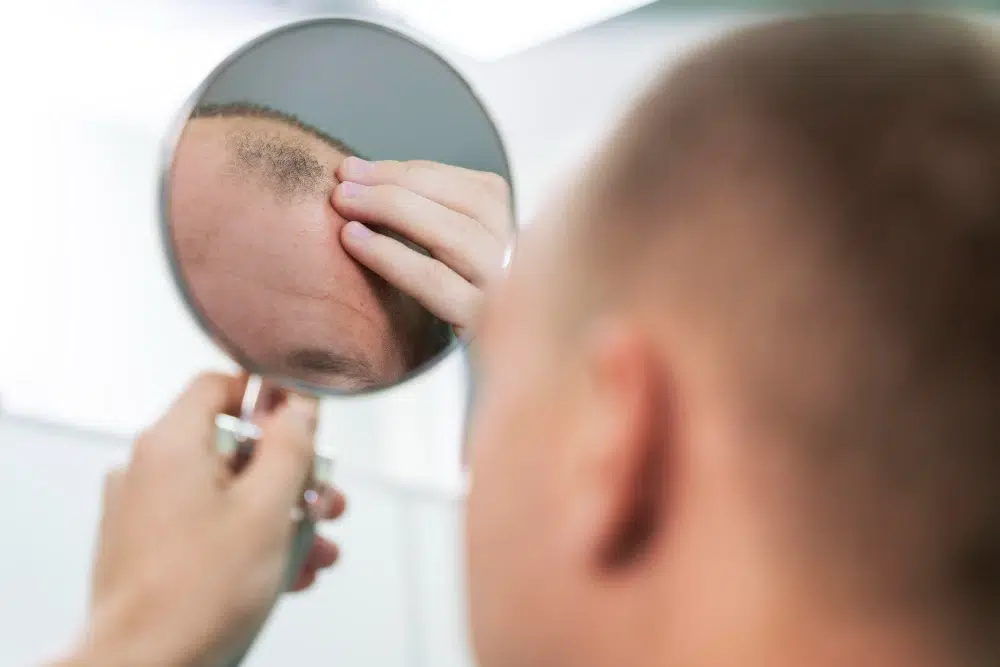
Hair loss tends to become most aggressive in your 30s and 40s, when hormonal changes, genetics, and lifestyle factors intersect. While men often begin to notice recession and thinning in their 20s, the rate of loss usually peaks in the following decades. Women may experience diffuse thinning, especially around menopause. Early intervention with personalized treatments such as PRP, DHI, or medical therapies can significantly slow or reverse the process. EsteQuality offers age-specific solutions to diagnose, treat, and restore hair health at every stage.
What Age Is Hair Loss Most Aggressive?
Hair loss is most aggressive between the ages of 30 and 45. During this period, genetic predisposition (especially androgenetic alopecia), hormonal fluctuations, and cumulative lifestyle stressors cause hair follicles to shrink faster and enter the resting phase more frequently.
- In men, hair loss often accelerates in the early 30s, especially if there’s a family history of male pattern baldness.
- In women, the most noticeable shedding usually occurs in the late 30s to mid-40s, particularly during perimenopause or menopause.
Without early intervention, hair density can decline rapidly during these years making timely diagnosis and treatment essential.
Why Does Hair Loss Accelerate at Certain Ages?
Several biological and environmental factors contribute to aggressive hair loss at specific age ranges:
The Role of Genetics
A strong family history of hair loss is the number one predictor. Genetic traits influence how early and how rapidly hair follicles shrink due to sensitivity to DHT (dihydrotestosterone) a byproduct of testosterone.
Hormonal Fluctuations
- Men may experience testosterone-related hair loss as early as their 20s.
- Women may notice increased shedding during pregnancy, menopause, or perimenopause, usually in their late 30s or 40s.
Lifestyle and Health Factors
- Poor nutrition
- High stress levels
- Smoking and alcohol consumption
- Scalp inflammation or skin conditions
These can all aggravate follicle deterioration, making hair loss more severe in your 30s and 40s.
Common Types of Hair Loss in Your 20s, 30s, 40s, and Beyond
Understanding what type of hair loss you’re facing can make treatment more effective. Here’s how it typically manifests across age groups:
In Your 20s
- Type: Early-stage androgenetic alopecia
- Signs: Receding hairline (especially at temples), subtle thinning on crown
- Who it affects most: Men with a family history of baldness
- Recommended action: Early diagnosis; consider non-surgical solutions like PRP or topical minoxidil
In Your 30s
- Type: Male or female pattern hair loss accelerates
- Signs: Visible scalp, widening part (women), increased daily shedding
- Risk factors: Hormonal imbalance, stress, dietary deficiencies
- Recommended action: Trichological assessment, possible DHI or FUE transplant for men
In Your 40s
- Type: Diffuse thinning, possible telogen effluvium episodes
- Signs: Noticeable loss in volume and coverage
- Who it affects most: Both men and women, often due to hormonal shifts
- Recommended action: Scalp therapy, mesotherapy, personalized medical treatments
50s and Beyond
- Type: Chronic thinning or bald patches
- Signs: Sparse coverage, especially at crown and frontal areas
- Underlying causes: Menopause, chronic conditions, medication side effects
- Recommended action: Combined treatments; evaluate transplant viability
Genetic vs. Lifestyle Triggers: When to Be Concerned
It’s important to know whether your hair loss is hereditary or triggered by external stressors — or a mix of both.
| Factor | Hereditary | Lifestyle |
| Onset Age | Early (teens–20s) | Varies |
| Progression | Gradual and predictable | Sudden or patchy |
| Pattern | Specific (e.g. receding hairline, crown) | Diffuse or erratic |
| Control | Harder without medical treatment | Often reversible |
Tip from EsteQuality: If you notice sudden or rapid hair loss without a family history, consult a hair specialist immediately — it could be a sign of underlying health issues or temporary shock loss.
Can You Prevent Aggressive Hair Loss with Early Intervention?
Yes, early intervention is crucial in slowing or even reversing hair loss. While some genetic factors can’t be changed, there are many proactive steps that can delay or reduce the severity of hair loss at any age.
Early Warning Signs to Watch For
- Excessive hair in the shower or on your pillow
- Noticeable thinning near temples or crown
- Itchy, flaky, or inflamed scalp
- Miniaturization of individual hair strands
Prevention Tips That Actually Work
- Use clinically backed products: Minoxidil, finasteride, and DHT blockers
- Improve scalp health: Regular washing, exfoliation, and hydration
- Nutritional support: Iron, zinc, biotin, omega-3s
- Stress management: Cortisol imbalance can accelerate hair loss
- Avoid harsh treatments: Minimize heat styling and chemical exposure
- Regular assessments: Trichoscopy and lab work can catch issues early
What EsteQuality Recommends for Managing Hair Loss
At EsteQuality, we believe no two hair loss cases are the same. That’s why we offer personalized diagnostics and treatment plans tailored to your age, hair type, and medical history.
Treatments We Offer Based on Age & Stage:
| Age Group | Recommended Services |
| 20s | Non-invasive therapies, scalp analysis, PRP treatment |
| 30s | DHI & Sapphire FUE hair transplant, hair mesotherapy |
| 40s | Stem cell hair restoration, vitamin infusion therapy |
| 50s+ | Combination packages, surgical restoration, hormone support |
🔬 Expert Insight: Many patients wait until hair loss becomes advanced before seeking help. Early diagnosis at EsteQuality allows for less invasive treatments with better long-term results.
