
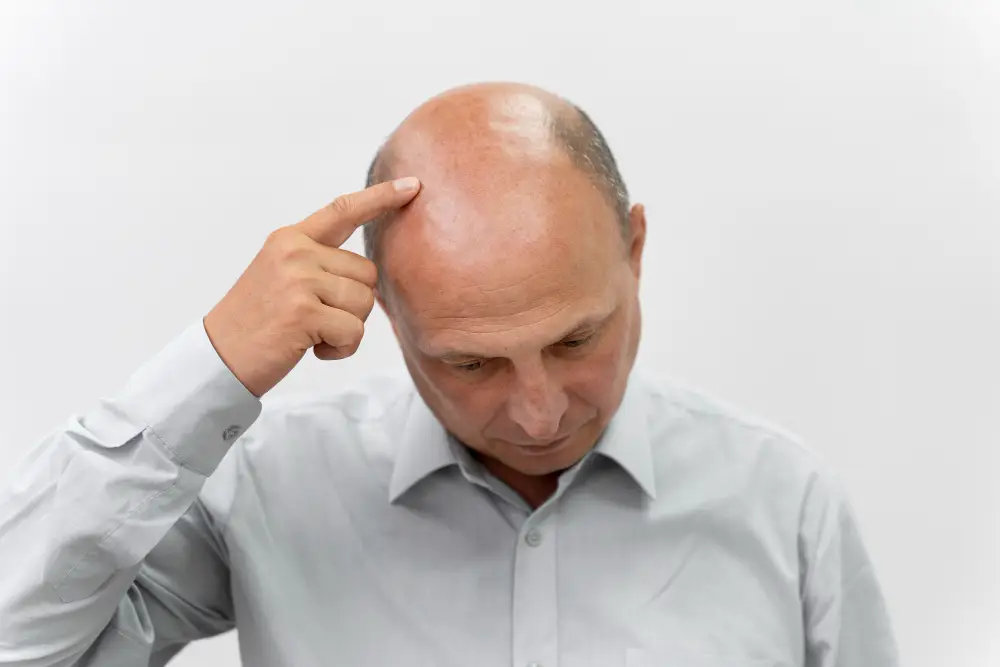
TL;DR: Dry shampoo does not usually cause permanent hair loss, but overuse can contribute to scalp buildup, itching, irritation, dryness, breakage, and temporary shedding. The main issue is that dry shampoo absorbs oil but does not truly clean the scalp. If it replaces regular washing for too long, product residue, sweat, oil, and dead skin can build up around the roots. This does not usually cause baldness, but it can make the scalp unhealthy and make existing shedding or breakage more noticeable. If hair loss continues after stopping dry shampoo, the cause may be genetic hair loss, telogen effluvium, scalp inflammation, or another condition that needs diagnosis.
Does dry shampoo cause hair loss?
Dry shampoo does not usually cause permanent hair loss. Used occasionally, dry shampoo is unlikely to damage healthy follicles. The problem starts when it is used too often, left on the scalp for too long, or used instead of washing the hair with water and shampoo. Dry shampoo can absorb oil and make hair look cleaner, but it does not remove sweat, dead skin cells, sebum, pollution, bacteria, styling residue, or product buildup. Over time, this can irritate the scalp and make hair feel dry, rough, or fragile.
The clearest answer is this: dry shampoo does not usually make follicles go bald, but overuse can create scalp conditions that increase breakage or shedding.
Why can dry shampoo be linked to hair shedding?
Dry shampoo can be linked to shedding when buildup, itching, or irritation affects the scalp environment. Hair follicles need a clean and balanced scalp. If dry shampoo sits on the scalp for days, it can mix with oil, sweat, and dead skin. This may lead to itching, flakes, clogged-looking buildup, or inflammation. Once the scalp starts itching, scratching can make the problem worse. Scratching may break fragile strands, irritate the roots, and make shedding look heavier during washing.
Common reasons dry shampoo may be linked with hair shedding include:
- Product buildup on the scalp
- Reduced regular washing
- Itching and scratching
- Dry, brittle hair texture
- Flaking or dandruff-like symptoms
- Scalp sensitivity
- Follicle irritation
- Breakage during brushing
- Using too much product near the roots
- Applying it for many days in a row
The issue is usually not dry shampoo alone. It is the combination of buildup, poor scalp cleansing, irritation, and fragile hair.
Is dry shampoo real shampoo?
Dry shampoo is not real cleansing shampoo. Dry shampoo absorbs oil, but it does not properly wash the scalp. It can make hair look fresher for a short time, but it does not replace water-based cleansing. This distinction matters because many people use dry shampoo as a shortcut for several days. That may work cosmetically, but the scalp still needs real cleansing to remove residue.
| Product | What it does | What it does not do |
| Dry shampoo | Absorbs oil and reduces greasy appearance | Does not truly clean the scalp |
| Regular shampoo | Removes oil, sweat, dirt, and residue | Does not give instant dry styling volume |
| Clarifying shampoo | Removes heavier buildup | Can be drying if overused |
| Medicated shampoo | Helps scalp conditions when needed | Should match the scalp problem |
A good routine can include dry shampoo, but it should not depend on dry shampoo only.
Is it hair loss or hair breakage from dry shampoo?
Most dry-shampoo-related “hair loss” is more likely breakage or irritation-related shedding, not permanent follicle loss. This distinction is important. Breakage means the hair strand snaps. Hair loss means the strand sheds from the root. Dry shampoo is more likely to make hair dry, rough, or brittle than to permanently damage follicles.
| Sign | More likely breakage | More likely hair loss |
| Short snapped pieces | Yes | No |
| Dry, rough texture | Yes | Sometimes |
| Hair breaks while brushing | Yes | No |
| Hair falls with a white bulb | No | Yes |
| Visible scalp thinning | No | Yes |
| Receding hairline | No | Yes |
| Crown thinning | No | Yes |
| Widening part line | No | Yes |
| Itchy or flaky scalp | Possible | Possible |
If most of the “fallen hair” is short, uneven, and broken, the problem is likely shaft breakage. If long hairs are falling from the root and density is changing, the issue may be true shedding. If shedding continues after stopping dry shampoo and improving scalp hygiene, the next step is properhair loss diagnosis and treatment options.
Can dry shampoo clog hair follicles?
Dry shampoo can contribute to scalp buildup around follicles if it is used too often and not washed out properly. “Clogging follicles” is often used too casually online. Dry shampoo does not automatically block every follicle or cause baldness. But residue can build up around the roots, especially when mixed with sweat, oil, styling products, and dead skin. This can make the scalp feel dirty, itchy, flaky, or tender. In sensitive people, buildup may worsen dandruff, folliculitis-like bumps, or scalp irritation.
Dry shampoo buildup is more likely when:
- It is used daily
- It is sprayed too close to the scalp
- Too much product is applied
- Hair is not washed for several days
- The scalp is already oily or flaky
- The person sweats heavily
- Styling products are layered on top
- The product is not brushed out properly
The safest rule is simple: dry shampoo should be washed out regularly. It should not sit on the scalp for days.
Can dry shampoo make hair look thinner?
Dry shampoo can make hair look thinner if it causes dryness, buildup, or breakage. At first, dry shampoo may make hair look fuller because it absorbs oil and adds texture. But overuse can do the opposite. Too much product can weigh down roots, leave a powdery residue, roughen the hair surface, and make fine hair look dull or separated.
Hair may look thinner because of:
- Root buildup
- Powder residue
- Dry, rough texture
- Breakage at the crown or hairline
- Flakes on the scalp
- Oily buildup mixed with product
- Hair clumping together instead of moving naturally
This is not the same as genetic thinning. But it can make existing hair loss more visible.
Can dry shampoo cause bald spots?
Dry shampoo does not usually cause bald spots. Bald spots are not a typical reaction to dry shampoo. Round or patchy hair loss may suggest alopecia areata, fungal infection, traction alopecia, or another scalp condition. Dry shampoo may worsen irritation in an already sensitive area, but it should not be blamed as the main cause of clear bald patches without evaluation.
| Pattern | More likely explanation |
| Round bald patches | Alopecia areata or infection |
| Receding hairline | Male pattern hair loss or traction |
| Crown thinning | Androgenetic alopecia |
| Widening part line | Female pattern hair loss |
| Diffuse shedding | Telogen effluvium or scalp stress |
| Short broken hairs | Breakage or friction |
| Itchy bumps | Scalp irritation or folliculitis |
If bald spots appear, dry shampoo should be stopped temporarily and the scalp should be assessed.
Can dry shampoo cause dandruff or itchy scalp?
Dry shampoo can worsen dandruff, itching, and scalp irritation if it replaces regular washing or stays on the scalp too long. Dry shampoo absorbs oil, but it does not remove dead skin, sweat, flakes, or product residue. If the scalp is already prone to dandruff, seborrheic dermatitis, folliculitis, or sensitivity, frequent dry shampoo use may make symptoms more noticeable.
Common warning signs include:
- Itchy scalp
- Flakes after application
- Redness
- Scalp tenderness
- Small bumps around follicles
- Burning after spraying
- Powdery buildup near the roots
- Hair feeling dry or stiff
If these symptoms appear, dry shampoo should be stopped temporarily and the scalp should be washed properly.
How often should you use dry shampoo?
Dry shampoo should be used occasionally between washes, not every day as a replacement for shampoo. A safe routine depends on scalp type, hair texture, sweating, and product amount. For most people, using dry shampoo one or two times between regular washes is more reasonable than applying it daily for a week.
A practical guide:
| Scalp or hair type | Safer use |
| Oily scalp | Occasional use between washes |
| Dry scalp | Use rarely or avoid |
| Dandruff-prone scalp | Use cautiously |
| Sensitive scalp | Patch test or avoid |
| Fine hair | Use small amounts |
| Thick hair | Brush out residue well |
| After heavy sweating | Wash instead of layering dry shampoo |
The key rule is simple: if the scalp feels itchy, coated, or uncomfortable, it needs washing—not more dry shampoo.
Who should avoid using dry shampoo too often?
People with dandruff, seborrheic dermatitis, scalp acne, folliculitis, eczema, psoriasis, or sensitive scalp should be more cautious with dry shampoo.
These scalp conditions can flare when oil, sweat, dead skin, and product residue sit too long on the scalp. Dry shampoo may make the hair look cleaner, but the scalp underneath may still be irritated.
Dry shampoo overuse is also risky for people who already have thinning hair. Fine or thinning hair can look fuller at first, but too much residue can make roots look separated, dull, and flat.
If hair loss continues after improving scalp hygiene, reviewing realhair transplant before and after results can help patients understand whether the issue is temporary shedding, breakage, or permanent density loss.
How can you use dry shampoo safely?
You can use dry shampoo safely by applying it lightly, keeping distance from the scalp, brushing out residue, and washing regularly. Dry shampoo should be used as a short-term cosmetic tool. It should not become the main scalp-cleansing method.
Safe use checklist:
- Spray from a distance.
- Apply only to oily roots.
- Use a small amount first.
- Let it sit briefly before brushing.
- Brush out visible residue.
- Do not apply layer after layer.
- Avoid using it on irritated scalp.
- Wash it out with regular shampoo.
- Do not use it immediately after heavy sweating.
- Stop if itching, burning, flakes, or bumps appear.
The best dry shampoo routine is one that improves appearance without leaving the scalp coated for days.
How do you know hair loss is not from dry shampoo?
Hair loss is less likely to be from dry shampoo if it follows a genetic, patchy, or progressive pattern. Dry shampoo-related problems usually involve buildup, itching, dryness, and breakage. It does not usually cause a classic receding hairline, crown thinning, or widening part line by itself.
Signs the cause is probably not dry shampoo:
- Receding temples
- Crown thinning
- Widening part line
- Round bald patches
- Heavy shedding lasting more than 3–6 months
- Hair loss that continues after stopping dry shampoo
- Family history of baldness
- Scalp pain, redness, or crusting
- Hair loss after stress, illness, medication, or weight loss
If the pattern looks progressive, the cause should be diagnosed before treatment is chosen.
When should you see a specialist for dry shampoo hair loss?
You should see a specialist if shedding is severe, scalp irritation continues, or thinning appears in a clear pattern. Temporary dryness or mild breakage can improve after stopping overuse and washing the scalp properly. But ongoing thinning needs proper evaluation.
See a specialist if you notice:
- Hairline recession
- Crown thinning
- Widening part
- Bald patches
- Scalp burning
- Persistent itching
- Flaking that does not improve
- Painful bumps on the scalp
- Shedding that continues after stopping dry shampoo
The goal is to separate product-related breakage from true follicle-level hair loss.
Can dry shampoo affect a hair transplant?
Dry shampoo should not be used on a healing scalp after a hair transplant unless the clinic approves it. After surgery, the scalp needs a clean and controlled healing environment. Dry shampoo residue can irritate the donor area, recipient area, or healing grafts if used too early. Patients planningDHI hair transplant in Istanbul orSapphire FUE hair transplant should follow clinic instructions on washing, product use, and when styling products can be restarted.
The safest rule is simple: do not apply dry shampoo to healing grafts, scabs, redness, or sensitive donor areas.
When can you use dry shampoo after a hair transplant?
Dry shampoo should only be used after the scalp has healed and the clinic confirms it is safe. The exact timing depends on scabbing, redness, sensitivity, graft stability, and the clinic’s aftercare protocol. Even after healing, dry shampoo should be used carefully and washed out properly.
Before using dry shampoo after a transplant, check that:
- Scabs are gone.
- The recipient area is healed.
- The donor area is comfortable.
- There is no redness or burning.
- There is no itching or infection sign.
- The clinic has approved styling products.
Dry shampoo is not worth risking graft irritation during early recovery.
Should you stop using dry shampoo if your hair is thinning?
You do not always need to stop dry shampoo completely, but you should stop overusing it. If thinning is present, the scalp needs better monitoring. Dry shampoo may hide oil temporarily, but it can also hide symptoms like buildup, flakes, irritation, and increased shedding.
A better approach:
- Pause dry shampoo for a few weeks.
- Wash the scalp regularly.
- Track whether itching or shedding improves.
- Avoid applying product directly to irritated areas.
- Check whether thinning follows a pattern.
- Get evaluated if density keeps decreasing.
If shedding improves after stopping dry shampoo, buildup or irritation may have contributed. If thinning continues, another cause is likely.
Does dry shampoo cause hair loss? Final verdict
Dry shampoo usually does not cause baldness, but overuse can contribute to buildup, scalp irritation, breakage, and temporary shedding. The main problem is not occasional use. The problem is using dry shampoo too often, leaving residue on the scalp, skipping real washing, and ignoring itching or flakes.
The clearest answer is this: dry shampoo is safe as an occasional styling tool, but it should not replace scalp cleansing. If hair loss continues after stopping dry shampoo, the cause should be diagnosed properly.
Frequently asked questions about dry shampoo and hair loss
Can dry shampoo make your hair fall out?
Dry shampoo can make shedding more noticeable if it causes buildup, itching, or scalp irritation. It does not usually cause permanent baldness.
Is it bad to use dry shampoo every day?
Daily dry shampoo use is not ideal for most people. It can lead to buildup, dryness, flakes, and scalp discomfort if it replaces regular washing.
Can dry shampoo cause bald spots?
Dry shampoo does not usually cause bald spots. Round bald patches may suggest alopecia areata, fungal infection, traction alopecia, or another scalp condition.
Can dry shampoo cause dandruff?
Dry shampoo may worsen flakes if it builds up on the scalp. It does not truly clean the scalp, so regular washing is still needed.
Can dry shampoo clog follicles?
Dry shampoo can contribute to residue around the roots if it is overused. This does not automatically cause baldness, but it can irritate the scalp environment.
Should I stop using dry shampoo if my scalp itches?
Yes, you should stop using dry shampoo if it causes itching, burning, redness, flakes, or bumps. The scalp should be washed and allowed to calm before using styling products again.
Can dry shampoo damage fine hair?
Dry shampoo can make fine hair dry, stiff, or more prone to breakage if overused. Fine hair also shows buildup more easily than thick hair.
When can I use dry shampoo after a hair transplant?
You should wait until the scalp has healed and the clinic confirms it is safe. Dry shampoo should not be used on healing grafts, scabs, redness, or sensitive donor areas.
