
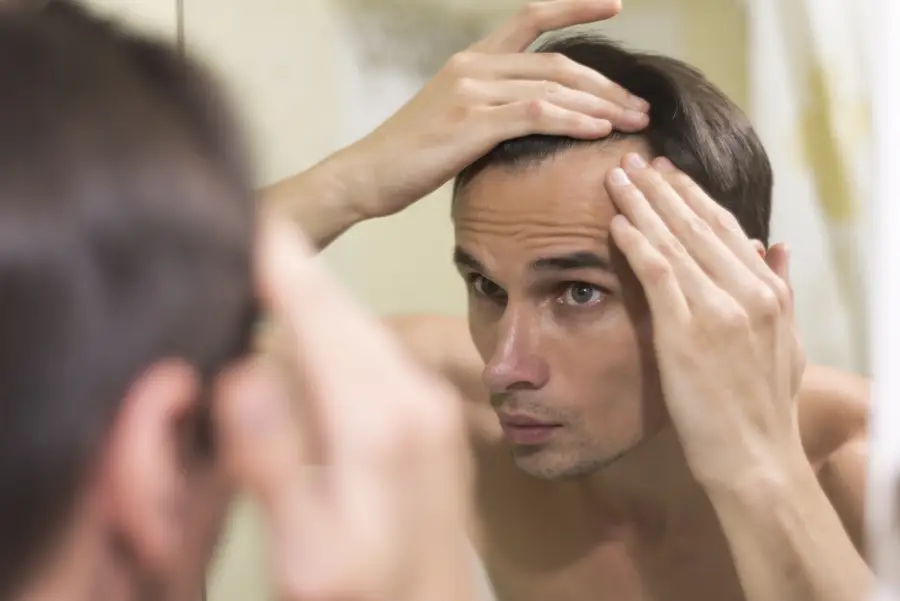
TL;DR: Hair dye does not usually cause permanent hair loss from the root, but it can cause hair breakage, scalp irritation, allergic reactions, or temporary shedding in some people. Most “hair loss” after dyeing is actually breakage from chemical damage, especially after bleaching or repeated coloring. True shedding can happen if the scalp becomes inflamed, burned, or allergic after dye exposure. Persistent thinning, receding hairline, widening part, or bald patches should not be blamed on hair dye alone; those patterns need proper diagnosis.
Does hair dye cause hair loss?
Hair dye does not usually cause permanent hair loss, but it can damage the hair shaft or irritate the scalp. Most hair dyes affect the visible hair strand, not the follicle under the skin. This means the more common problem is dryness, brittleness, split ends, and breakage. The hair may look thinner because strands snap, but the follicle may still be healthy. Hair dye becomes more concerning when it causes scalp burning, itching, redness, swelling, crusting, or allergic dermatitis. In severe inflammatory reactions, temporary shedding can happen because the scalp environment becomes irritated. Hair dye allergy is commonly linked with ingredients such as PPD, which is frequently used in darker permanent dyes and is a known trigger for scalp allergic contact dermatitis.
If the hair loss continues after the scalp has healed, the next step is not another hair product. It is proper hair loss diagnosis and treatment options to check whether the real cause is chemical damage, telogen effluvium, genetic hair loss, scalp disease, or another factor.
Why does hair fall out after dyeing?
Hair may seem to fall out after dyeing because chemical processing weakens the strand or irritates the scalp. There are three common reasons. First, the hair shaft becomes weaker and breaks during washing, brushing, or styling. Second, dye-related scalp irritation increases shedding. Third, a person may already have hair loss, and dyeing simply makes the thinning more noticeable.
Common triggers after dyeing include:
- Bleach damage
- Repeated permanent dyeing
- Overlapping color on already processed hair
- High-volume developer
- Heat styling after coloring
- Scalp allergy
- Chemical burns
- Scratching after irritation
- Poor aftercare
- Existing pattern hair loss
The practical answer is simple: hair falling after dyeing is not always true hair loss. Very often, it is chemically weakened hair breaking off.
Is it hair loss or hair breakage after dyeing?
Most hair “loss” after dyeing is actually breakage, where damaged strands snap instead of falling from the root. This distinction matters because the solution is different. Breakage needs hair-shaft repair, less chemical stress, better conditioning, and time. True hair loss needs scalp and follicle evaluation.
| Sign | More likely breakage | More likely hair loss |
| Short broken pieces | Yes | No |
| Hair strands of different lengths | Yes | Sometimes |
| Dry, rough, frizzy texture | Yes | Sometimes |
| Hair falls with a white bulb | No | Yes |
| Visible scalp thinning | No | Yes |
| Receding hairline | No | Yes |
| Crown thinning | No | Yes |
| Widening part line | No | Yes |
| Burning or itchy scalp | Possible | Possible |
A simple check helps. If most fallen hairs are short, snapped, rough, and uneven, breakage is more likely. If long hairs fall from the root with a small bulb, shedding is more likely.
Can bleach cause hair loss?
Bleach is more likely than regular dye to cause breakage because it can weaken the outer and inner structure of the hair shaft. Bleaching works by lifting pigment from the hair. This process can make the cuticle rough, reduce strength, and leave the strand dry and fragile. Excessive bleaching has been shown to create visible structural damage, including brittle and roughened hair surfaces.
Bleach damage is more likely when:
- Hair is lightened too many levels at once.
- Bleach is applied repeatedly to the same areas.
- The hair is already dry or chemically treated.
- Heat styling is used soon after bleaching.
- Bleach contacts the scalp and causes burning.
- The processing time is too long.
- Strong developers are used too often.
Bleach usually damages the strand more than the follicle. But if the scalp is burned or inflamed, shedding risk can increase.
Can hair dye cause scalp irritation or allergy?
Yes, hair dye can cause scalp irritation or allergic contact dermatitis in sensitive people. This can happen after one application or after years of using the same product. Allergy can develop over time, especially with repeated exposure to certain dye ingredients. PPD allergy is one of the best-known examples in permanent hair dye reactions.
Warning signs include:
- Itching
- Burning
- Redness
- Swelling
- Scalp tenderness
- Flaking
- Oozing
- Crusting
- Eyelid or facial swelling
- Rash around the ears, neck, or hairline
If these symptoms appear after dyeing, the person should not apply more dye to “fix” the color. The scalp needs to recover first.
Can allergic reaction to hair dye cause shedding?
A severe allergic or inflammatory reaction to hair dye can trigger temporary shedding in some cases. The mechanism is not the same as genetic baldness. The follicle may shed because the scalp goes through inflammation and stress. In rare severe cases, major hair loss has been reported after repeated exposure to PPD-containing dye. This type of shedding may improve after the reaction is treated and the scalp calms down. But if shedding continues, becomes patchy, or follows a male or female pattern, another diagnosis may be involved.
The key point is clear: hair dye reactions can trigger shedding, but they do not explain every type of hair loss.
Does hair dye cause permanent baldness?
Hair dye does not usually cause permanent baldness. Permanent baldness is more commonly linked with androgenetic alopecia, scarring alopecia, autoimmune hair loss, untreated scalp disease, or severe follicle injury. Hair dye is more likely to cause breakage and temporary shedding than permanent follicle loss.
Permanent damage becomes more concerning when there is:
- Chemical burn
- Severe scalp inflammation
- Infection after scratching
- Scarring
- Repeated allergic reactions
- Long-term untreated scalp disease
- Hair loss that continues after the dye reaction heals
If the hairline is receding, the crown is thinning, or the part line is widening, hair dye may not be the main cause.
Can frequent hair dyeing make hair thinner?
Frequent hair dyeing can make hair look thinner by increasing dryness, breakage, split ends, and shaft damage. This is not the same as follicle-level hair loss. The hair may look less dense because damaged strands snap before they reach their normal length. This is especially common when permanent dye, bleach, heat styling, and chemical straightening are combined.
Hair is more likely to look thinner when:
- Dye is applied too often.
- Bleach overlaps previously lightened hair.
- High-volume developer is used repeatedly.
- Hair is brushed aggressively after coloring.
- Heat styling is used on already fragile hair.
- The scalp becomes itchy or inflamed after dyeing.
- The person already has pattern hair loss underneath.
The main point is simple: frequent coloring can reduce hair quality, but it does not automatically mean the follicles are permanently damaged.
How can you reduce hair damage from hair dye?
You can reduce hair dye damage by spacing out color sessions, avoiding repeated bleach, patch testing, and protecting the hair shaft after coloring.
The goal is to reduce chemical overload. Hair that is already dry, brittle, or overprocessed should not be bleached again until the strand condition improves.
A safer dye routine includes:
| Step | Why it helps |
| Do a patch test | Reduces allergy risk |
| Avoid overlapping bleach | Prevents repeated shaft damage |
| Space out dye sessions | Gives hair time to recover |
| Use lower heat styling | Reduces breakage risk |
| Condition regularly | Improves softness and manageability |
| Avoid coloring irritated scalp | Prevents worsening inflammation |
| Trim split ends | Reduces further breakage |
| Stop if burning occurs | Protects scalp health |
A burning scalp is not a normal part of coloring. If the scalp burns, swells, crusts, or oozes, the dye should be washed out and the scalp should be evaluated before any new chemical treatment.
How do you know hair loss is not from hair dye?
Hair loss is less likely to be from hair dye if the pattern is progressive, genetic, patchy, or continues after the scalp has recovered. Hair dye damage usually affects the hair shaft. True hair loss from the root follows different patterns. If the hairline is receding, the crown is thinning, or the part line is widening, the main cause may be pattern hair loss rather than dye damage.
Signs the cause may not be hair dye:
- Receding temples
- Crown thinning
- Widening part line
- Round bald patches
- Sudden diffuse shedding after stress or illness
- Hair loss without scalp irritation
- Family history of baldness
- Shedding that continues months after dyeing
If the issue looks like true thinning rather than breakage, comparing realistichair transplant before and after results can help patients understand what surgical restoration can and cannot improve.
When should you see a specialist after hair dye hair loss?
You should see a specialist if shedding is severe, the scalp is inflamed, or thinning continues after the dye reaction has healed. Mild dryness or breakage after coloring can often improve with better hair care. But scalp symptoms and ongoing hair loss need a proper diagnosis.
See a specialist if you notice:
- Burning or pain after dyeing
- Scalp swelling
- Oozing or crusting
- Severe itching
- Redness that does not settle
- Patchy bald areas
- Hairline recession
- Crown thinning
- Widening part line
- Shedding lasting more than 3–6 months
The safest approach is to separate chemical breakage from medical hair loss before choosing treatment.
Can hair dye affect a hair transplant?
Hair dye should be avoided around the hair transplant period because the scalp needs time to heal before chemical products are applied. Coloring too early after surgery can irritate the scalp, disturb healing, and increase discomfort. The transplanted area and donor area both need time to recover before dye, bleach, toner, or harsh chemicals are used. Patients planning DHI hair transplant in Istanbul or Sapphire FUE hair transplant should follow clinic guidance before coloring transplanted or donor-area hair.
The key rule is simple: do not dye healing skin. Wait until the scalp is fully recovered and the clinic confirms that coloring is safe.
When can you dye your hair after a hair transplant?
Most patients should wait until the scalp has fully healed before dyeing hair after a transplant. The exact timing depends on healing, redness, scabbing, sensitivity, and the surgeon’s protocol. Bleach and strong permanent dyes are more irritating than gentle color products, so they should be approached more carefully.
Before dyeing after a transplant, check that:
- Scabs are gone.
- Redness has settled.
- There is no burning or itching.
- The donor area is comfortable.
- The recipient area is healed.
- The clinic has cleared chemical use.
Even after healing, patch testing is important because the scalp can be more sensitive after surgery.
Should you dye your hair if you already have hair loss?
You can dye your hair if you have hair loss, but the method should be gentle and the scalp should be healthy first. If the hair is already thin, dry, or fragile, aggressive coloring can make density look worse by increasing breakage. If the scalp is itchy, inflamed, flaky, or painful, dyeing should be postponed until the scalp condition is treated.
A safer approach includes:
- Avoid bleach if hair is fragile.
- Avoid dyeing during active scalp irritation.
- Use professional application when possible.
- Avoid overlapping chemical treatments.
- Choose softer color changes instead of drastic bleaching.
- Diagnose the hair loss pattern before assuming dye is the cause.
Hair dye can change color, but it cannot treat thinning. If density is decreasing, the underlying cause still needs evaluation.
Does hair dye cause hair loss? Final verdict
Hair dye usually does not cause permanent hair loss, but it can cause breakage, scalp irritation, allergy-related shedding, or make existing hair loss more noticeable. Most post-dye “hair loss” is actually hair breakage. This happens when the hair shaft becomes dry, weak, and brittle after chemical processing. True shedding is more likely when the scalp becomes inflamed, burned, or allergic after dye exposure.
The clearest answer is this: hair dye does not usually make healthy follicles go bald, but unsafe coloring can damage the hair and scalp. Persistent thinning, bald patches, crown loss, or receding hairline should be diagnosed separately.
Frequently asked questions about hair dye and hair loss
Can box dye cause hair loss?
Box dye can cause breakage or scalp irritation if used incorrectly, but it does not usually cause permanent hair loss. The risk is higher with repeated use, overlapping color, strong developer, or allergic reaction.
Can bleach make hair fall out?
Bleach can make hair break off, especially if the hair is already damaged. This can look like hair loss, but it is often shaft breakage rather than root shedding.
Can permanent hair dye damage hair follicles?
Permanent hair dye usually affects the hair shaft more than the follicle. Follicle damage is more concerning if there is chemical burn, severe inflammation, infection, or scarring.
How long does hair shedding last after dyeing?
If shedding is caused by scalp inflammation, it may improve after the scalp heals. If shedding continues for months, the cause may be telogen effluvium, pattern hair loss, or another condition.
Will hair grow back after hair dye damage?
Hair can improve if the follicle is healthy and the main issue is breakage. Damaged lengths cannot be fully repaired permanently, but new growth can be healthier once chemical damage is reduced.
Should I dye my hair if I have scalp itching?
No, you should not dye your hair while the scalp is itchy, inflamed, painful, or flaky. Coloring an irritated scalp can make symptoms worse.
Should I dye my hair if I have hair thinning?
You can, but aggressive bleaching or frequent permanent dye may make thin hair look weaker. A gentle color plan is safer, and the thinning pattern should be diagnosed separately.
When can I dye my hair after a hair transplant?
You should wait until the scalp has fully healed and your clinic confirms it is safe. Dyeing too early can irritate the donor or recipient area.
