
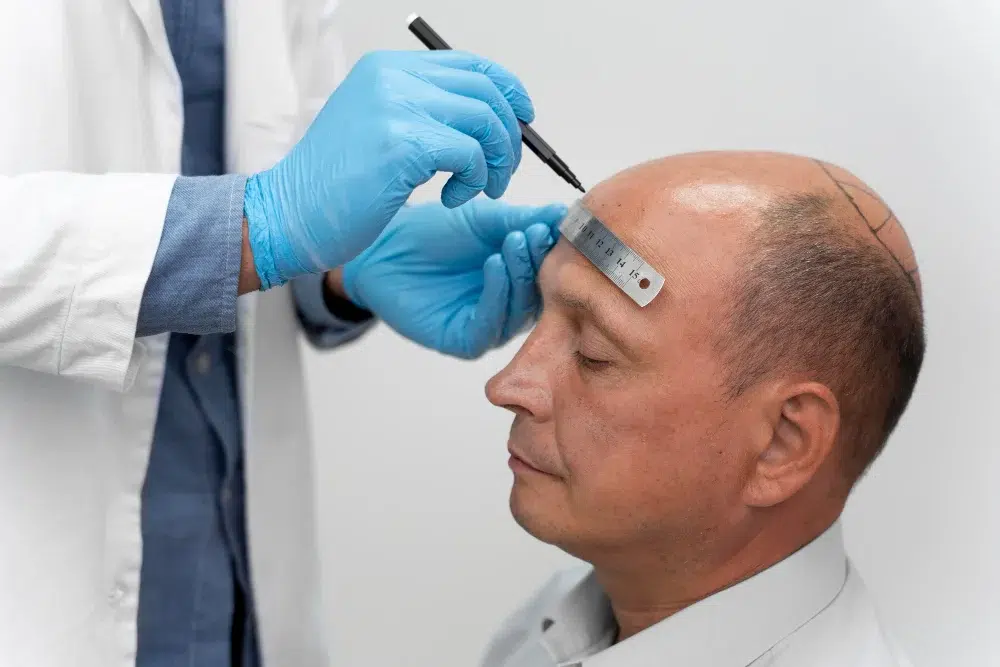
DHI and FUT are two different hair transplant methods. FUT is an older, more invasive technique that leaves a linear scar and requires stitches. DHI is a modern, minimally invasive approach using a special implanter pen, offering faster recovery, no visible scarring, and more natural results. While FUT may be suitable for patients needing a high number of grafts on a budget, DHI is generally the better choice for those seeking precision, comfort, and a scar-free outcome.
What Is DHI (Direct Hair Implantation)?
DHI is a refined version of FUE, where hair follicles are extracted one by one and implanted directly into the scalp using a special implanter pen without the need to open channels first.
Key features:
- No scalpel or stitches
- Short recovery time
- Precise control over angle, direction, and depth
- Suitable for frontal hairlines and small areas needing density
What Is FUT (Follicular Unit Transplantation)?
FUT, also called the strip method, involves surgically removing a strip of scalp from the donor area. Hair follicles are dissected under a microscope and implanted into balding areas.
Key features:
- Leaves a permanent linear scar
- Typically allows for more grafts in one session
- Longer recovery due to sutures and wound healing
Key Differences Between DHI and FUT
The main difference between DHI and FUT lies in how the hair follicles are extracted and implanted. FUT involves cutting a strip of scalp, which leaves a linear scar and requires stitches and longer healing. DHI, on the other hand, extracts follicles one by one and uses a special implanter pen to place them directly into the scalp with no visible scarring and quicker recovery. DHI offers greater precision, especially for designing natural-looking hairlines, while FUT may be preferred in cases needing large graft numbers in fewer sessions.
| Feature | DHI (Direct Hair Implantation) | FUT (Follicular Unit Transplantation) |
| Extraction Method | Individual follicle extraction (FUE-based) | Strip of scalp removed surgically |
| Implantation Method | Direct implantation with implanter pen | Manual placement after creating incisions |
| Tools Used | DHI pen, micro-punch | Scalpel, forceps, and microscope |
| Scarring | No visible scarring | Linear scar in donor area |
| Stitches Required | No | Yes |
| Invasiveness | Minimally invasive | More invasive |
| Healing Time | 5–7 days | 10–14 days |
| Hairline Precision | Very high – ideal for natural hairlines | Less precise |
| Best Suited For | Smaller areas, natural design, low trauma | High graft volume in a single session |
| Graft Survival Rate | Very high (controlled depth and angle) | Good, but depends on surgeon skill |
| Pain & Discomfort | Minimal | Moderate to high |
DHI is typically favored by patients who want a scar-free, high-precision transplant, especially in visible areas like the hairline or temples. FUT may still be used when a large number of grafts are needed in one session and scarring is not a major concern.
DHI: Advantages and Limitations
Pros of DHI:
- No stitches or visible scars
- Minimal trauma and faster healing
- Greater control over angle and direction of implantation
- Ideal for hairline design and dense packing
- Suitable for patients who want minimal downtime
Cons of DHI:
- Slightly higher cost due to advanced tools and time
- Not always ideal for large balding areas needing many grafts
- Requires highly skilled technicians for best results
FUT: Advantages and Limitations
Pros of FUT:
- Allows a large number of grafts in one session
- Often slightly more affordable per graft
- Suitable for patients with significant baldness
Cons of FUT:
- Leaves a permanent linear scar
- Requires stitches and longer recovery
- More discomfort during and after the procedure
- Limited hairstyle options post-op (scar visibility
Who Should Choose DHI or FUT?
DHI is ideal for patients with mild to moderate hair loss, especially in visible areas like the hairline or temples. It’s also best for those who want a natural look, faster recovery, and no scarring. On the other hand, FUT is more suitable for patients with advanced hair loss who need a large number of grafts in a single session and are less concerned about scarring or longer downtime. Your choice should depend on your hair loss pattern, lifestyle, and expectations from the procedure.
Based on Hair Loss Pattern
- DHI is ideal for patients with mild to moderate hair loss, especially in the frontal hairline or crown.
- FUT is better suited for advanced baldness, where a high graft count is needed in fewer sessions.
Based on Budget and Recovery Preference
- Choose DHI if you want faster recovery, no visible scarring, and a natural-looking finish.
- Choose FUT if you have a tight budget, don’t mind a scar, and need a large area covered quickly.
FAQs: DHI vs FUT Hair Transplants
1. Which method leaves a scar DHI or FUT?
Only FUT leaves a linear scar in the donor area, as it involves removing a strip of skin. DHI leaves no visible scarring since it extracts individual follicles.
2. Is DHI more expensive than FUT?
Yes, DHI is generally more expensive due to its advanced technique, specialized tools (DHI pen), and longer surgical time. However, many patients find the results worth the investment.
3. Which technique has a faster recovery time?
DHI has a shorter recovery time, usually 5–7 days. FUT takes longer (10–14 days) due to the incision and stitches in the donor area.
4. Can I get the same number of grafts with DHI as with FUT?
FUT allows for more grafts in a single session. DHI is better for small to medium areas, but multiple sessions may be needed for extensive baldness.
5. Which method looks more natural?
DHI provides more natural-looking results, especially for the hairline and temples, due to its precise control over implantation angle and depth.
