
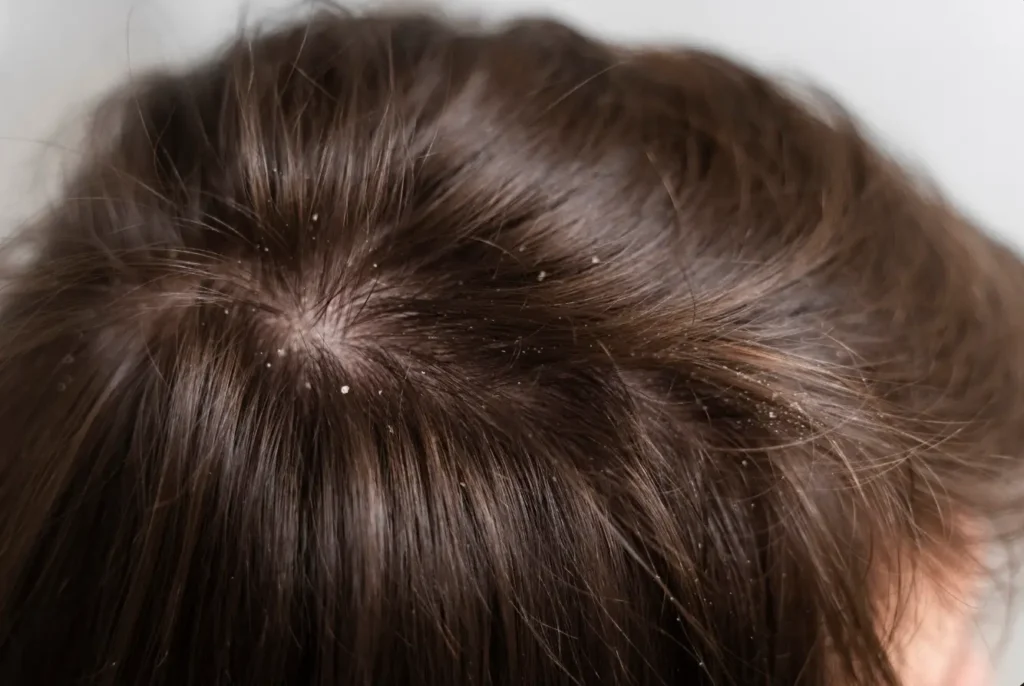
TL;DR: Dandruff usually does not directly cause permanent hair loss. Mild flakes alone do not destroy hair follicles. However, dandruff can be linked to temporary shedding or hair breakage when it comes with severe itching, scratching, scalp inflammation, seborrheic dermatitis, psoriasis, fungal infection, or folliculitis. The key point is simple: flakes alone are usually not the problem; inflammation and scratching are the real risk factors.
Does dandruff cause hair loss?
Dandruff usually does not directly cause permanent hair loss. Mild dandruff mainly causes white or yellowish flakes on the scalp. It can be annoying, visible, and itchy, but it does not usually damage the follicle enough to cause permanent baldness. Hair loss becomes more likely when dandruff is severe, itchy, inflamed, or connected to another scalp condition. Constant scratching can break hair shafts, irritate the scalp, and worsen shedding. In that case, the problem is not simple dandruff alone; it is the inflammation and trauma around the scalp.
Why can dandruff be linked to hair loss?
Dandruff can be linked to hair loss when itching, scratching, and inflammation disturb the scalp environment. Hair follicles need a stable scalp environment. When the scalp is inflamed, greasy, itchy, or irritated, the hair cycle can be affected. Scratching also creates physical damage. This can cause hairs to break near the scalp or shed more than usual.
The most common pathway looks like this:
| Step | What happens |
| Dandruff starts | Flakes appear on the scalp |
| Itching increases | The person scratches more often |
| Scalp becomes irritated | Redness, soreness, or inflammation develops |
| Hair shafts weaken | Hair may break during washing or brushing |
| Shedding becomes noticeable | More hair appears on pillows, towels, or in the shower |
This type of hair loss is usually temporary if the scalp is treated early. Permanent hair loss is more concerning when there is infection, scarring inflammation, or untreated disease affecting the follicles.
Is dandruff the same as seborrheic dermatitis?
Dandruff is often considered a mild form of seborrheic dermatitis, but seborrheic dermatitis is more inflammatory. The American Academy of Dermatology says dandruff may be considered the mildest form of seborrheic dermatitis. Both can cause white-to-yellowish flakes, but seborrheic dermatitis can also cause redness, greasy scale, swelling, and more persistent itching.
The practical difference is clear:
| Feature | Dandruff | Seborrheic dermatitis |
| Flaking | Yes | Yes |
| Itching | Mild or moderate | Often stronger |
| Redness | Usually absent | Common |
| Greasy scale | Sometimes | Common |
| Hair loss risk | Low | Higher if inflamed or scratched |
| Needs medical care? | Sometimes | More likely if persistent |
So the correct answer is: simple dandruff rarely causes hair loss, but inflamed seborrheic dermatitis can contribute to shedding or breakage.
What type of hair loss can dandruff cause?
Dandruff-related hair loss is usually temporary shedding or breakage, not permanent baldness. There are two common patterns. The first is hair breakage, where the strand snaps because of scratching, harsh washing, or scalp irritation. The second is temporary shedding, where inflammation or physical stress pushes more hairs into the shedding phase.
This is different from male or female pattern hair loss. Pattern hair loss usually causes a receding hairline, crown thinning, or a widening part line. Dandruff-related shedding is more likely to appear with flakes, itching, redness, or scalp discomfort.
The key distinction is:
| Hair problem | What it usually looks like |
| Dandruff-related breakage | Short broken hairs, itching, flakes |
| Dandruff-related shedding | More hair fall with scalp irritation |
| Male pattern hair loss | Receding hairline, crown thinning |
| Female pattern hair loss | Widening part, reduced density |
| Alopecia areata | Round bald patches |
| Fungal infection | Patchy loss, scale, redness, possible pain |
If hair loss continues after dandruff improves, the cause is probably not dandruff alone.
Can scratching dandruff make hair fall out?
Yes, aggressive scratching can cause hair breakage and may worsen temporary shedding. Scratching does not usually kill healthy follicles immediately, but repeated trauma can damage the hair shaft and irritate the scalp barrier. If the scalp becomes inflamed or infected, shedding can become worse.
This is why dandruff treatment should focus on two goals: controlling flakes and stopping the itch-scratch cycle. If the scalp keeps itching despite anti-dandruff shampoo, the diagnosis may be seborrheic dermatitis, psoriasis, eczema, contact dermatitis, or fungal infection.
When is dandruff a sign of a bigger scalp problem?
Dandruff may signal a bigger scalp problem if flakes come with redness, pain, thick scale, bleeding, crusting, or bald patches. Simple dandruff is usually mild. It should not cause severe pain, open sores, pus, or patchy bald spots. Those symptoms need medical evaluation.
Red flags include:
- Thick plaques or heavy scale
- Circular bald patches
- Pain, burning, or tenderness
- Bleeding from scratching
- Yellow crusting or pus
- Severe scalp redness
- Hair loss that keeps progressing
- Flaking that does not improve with medicated shampoo
For EsteQuality’s audience, the message should be direct: if flakes and hair loss appear together, treat the scalp first and diagnose the type of hair loss before considering cosmetic or surgical solutions.
What conditions can look like dandruff and cause hair loss?
Several scalp conditions can look like dandruff but carry a higher hair loss risk than simple flakes. Simple dandruff usually causes loose flakes without major redness or pain. If there is inflammation, thick scale, patchy loss, crusting, or tenderness, the problem may be something else.
| Condition | Looks like dandruff? | Hair loss risk |
| Mild dandruff | Yes | Low |
| Seborrheic dermatitis | Yes | Possible shedding if inflamed |
| Scalp psoriasis | Yes | Possible breakage or shedding |
| Tinea capitis | Yes | Can cause patchy hair loss |
| Folliculitis | Sometimes | Can scar in severe cases |
| Contact dermatitis | Sometimes | Temporary shedding possible |
How can you treat dandruff to reduce hair loss risk?
You can reduce dandruff-related hair shedding risk by treating flakes, controlling itching, and stopping repeated scratching. The goal is not just to remove visible flakes. The goal is to reduce scalp irritation. If itching improves, scratching decreases. If scratching decreases, breakage and inflammation-related shedding are less likely.
Common anti-dandruff ingredients include:
- Ketoconazole
- Selenium sulfide
- Zinc pyrithione
- Salicylic acid
- Coal tar
- Ciclopirox
Can anti-dandruff shampoo stop hair loss?
Anti-dandruff shampoo can help if hair loss is linked to itching, flakes, and scalp inflammation, but it will not treat genetic hair loss. If the shedding comes from scratching or seborrheic dermatitis, medicated shampoo may reduce the trigger. But it cannot reverse male pattern baldness, female pattern hair loss, alopecia areata, or inactive follicles.
The clean answer is: anti-dandruff shampoo treats the scalp problem, not every type of hair loss.
How often should you use dandruff shampoo?
Most dandruff shampoos are used several times per week at first, then less often for maintenance. The exact frequency depends on the active ingredient, scalp sensitivity, and severity. Mayo Clinic states that after seborrheic dermatitis symptoms clear, medicated shampoo may be used once weekly or once every two weeks to help prevent relapse.
A simple routine can look like this:
| Stage | Frequency | Goal |
| Active flakes | 2–3 times weekly | Control scale and itch |
| Improving scalp | 1–2 times weekly | Prevent relapse |
| Clear scalp | Weekly or every 2 weeks | Maintenance |
| Irritated scalp | Stop and reassess | Avoid worsening irritation |
The shampoo should reach the scalp, not just the hair. It usually needs short contact time before rinsing, depending on product instructions.
How do you know if hair loss is not from dandruff?
Hair loss is less likely to be from dandruff if the pattern looks genetic, patchy, sudden, or continues after flakes improve. Dandruff-related shedding usually appears with itching, flakes, redness, or irritation. If the scalp looks clear but hair loss continues, another diagnosis is likely.
Signs the cause may not be dandruff:
- Receding hairline
- Crown thinning
- Widening part line
- Round bald patches
- Sudden heavy shedding
- Eyebrow or beard hair loss
- Scalp pain or burning
- Hair loss despite dandruff control
This is important for EsteQuality readers because hair transplant planning should not begin before the cause of hair loss is understood.
When should you see a doctor for dandruff and hair loss?
You should see a doctor if dandruff is severe, persistent, painful, inflamed, or comes with visible thinning or bald patches. Mild dandruff can often be managed with medicated shampoo. Medical evaluation is needed when symptoms do not improve or when the scalp shows signs of infection or inflammatory disease.
See a dermatologist if you notice:
- Dandruff lasting more than several weeks despite treatment
- Thick, greasy, or painful scale
- Bleeding from scratching
- Crusting or pus
- Round bald patches
- Rapid thinning
- Severe redness
- Burning or tenderness
Should you get a hair transplant if you have dandruff?
You should control active dandruff, inflammation, or scalp disease before considering a hair transplant. A healthy scalp matters for hair transplant planning. Active itching, redness, infection, thick scale, or uncontrolled seborrheic dermatitis can interfere with comfort, healing, and post-procedure care.
If the hair loss is genetic and the scalp condition is controlled, a hair transplant may still be an option. But if shedding is temporary and caused by inflammation or scratching, surgery may not be the right first step.
The correct order is:
- Diagnose the scalp condition
- Treat dandruff or inflammation
- Reassess hair density
- Identify the real hair loss pattern
- Consider medical or surgical options only if needed
Does dandruff cause hair loss? Final verdict
Dandruff alone usually does not cause permanent hair loss, but severe itching, scratching, and scalp inflammation can trigger temporary shedding or breakage. The most accurate answer is not “yes” or “no” in every case. Mild flakes are usually harmless to follicles. Inflamed dandruff-like scalp disease is different.
If dandruff improves and shedding stops, the problem was likely scalp-related. If hair loss continues, widens, forms patches, or follows a male/female pattern, the cause is probably not dandruff alone.
Frequently asked questions about dandruff and hair loss
Can dandruff make hair thinner?
Dandruff can make hair look thinner if itching and inflammation cause shedding or breakage. Mild flakes alone usually do not reduce hair density.
Can scratching dandruff cause hair loss?
Yes, repeated scratching can break hairs and irritate the scalp. The main risk is mechanical breakage and inflammation-related shedding.
Does seborrheic dermatitis cause permanent hair loss?
Seborrheic dermatitis usually does not cause permanent hair loss, but severe or untreated inflammation can worsen shedding. If there is scarring, pain, crusting, or patchy loss, another condition should be ruled out.
Can dandruff shampoo regrow hair?
No, dandruff shampoo does not regrow hair unless shedding is caused by scalp irritation that improves with treatment. It can help the scalp environment, but it is not a hair growth treatment.
Is hair loss from dandruff reversible?
Usually yes, if the cause is scratching, irritation, or temporary inflammation. Regrowth depends on controlling the scalp problem and excluding other hair loss causes.
Can dandruff block hair follicles?
Heavy scale and oil buildup can affect the scalp environment, but simple dandruff does not usually block follicles enough to cause baldness. Persistent greasy scale should be checked for seborrheic dermatitis.
Should I wash my hair more often if I have dandruff?
Often yes, because dandruff usually improves when flakes, oil, and yeast overgrowth are controlled with the right shampoo. The best frequency depends on hair type, scalp sensitivity, and the shampoo ingredient.
