
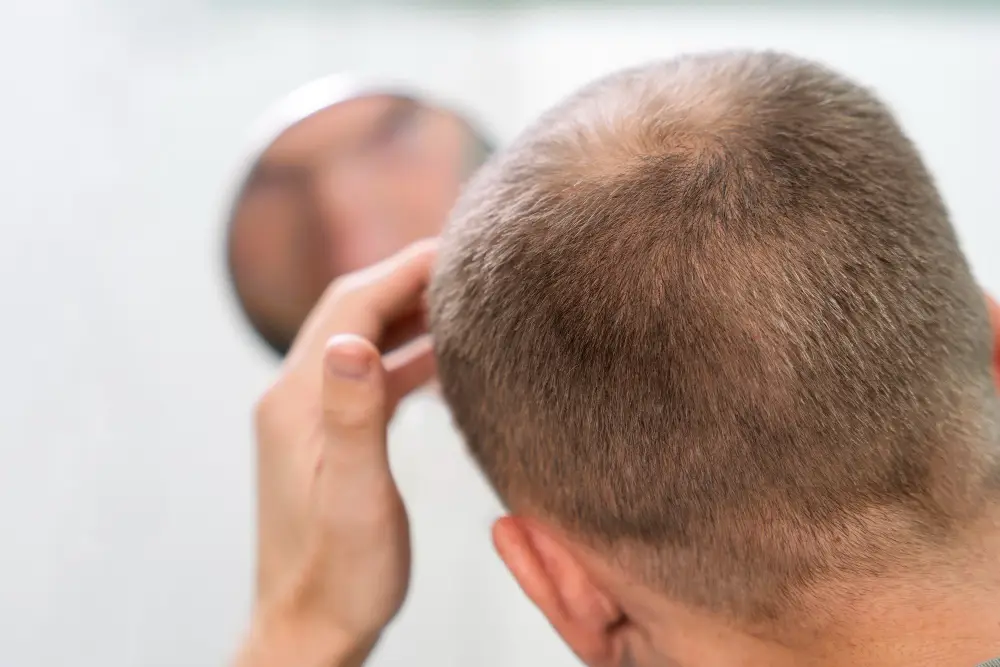
TL;DR: Semaglutide can be linked with hair loss, but the main reason is usually rapid weight loss, low calorie intake, low protein intake, or nutrient deficiency rather than direct damage to the hair follicle. In Wegovy studies, hair loss was reported in 3.3% of adults using semaglutide 2.4 mg and 1% of placebo users; the official label states that these hair loss reports were associated with weight reduction.
Does semaglutide cause hair loss?
Semaglutide may cause or contribute to hair shedding in some patients, but it is usually not the only cause. Most hair loss reported during semaglutide treatment appears to be connected with weight-loss-related stress on the body. When a person loses weight quickly, eats less protein, develops low iron or vitamin levels, or experiences nausea and reduced appetite, the hair cycle can shift into a shedding phase. This makes semaglutide an indirect trigger in many cases, not necessarily a direct follicle-damaging drug.
Is hair loss a listed side effect of semaglutide?
Yes, hair loss is listed in Wegovy weight-loss trial data. The Wegovy label reports hair loss in 3.3% of adults treated with semaglutide 2.4 mg compared with 1% of placebo users. In pediatric patients, hair loss was reported in 4% of those treated with Wegovy 2.4 mg and in no placebo-treated patients. The label also states that hair loss reactions were associated with weight reduction, which supports the idea that weight loss itself is a major factor.
Why does hair loss happen on semaglutide?
Hair loss on semaglutide usually happens because the body reacts to rapid weight loss, calorie restriction, or nutrient shortage.
Hair growth needs enough protein, iron, zinc, vitamin D, B12, thyroid balance, and stable energy intake. Semaglutide reduces appetite, so some patients unintentionally eat too little or avoid protein-rich foods because of nausea, early fullness, reflux, or constipation. That can push more hairs into the resting phase and cause diffuse shedding a few months later.
| Common trigger | How it affects hair |
| Rapid weight loss | Puts the body under metabolic stress |
| Low protein intake | Reduces building blocks for hair production |
| Low iron or ferritin | Can worsen diffuse shedding |
| Low vitamin D or B12 | May weaken hair-cycle support |
| Nausea or vomiting | Reduces consistent nutrient intake |
| Thyroid imbalance | Can independently cause hair loss |
What type of hair loss is linked to semaglutide?
The most likely type is telogen effluvium, a temporary shedding pattern caused by physical or metabolic stress. Telogen effluvium does not usually create one clean bald patch. It usually causes more hair in the shower, on the pillow, in the brush, or in the hands during washing. DermNet describes telogen effluvium as excessive shedding of resting hairs after a shock to the system, and weight loss is a known trigger in dermatology literature.
Is semaglutide hair loss permanent?
In most telogen effluvium cases, the shedding is temporary if the trigger is corrected. Hair often improves when weight loss slows down, nutrition becomes stable, protein intake increases, and deficiencies are treated. The important exception is underlying pattern hair loss. Semaglutide-related weight loss can reveal or worsen the appearance of male or female pattern hair loss that was already developing.
When does hair loss start after semaglutide?
Hair shedding often starts 2–4 months after rapid weight loss or major appetite reduction. This delay happens because telogen effluvium does not appear immediately after the trigger. The follicle first shifts into the resting phase, and the shedding becomes visible later. This is why patients may start semaglutide, lose weight for several months, and only then notice increased shedding.
How can you tell if it is semaglutide-related shedding?
Semaglutide-related shedding is more likely if hair loss starts after fast weight loss and appears as general thinning rather than patchy bald spots. The pattern matters. Diffuse shedding across the scalp fits telogen effluvium. A receding hairline, crown thinning, widening part line, circular bald patches, scalp redness, pain, scaling, or itching may point to another diagnosis. AAD notes that a receding hairline, bald spot, or overall thinning can be signs of hair loss that need proper evaluation.
Should you worry about hair loss on semaglutide?
You should take it seriously, but you should not panic or stop semaglutide on your own. The right response is to check the basics first: weight-loss speed, protein intake, total calories, ferritin, iron, vitamin D, B12, zinc, thyroid function, and any previous history of hair thinning. Stopping semaglutide without medical advice can affect diabetes control, weight management, and cardiovascular risk plans, depending on why it was prescribed.
How can you reduce hair loss while taking semaglutide?
You can reduce the risk by losing weight gradually, eating enough protein, correcting deficiencies, and treating the real cause of shedding. The first priority is not a hair serum. It is nutrition. Semaglutide lowers appetite, so many patients eat less without realizing how low their protein, iron, zinc, B12, folate, and vitamin D intake has become. Telogen effluvium guidance also recommends a nutritious diet with enough protein, fruit, vegetables, and correction of thyroid, iron, B12, and folate abnormalities when present.
| What to check | Why it matters |
| Protein intake | Hair fiber needs amino acids |
| Ferritin / iron | Low iron can worsen diffuse shedding |
| Vitamin D | Low levels may affect hair-cycle support |
| B12 / folate | Important for cell turnover |
| Zinc | Deficiency can contribute to shedding |
| TSH / thyroid panel | Thyroid imbalance can cause hair loss |
| Weight-loss speed | Rapid loss can trigger telogen effluvium |
A practical target is simple: do not let the injection replace a structured nutrition plan. Hair shedding is more likely when weight loss is fast, calories are too low, and protein intake is inconsistent.
Should you take vitamins for semaglutide hair loss?
You should take vitamins only if your diet is restricted or a blood test shows deficiency. Randomly taking biotin, iron, zinc, or high-dose vitamin D is not the right strategy. The better approach is to test first, then correct what is actually low. The British Association of Dermatologists notes that supplements may be considered when the diet is restricted, such as vegan or vegetarian diets, and that blood tests may be used to exclude causes like thyroid disease and iron deficiency.
Should you stop semaglutide if you notice hair loss?
No, you should not stop semaglutide on your own because the hair loss may be temporary and the medication may be treating obesity, diabetes, or cardiovascular risk. The right step is to speak with the prescribing doctor. They may review your dose, weight-loss speed, calorie intake, protein intake, side effects, and lab values. In many cases, the solution is not stopping semaglutide; it is slowing the pace of weight loss and correcting nutrition.
Stopping without medical advice is especially risky if semaglutide was prescribed for type 2 diabetes or cardiometabolic risk. The decision should be based on the full clinical picture, not hair shedding alone.
How long does semaglutide hair loss last?
If the shedding is telogen effluvium, it often improves within months after the trigger is corrected. DermNet states that telogen effluvium hair fall is often noticed 2–4 months after the triggering event and usually tapers back to normal over 6–9 months in most cases. The British Association of Dermatologists also notes that the shedding phase usually lasts 3–6 months, although full volume recovery can take longer.
The realistic patient expectation is: shedding may slow first, but visible density recovery takes longer because hair grows slowly.
When should you see a doctor for hair loss on semaglutide?
You should see a doctor if shedding is severe, lasts more than 3–6 months, forms patches, or comes with scalp symptoms. Semaglutide-related telogen effluvium is usually diffuse. That means shedding happens all over the scalp. Red flags include circular bald spots, scalp redness, pain, burning, heavy scaling, pus, sudden eyebrow loss, or a clearly receding hairline.
See a dermatologist or hair specialist if you notice:
- shedding that continues beyond 6 months
- widening part line
- crown thinning
- receding hairline
- bald patches
- scalp itching, pain, redness, or scaling
- hair loss after very rapid weight loss
- fatigue, heavy periods, thyroid symptoms, or signs of anemia
AAD states that accurate diagnosis matters because many people can see regrowth with the right diagnosis, and earlier treatment improves the chance of regrowth.
What treatments help with semaglutide-related hair loss?
The best treatment depends on whether the problem is temporary shedding, nutritional deficiency, or underlying pattern hair loss. For pure telogen effluvium, the main treatment is correcting the trigger. That means improving protein intake, treating deficiencies, stabilizing weight loss, reducing harsh styling, and giving the hair cycle time to recover.
For androgenetic alopecia, treatment may include minoxidil, prescription medications, PRP, low-level laser therapy, or hair transplant planning depending on the case. AAD notes that not every type of hair loss is treated the same way and that results from treatment can take months.
| Situation | Best next step |
| Diffuse shedding after fast weight loss | Nutrition review + lab testing |
| Low ferritin, B12, vitamin D, or zinc | Correct the deficiency |
| Widening part or crown thinning | Check for female/male pattern hair loss |
| Receding hairline | Dermatology or hair restoration consult |
| Bald patches | Urgent dermatology evaluation |
| Scalp inflammation | Treat scalp disease first |
Can Ozempic cause hair loss?
Ozempic may be associated with hair shedding in some users, but hair loss is more commonly discussed in the context of weight loss rather than direct follicle damage. Ozempic and Wegovy both contain semaglutide, but they are used at different doses and for different indications. Wegovy’s weight-loss trial data specifically lists hair loss reports and states that these reactions were associated with weight reduction.
The better wording is: Ozempic users may notice shedding, especially after significant weight loss, but the cause should still be medically evaluated.
Can Wegovy cause hair loss?
Yes, hair loss is reported in Wegovy weight-management studies. The official Wegovy label reports hair loss in adults using semaglutide 2.4 mg more often than placebo, and it states that these hair loss reactions were associated with weight reduction.
This makes Wegovy different from vague online claims. Hair loss is not just anecdotal; it appears in official trial safety data. But the label language still points toward weight reduction as the associated factor.
Does hair grow back after semaglutide hair loss?
In most telogen effluvium cases, hair can grow back once the trigger is corrected. Telogen effluvium is usually non-scarring, which means follicles are still alive. DermNet describes it as temporary shedding where new hair continues to grow.
The exception is pattern hair loss. If semaglutide-related weight loss reveals androgenetic alopecia, the shedding may improve but the underlying thinning may still need treatment.
Does semaglutide cause hair loss? Final verdict
Semaglutide can be linked with hair loss, but the most likely cause is rapid weight loss and nutritional stress, not permanent follicle damage. For most patients, the pattern looks like telogen effluvium: diffuse shedding, delayed onset, and gradual improvement when the trigger is corrected. Wegovy trial data supports that hair loss can occur during semaglutide-based weight management, but the official label associates it with weight reduction.
The clearest final answer is: semaglutide may contribute to temporary shedding, but persistent thinning, bald patches, or hairline recession need proper diagnosis.
Frequently asked questions about semaglutide and hair loss
Is hair loss from semaglutide permanent?
Usually no, if it is telogen effluvium. Telogen effluvium is typically temporary, but recovery depends on correcting the trigger. If pattern hair loss is also present, treatment may be needed.
How much hair loss is normal on semaglutide?
Mild increased shedding can happen, but heavy shedding should be evaluated. Normal daily shedding varies, but sudden clumps, visible thinning, or shedding beyond a few months should not be ignored.
What vitamin helps with semaglutide hair loss?
No single vitamin fixes semaglutide hair loss unless there is a deficiency. The most relevant labs are ferritin, iron, vitamin D, B12, folate, zinc, and thyroid function.
Can eating more protein stop semaglutide hair loss?
It can help if low protein intake is part of the trigger. Protein supports hair fiber production, but it will not treat every cause of hair loss.
Is semaglutide hair loss a reason to stop treatment?
Not automatically. The better step is medical review, nutrition assessment, and lab testing before changing or stopping the medication.
Can minoxidil help semaglutide hair loss?
Minoxidil may help if there is underlying pattern hair loss, but it is not always needed for temporary telogen effluvium. A dermatologist should confirm the diagnosis before starting long-term hair medication.
