
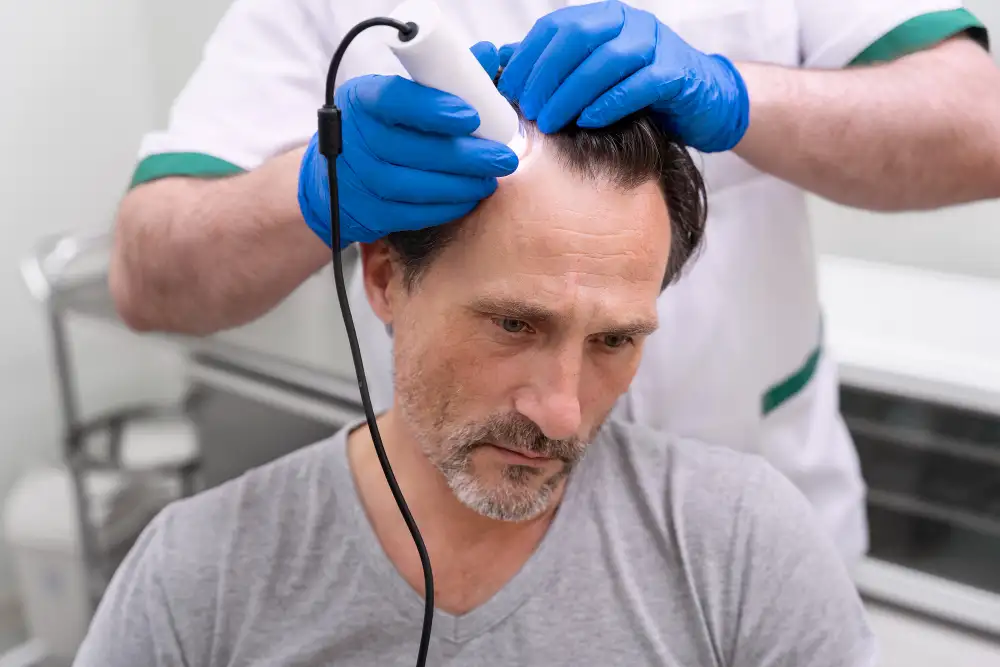
TL;DR: Hair cloning is an emerging biotechnology that aims to create new hair follicles in the lab by multiplying stem cells taken from a small donor sample, potentially offering unlimited grafts and eliminating donor limitations. Although still in the research phase, experts expect it to become available within 5-10 years. Once approved, Turkey and clinics like EsteQuality are expected to be among the first to offer this next-generation, donor-free hair restoration method, providing higher density, more natural results, and a promising solution for advanced hair loss.
What Is Hair Cloning?
Hair cloning is an advanced biotechnology approach designed to overcome the limitations of traditional hair transplants. While methods like FUE and DHI depend heavily on the amount of grafts available in the donor area, hair cloning aims to regenerate new follicles in the laboratory. The core idea is simple yet revolutionary: by extracting a few healthy hair follicles and isolating their stem cells, scientists can multiply these cells to potentially create thousands of lab-grown hair follicles. This next-generation technique could offer a long-term solution for people struggling with severe hair loss and even complete baldness.
The Science Behind Hair Follicle Cloning
Hair follicle cloning relies on stem cell technology. Researchers focus on special cells within the follicle dermal papilla cells and epithelial stem cells which have natural regenerative capacity. Through controlled laboratory cultivation, these cells can be duplicated repeatedly, allowing experts to produce unlimited follicular units.
Why Hair Cloning Could Transform Hair Restoration
If fully developed, hair cloning may eliminate donor dependency, provide denser and more natural-looking results, and introduce a new era of donor-free hair restoration. Many experts believe it will become one of the most important breakthroughs in regenerative medicine.
How Does Hair Cloning Work?
Hair cloning works by taking a small sample of healthy hair follicles from the donor area, isolating their stem cells, and multiplying these cells in a controlled laboratory environment to create new hair follicles. First, doctors extract a few follicles, usually 20–50, without affecting the donor region. Inside the lab, specialists separate key regenerative cells such as dermal papilla cells and epithelial stem cells. These cells are then cultured and expanded until they form large populations capable of generating new follicular structures. Once fully developed and proven safe, the newly formed follicles could be implanted into bald areas to grow naturally, offering a potential solution for unlimited hair restoration in the future.
Stem Cell Extraction and Cultivation Process
- Follicle Collection:
Doctors extract a small number of healthy follicles from the donor area usually between 20 and 50 units. This minimal extraction protects the donor region. - Cell Isolation:
Stem cells and dermal papilla cells within these follicles are isolated. These are the cells responsible for hair growth and regeneration. - Cell Expansion:
The isolated cells are cultivated in sterile laboratory conditions, where they multiply into large populations. This process creates the basis for unlimited hair follicles. - Follicle Formation:
Under specific conditions, expanded cells can form new follicular structures, which may eventually be implanted into bald areas once clinical use becomes available.
Lab-Grown Follicles vs. Natural Follicles
| Feature | Natural Hair Follicles | Lab-Grown Hair Follicles |
| Source | Human donor area | Stem-cell expanded cultures |
| Quantity | Limited | Potentially unlimited |
| Regrowth Potential | Depends on donor density | Engineered for regeneration |
| Current Availability | Widely used (FUE/DHI) | Experimental stage |
While natural follicles are restricted by donor supply, lab-grown follicles represent the future of cell-based hair therapy and regenerative hair technology.
Hair Cloning vs. Classic Hair Transplant Methods
Hair cloning differs from classic hair transplant methods by eliminating donor limitations, using lab-grown follicles instead of natural grafts, and offering the potential for unlimited follicle production. Unlike FUE or DHI techniques, which depend entirely on the number and quality of grafts in the donor area, hair cloning aims to multiply stem cells to create new follicles in the laboratory. This makes it especially promising for patients with low donor density or advanced hair loss. While traditional hair transplants are fully available today, hair cloning remains in the research stage, but its regenerative potential suggests it could deliver higher density and more sustainable long-term results once clinically approved.
Key Differences Between Hair Cloning and FUE/DHI
- Donor Dependency:
• FUE/DHI: Fully dependent on donor density
• Hair Cloning: Designed to eliminate donor limitations - Follicle Source:
• FUE/DHI: Natural grafts
• Hair Cloning: Laboratory-engineered follicles - Availability:
• FUE/DHI: Fully available worldwide
• Hair Cloning: Still in research and preclinical testing - Suitability:
• FUE/DHI: Best for mild to moderate hair loss
• Hair Cloning: Promising for advanced or total hair loss
Who Benefits Most From Hair Cloning?
Hair cloning may significantly benefit:
- Individuals with low donor density
- Patients with aggressive or genetic hair loss
- Men and women with advanced pattern baldness
- People seeking denser, more natural coverage
- Patients who have exhausted previous hair restoration options
Current Stage of Hair Cloning Technology
Although hair cloning is one of the most promising innovations in regenerative medicine, it is not yet available as a clinical treatment. Today, the technology remains in the research and preclinical trial stages, with significant efforts being led by biotechnology companies and academic institutions.
Research Progress in the UK, USA, and Japan
- United Kingdom:
Companies like HairClone are pioneering follicle cell expansion and follicle banking services. Although full hair cloning is not ready, HairClone currently offers follicle cryopreservation, allowing patients to store their youthful follicle cells for future use. - United States:
Several institutions are experimenting with stem-cell hair regeneration, including universities working on dermal papilla cell expansion, organoid modeling, and microtissue engineering. - Japan:
Japanese researchers have made breakthroughs in regenerative hair technology using iPS cells (induced pluripotent stem cells). Their studies show potential for developing complete hair follicles that can cycle naturally.
These global advancements suggest that cell-based hair therapy and lab-grown follicles are progressing steadily, even though they have not yet reached commercial release.
When Will Hair Cloning Become Available? (Expert Predictions)
Experts estimate that hair cloning might become available within the next 5 to 10 years, depending on:
- Regulatory approvals
- Long-term safety data
- Scalp integration success
- Cost-effectiveness
- Production scalability
Most scientists agree that the first versions will likely begin as adjunct treatments, improving existing transplant results before transitioning into fully donor-free hair restoration solutions.
The Future of Hair Cloning
As research advances, hair cloning is expected to reshape the global hair restoration industry.
Potential Advantages of Hair Cloning
- Unlimited hair follicles created from a small biopsy
- Elimination of donor limitations, even for severe hair loss
- Higher density and more natural-looking results
- Suitable for both men and women
- Improved longevity and follicle cycling
- Reduced need for multiple transplant sessions
How Hair Cloning Could Revolutionize Hair Restoration Worldwide
Hair cloning may become a cornerstone of next-generation treatment plans. By combining biotechnology, stem cell therapy, and tissue engineering, the method could provide a permanent solution for baldness while also advancing our understanding of:
- Hair regeneration mechanisms
- Genetic hair loss factors
- Scalp tissue engineering
- Personalized medical treatments
As the technology matures, leading hair restoration destinations especially Turkey are expected to integrate hair cloning into mainstream treatment packages.
Hair Cloning in Turkey: What Patients Should Expect
Turkey is already recognized as one of the world’s top destinations for hair transplantation. With its internationally accredited clinics, experienced surgeons, and strong medical tourism infrastructure, the country is expected to become a major hub for hair cloning in the future.
Why Turkey Will Lead the Hair Cloning Era
- High volume of international patients
- Strong experience in hair restoration techniques (FUE, DHI, Sapphire)
- Cutting-edge research adoption
- Competitive pricing compared to the US and Europe
- Rapid integration of new regenerative hair technologies
Once hair cloning becomes clinically available, Turkish clinics will likely be among the first to offer next-generation, donor-free hair restoration using lab-grown follicles.
Integration of Hair Cloning Into Turkish Clinics
Clinics such as EsteQuality are already preparing by:
- Monitoring global advancements in stem cell based hair therapy
- Establishing partnerships with biotech companies
- Training medical teams in regenerative medicine
- Developing hair cloning consultation frameworks for future patients
Why Choose EsteQuality for Future Hair Cloning?
EsteQuality is committed to delivering the most innovative and effective hair restoration solutions. With a team specializing in both traditional and regenerative treatments, the clinic is positioned to become a leading provider of future hair cloning procedures in Turkey.
Medical Expertise and Innovative Approach
- Experienced surgeons trained in advanced hair restoration
- Continuous adaptation to global scientific research
- Evidence-based medical practices
- High standards of patient safety and ethical care
Commitment to Patient-Centered Care
- Personalized treatment plans
- Transparent communication
- Multilingual international patient support
- Long-term follow-up programs
Preparing for the Future of Regenerative Hair Treatments
While full hair cloning is still under development, EsteQuality is already offering:
- Detailed assessments for future candidates
- Guidance on follicle preservation opportunities
- Updates on global hair cloning research
- Integration plans for next-generation procedures
Patients choosing EsteQuality today can trust that they will have access to the most advanced solutions once hair cloning becomes commercially available.
FAQ: Hair Cloning in Turkey
Is hair cloning available in Turkey today?
No. Hair cloning is still in the research phase and not yet offered as a clinical treatment anywhere in the world.
How much will hair cloning cost in the future?
Official pricing is not yet known, but experts predict it may initially be more expensive than traditional transplants before becoming more affordable over time.
Is hair cloning safe?
Clinical safety data is still being evaluated. Long-term studies are needed to ensure that lab-grown follicles behave naturally and safely after transplantation.
Who is a good candidate for hair cloning treatment?
Future candidates may include individuals with low donor density, advanced baldness, or those who previously failed to achieve optimal results with conventional transplants.
