
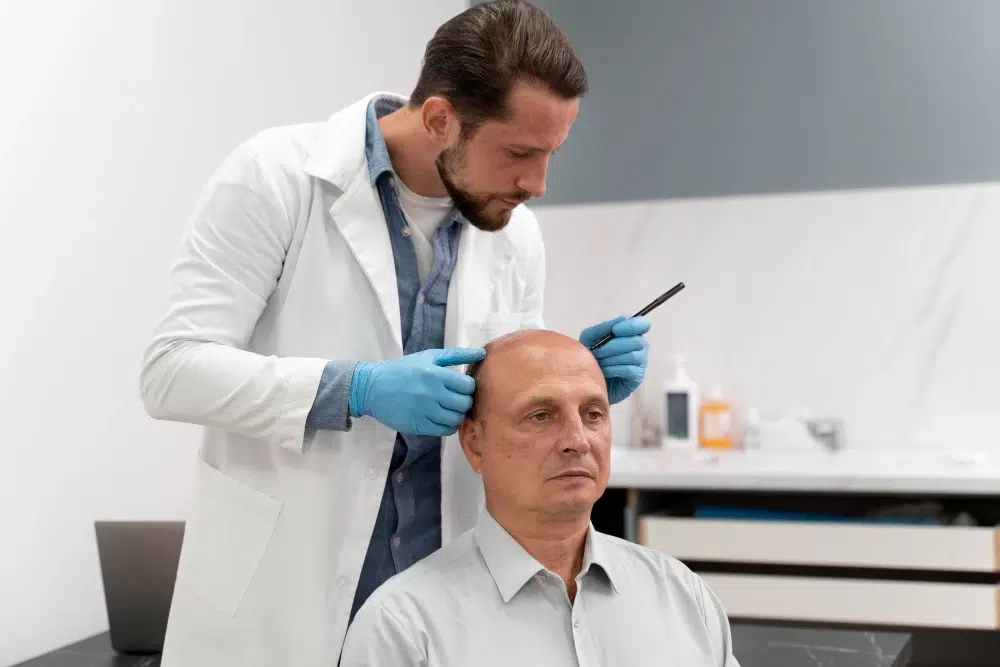
Swelling after a hair transplant is one of the most common and completely normal short-term effects patients experience after surgery. It usually appears on the forehead, around the eyes, or on the scalp during the first few days following the procedure.
This swelling occurs because of fluids injected under the scalp, the body’s natural healing response, and minor trauma to the skin during graft extraction and implantation.
While it can look concerning, it is temporary, harmless, and part of the recovery process.

What Causes Swelling After Hair Transplant?
During hair transplant surgery, surgeons inject a fluid mixture containing saline, anesthesia, and tumescence beneath the scalp. This fluid helps lift the scalp gently, allowing the doctor to perform precise graft extraction and implantation without damaging the capillaries (tiny blood vessels) that nourish the hair follicles.
At EsteQuality, we explain to our patients that this injected fluid:
- Protects the scalp from internal trauma
- Reduces bleeding during the procedure
- Makes graft placement easier and denser
After the surgery, the same fluid gradually leaves the body through urination, sweating, and minimal drainage from the donor area.
💧 How to Help the Body Eliminate This Fluid
To support your recovery and reduce swelling naturally:
- Drink at least 3 liters of water daily
- Avoid adding extra salt to meals (salt causes water retention)
- Use prescribed anti-edema medication recommended by your doctor
These steps help your body flush out fluids faster and reduce puffiness more comfortably.
✅ Your scalp is nourished by tiny capillaries; the injected fluid doesn’t feed the grafts but helps protect those vessels and maintain safe operating conditions.
Where Does Swelling Occur?
Swelling can appear in different parts of the head and face depending on how the fluid moves under the skin.
Forehead and Around the Eyes
This is the most common area. Fluids tend to move downward with gravity, collecting on the forehead or eyelids. Patients may notice:
- Puffy eyelids or a tired look
- Mild tightness around the eyes
- Discomfort when blinking
Although it may look dramatic, it usually resolves within 2–4 days.
Scalp and Donor Area
Some patients feel tightness or pressure on the scalp rather than visible puffiness. This is normal and fades quickly.
Rarely: Neck or Upper Cheeks
In rare cases, swelling can extend slightly downward. This is still part of the body’s natural drainage and not dangerous.
EsteQuality’s Approach: No Forehead Band Needed
At EsteQuality, we do not use forehead bands after surgery.
Some clinics apply tight bands to prevent swelling from moving toward the eyes — however, this can trap the fluids inside the scalp and delay the healing process.
Our approach allows the body to drain fluids naturally, leading to a faster and more comfortable recovery.
Sleeping Position & Fluid Drainage
To prevent swelling from collecting on the forehead or eyes, it’s essential to avoid bending your head forward during the first few days.
Sleep on your back with your head elevated at a 30–45° angle using two to three pillows.
During the first night, a small amount of fluid may leak from the donor area, which is completely normal.
We provide protective pads so patients can cover their pillow and neck cushion to prevent staining.
This drainage typically occurs only on the first night and does not repeat afterward.
An Unexpected Advantage: Denser Appearance
Interestingly, the fluid injected under the scalp during surgery temporarily inflates the skin, like a balloon.
This allows surgeons to implant grafts closer together.
Once the swelling subsides, the scalp’s surface area decreases, and the implanted grafts appear denser and more natural.
It’s one of the hidden benefits of the healing process!
How Long Does Swelling Last After Hair Transplant?
Swelling follows a predictable timeline:
| Day | What to Expect |
|---|---|
| Day 1 | No visible swelling yet |
| Day 2–3 | Peak swelling on forehead or eyelids |
| Day 4–5 | Swelling begins to move downward and fade |
| Day 6–7 | Most swelling disappears naturally |
For most patients, swelling completely resolves by day 5–7.
If swelling worsens after a week, or is accompanied by pain, redness, or fever, medical attention is recommended.
How to Reduce Swelling After Hair Transplant
| Method | Benefit |
|---|---|
| Sleep with head elevated (30–45°) | Prevents fluid from collecting on the forehead |
| Apply cold compress on forehead (not grafts) | Reduces puffiness |
| Take prescribed medication | Controls inflammation |
| Stay hydrated (3L/day) | Helps eliminate fluid naturally |
| Avoid salt, alcohol, and smoking | Prevents fluid retention |
| Avoid looking down | Keeps swelling from moving toward eyes |
Is Swelling Normal or a Sign of Complication?
In almost all cases, swelling is normal and expected.
However, patients should contact their surgeon if they notice:
- Swelling getting worse after 5 days
- Redness, warmth, or pus around the swollen area
- Severe pain or fever
These may indicate infection and should be evaluated by a medical professional.
Final Thoughts
Swelling after a hair transplant is a natural part of the healing process.
By following the right aftercare steps — such as staying hydrated, sleeping elevated, avoiding excess salt, and taking prescribed medications — patients can minimize discomfort and recover faster.
At EsteQuality, our personalized approach ensures that every patient heals comfortably and safely, without unnecessary compression bands or complications.
A little swelling today leads to stronger, denser, and healthier results tomorrow.
Learn more about Hair Transplant Patient Guide and how to ensure the best healing process.

