
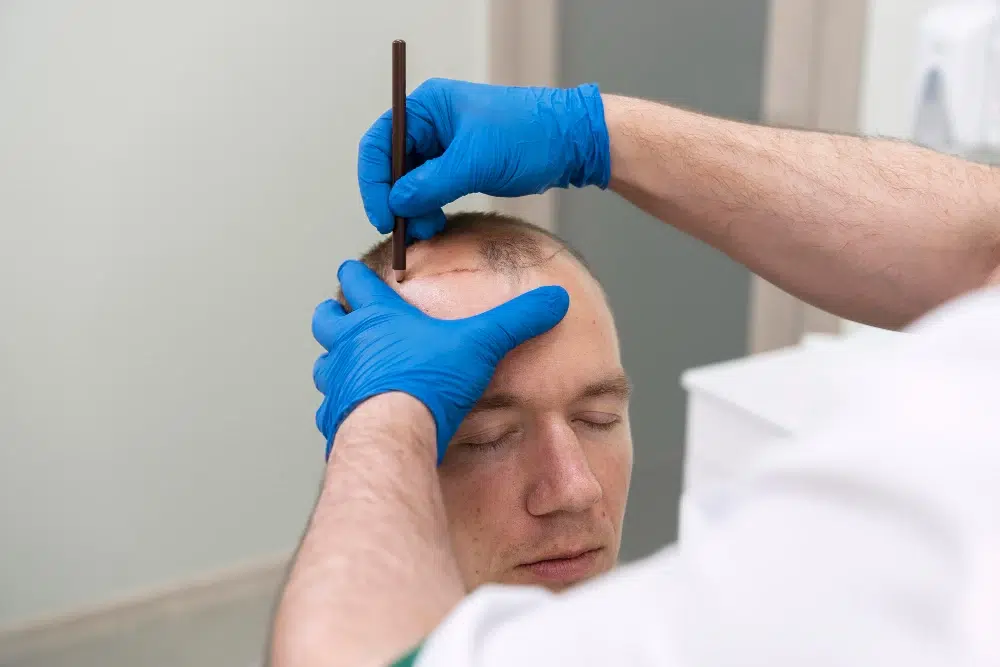
TL;DR: If you have thin, thinning, or naturally fine hair, you have likely been told that a high-capacity transplant is impossible without leaving your donor area looking patchy or over-harvested. At EsteQuality, we are challenging the industry standard of 3,000 grafts by utilizing advanced donor mapping and homogeneous extraction techniques. In this case study, we demonstrate how we safely harvested 5,700 grafts to provide maximum density in thinning areas while keeping the donor site completely healthy and natural. This approach ensures that even the most delicate hair textures can achieve a full, sophisticated result without compromising donor integrity.
Understanding Your Hair: Thin vs. Thinning vs. Fine Hair
Before committing to a procedure, it is crucial to understand the characteristics of your hair. These terms are often used interchangeably, but they mean very different things in surgery:
- Fine Hair: This refers to the texture and diameter of the hair shaft. Fine hair is delicate and requires extreme precision during extraction to avoid breakage.
- Thin Hair: This refers to the density (number of follicles per square centimeter). If your donor area is naturally thin, graft management becomes the top priority.
- Thinning Hair: This refers to the active process of hair loss, where thick areas become sparse.
For a patient who has fine, thin, and thinning hair simultaneously, a standard transplant approach is often insufficient. At EsteQuality, we specialize in these complex cases, ensuring every fragile follicle is handled with Sophisticated Quality.
The Precision Method: How to Transplant for Thin, Fine, and Thinning Hair
Performing a hair transplant for thin, thinning, or fine hair requires extreme precision because delicate strands provide less visual coverage. At EsteQuality, we solve this by using advanced donor mapping to safely extract up to 5,700 grafts nearly double the industry standard. By utilizing micro-tools and a homogeneous extraction pattern, we deliver maximum density to balding areas while keeping your donor site completely natural and healthy.
To achieve a full look without damaging the scalp, our process follows three critical steps:
- High-Resolution Donor Mapping: We use microscopic analysis to identify the exact density of your donor area. For patients with fine hair, we must calculate the precise distance between follicles to ensure that extracting 5,700 grafts won’t result in a patchy appearance.
- Micro-FUE Homogeneous Extraction: Standard tools are often too large for thinning hair follicles. We use ultra-fine micro-punches that match the delicate texture of fine hair. By scattering the extraction points across the entire donor zone, we maintain the natural look of the back of your head.
- Strategic Implantation for Maximum Volume: When dealing with thin hair, the angle of implantation is everything. We place the grafts in a dense, multi-layered pattern to ensure that even though the hair is fine, it creates a thick, opaque look that conceals the scalp.
While most clinics stop at 3,000 grafts to stay in their “comfort zone,” our specialized method allows us to push the boundaries of density for those who need it most.
The 3,000 vs. 5,700 Graft Challenge: Why Quality Matters
In the hair transplant industry, 3,000 grafts is often cited as the “safe limit” for a single session, especially for patients with fine hair. Many clinics fear that going beyond this number will result in permanent damage, leaving the back of the head looking patchy or “over-harvested.”
How does EsteQuality extract 5,700 grafts safely? The secret lies in our meticulous donor management. We don’t just “take” hair; we map the donor site like a resource. By using high-precision micro-punches and spreading the extraction evenly (homogeneously), we can harvest nearly double the industry average without leaving any visible gaps.
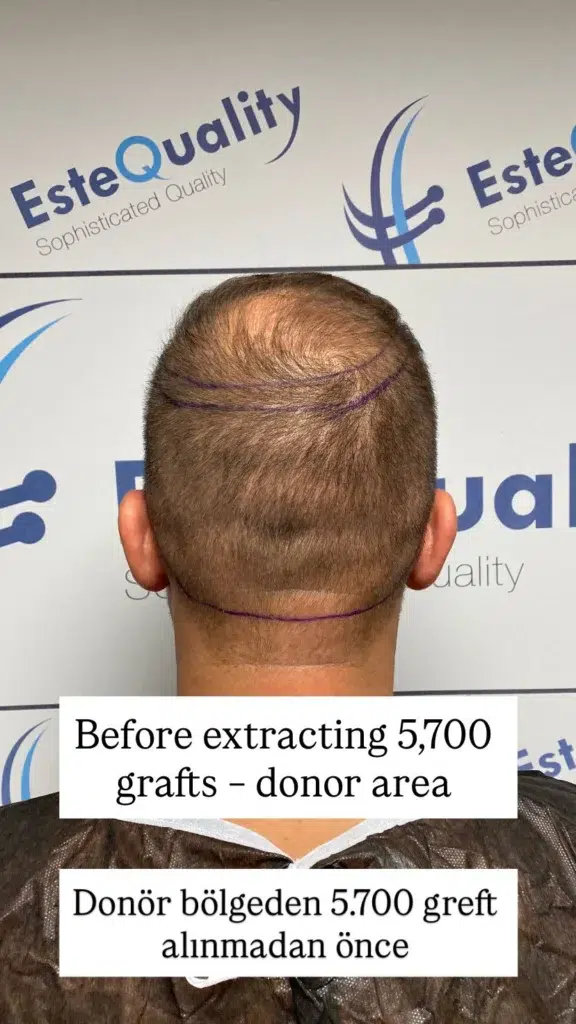
Case Study: Harvesting 5,700 Grafts from a Fine Hair Donor
In this specific case, our patient presented with a combination of naturally fine hair and significant thinning across the frontal and crown areas. While many clinics would label this a “limited case” due to the donor’s fragile texture, our advanced mapping revealed a much higher potential.
Step 1: Evaluating the Thin Donor Zone
Many patients with thin hair worry that they don’t have enough “supply” for the “demand” of their balding areas. Our first step is a microscopic evaluation of the donor area. For this patient, we identified that while the hair shaft was fine, the follicle health was excellent, allowing us to plan for a high-capacity extraction without risking the future health of the scalp.
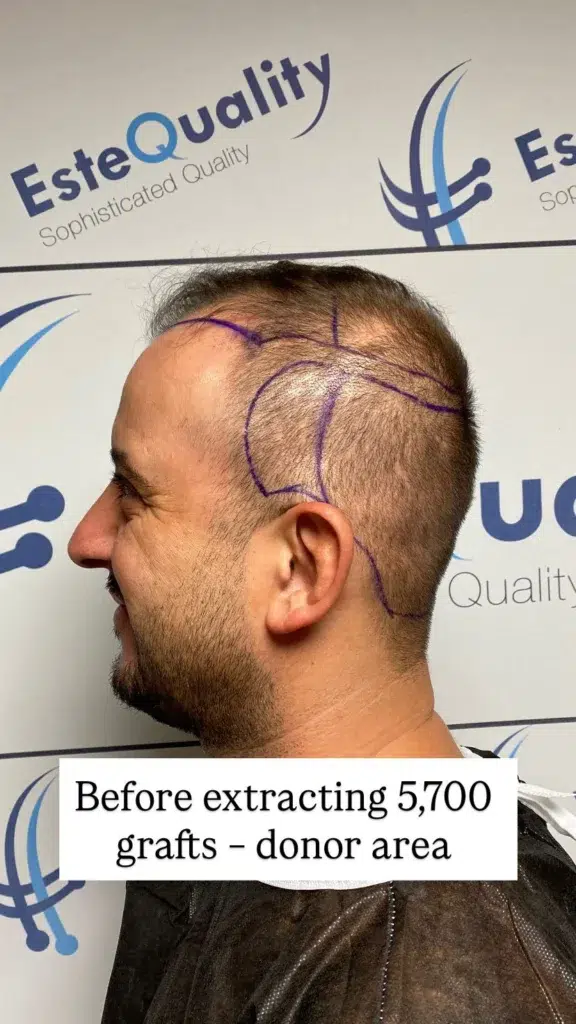
Step 2: Homogeneous Extraction of 5,700 Grafts
The hallmark of EsteQuality’s technique is homogeneity. We extract grafts in a precise, scattered pattern that leaves the surrounding follicles undisturbed. This prevents the “over-harvested” or patchy look that often happens when clinics attempt to take more than 3,000 grafts from a thin donor area.
Why EsteQuality Succeeds Where Others Limit You
The difference between a 3,000 graft limit and a 5,700 graft success story is surgical precision and the tools we use:
- Micro-Punches: We use ultra-fine tools designed specifically to match the diameter of fine hair, minimizing trauma to the scalp and ensuring faster healing.
- Graft Selection: We prioritize harvesting double and triple follicular units to ensure that the thinning recipient areas receive maximum volume and coverage.
- Donor Preservation: Our goal is for the back of your head to look completely natural once it heals, with no visible signs of a massive extraction.
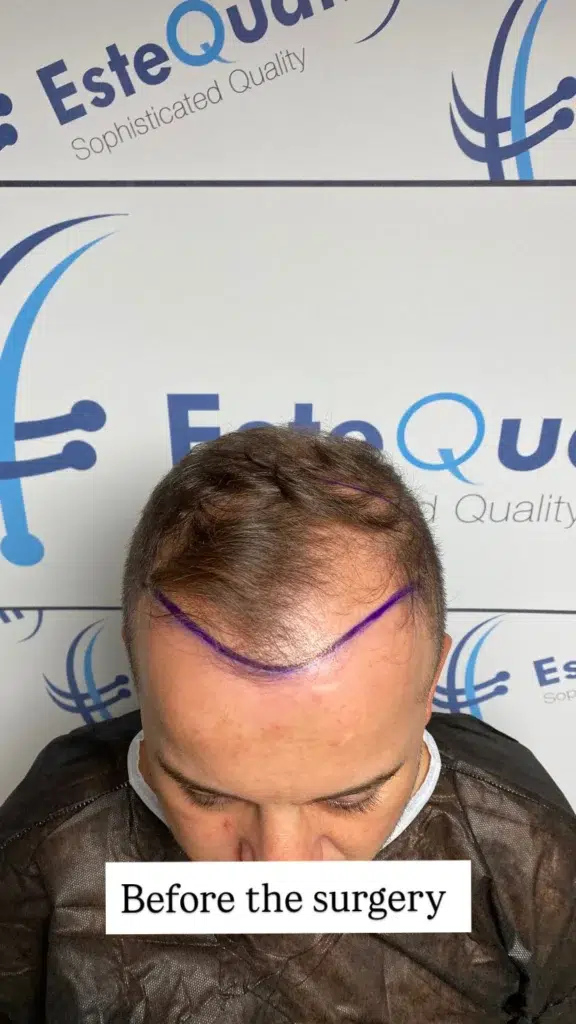
Visual Evidence: Does the Donor Area Look Thin After 5,700 Grafts?
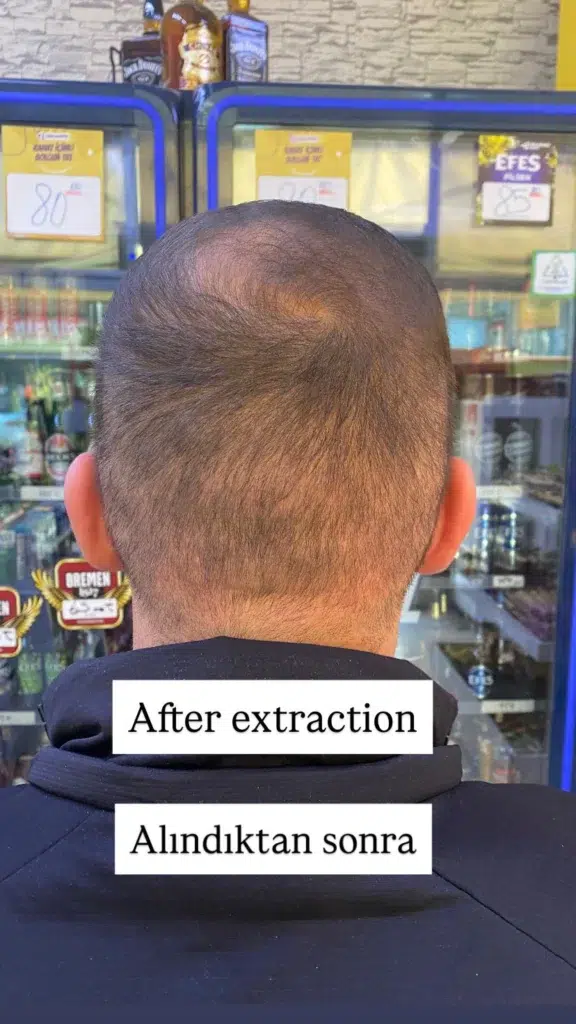
One of the biggest myths in hair restoration is that extracting over 3,000 grafts from a thin donor area will leave it looking empty. As seen in our case study, the answer lies in the distribution.
After extracting 5,700 grafts, the patient’s donor area remains uniform and dense. This is because EsteQuality specialists use a “checkerboard” extraction pattern. By leaving enough surrounding hair to provide coverage, we ensure that even with a high-capacity harvest, the back of your head looks as if no surgery ever took place.
Why 5,700 Grafts is a Game-Changer for Fine Hair Textures
If you have fine hair, the diameter of each individual hair is small. This means 3,000 grafts of fine hair will look significantly “thinner” than 3,000 grafts of thick hair.
To achieve a sophisticated and full result for a patient with thinning hair, you simply need more grafts. By safely reaching the 5,700 graft mark, we provide the necessary volume to cover the scalp effectively. Without this high number, the result often looks “see-through” under bright lights.
Frequently Asked Questions (FAQ) for Fine & Thinning Hair
Can women with thinning hair also benefit from a 5,700 graft session?
Absolutely. Many women suffer from fine and thinning hair due to hormonal changes or genetics. While female hair loss patterns differ from men, our high-capacity extraction technique is equally effective for women who have sufficient donor density. At EsteQuality, we focus on increasing volume without the need for a full shave in many female cases.
Does fine hair have a lower “survival rate” after being transplanted?
The hair’s texture (fine) doesn’t inherently lower the survival rate, but it does make the grafts more fragile during the handling process. This is why we use specialized microsurgical tools. Our team ensures that each fine follicle is kept in a nutrient-rich solution and transplanted quickly to maintain a high survival rate, even in a large 5,700-graft session.
Which technique is better for thin hair: Sapphire FUE or DHI?
For patients with active thinning between existing hairs, the DHI (Direct Hair Implantation) technique is often superior. It allows us to implant 5,700 grafts with extreme precision between your current hairs without damaging them. However, for large bald areas with fine hair texture, Sapphire FUE is excellent for creating a natural-looking, high-density foundation.
Will the “shock loss” be worse if my hair is already thin?
“Shock loss” is a temporary shedding of existing thin hair due to the trauma of surgery. While it can be more noticeable if your hair is already sparse, it is almost always temporary. Within a few months, both your transplanted hair and your original thinning hair will grow back stronger.
Can I use Minoxidil or Finasteride after a 5,700 graft transplant?
Yes, and in many cases, we recommend it. While the transplanted hair is permanent, your original fine hair may continue the thinning process. Using medical treatments alongside your transplant at EsteQuality helps preserve your existing hair, ensuring the 5,700 grafts look even denser over time.
Is the recovery time longer for high-capacity (5,700 grafts) transplants?
Surprisingly, no. Because we use homogeneous extraction, the tiny micro-wounds in the donor area are spread out. This prevents inflammation from concentrating in one spot. Even with 5,700 grafts, most of our patients return to their social lives within 7 to 10 days, with the donor area healing remarkably fast.
Will my scalp still be visible under bright lights because my hair is fine?
This is a common concern. While a transplant significantly increases coverage, fine hair naturally provides less “shadow” than thick hair. This is exactly why we aim for 5,700 grafts instead of the standard 3,000; the extra density is what prevents the scalp from being overly visible under direct light.


