
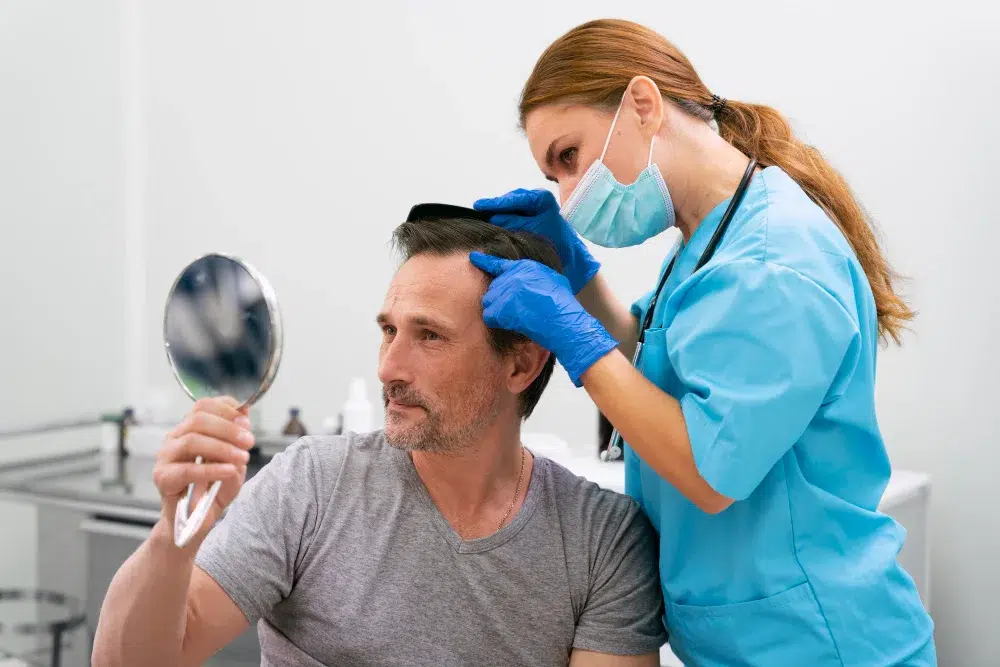
Yes, a modern hair transplant is designed to be a permanent, lifelong solution. By utilizing the principle of “Donor Dominance,” surgeons harvest follicles from DHT-resistant zones that are genetically programmed to grow forever. While these transplanted hairs are here to stay, your native (original) hair may still thin over time, and the texture of all your hair will naturally age with you.
What Does “Permanent” Mean in Hair Transplant Procedures?
In medical terms, a hair transplant is considered a permanent surgical procedure . This is due to a biological phenomenon known as “Donor Dominance.” The hair follicles located at the back and sides of your scalp are genetically resistant to DHT (dihydrotestosterone) , the hormone responsible for male pattern baldness. When these follicles are relocated to the thinning areas (the recipient site), they carry their genetic resistance with them. They do not “learn” to fall out; they continue to grow in their new location just as they would have in their original spot.
Difference Between Hair Transplant and Temporary Hair Loss Treatments
Understanding the distinction between surgical restoration and maintenance therapy is vital for managing expectations:
- Temporary Treatments (Minoxidil, Finasteride): These are chemical interventions. They work by stimulating blood flow or blocking DHT systemically. The moment you stop using them, the hair loss resumes. They are maintenance-based , not curative.
- Hair Transplant: This is a structural change . By physically moving DHT-resistant tissue, the surgery provides a permanent foundation of hair that does not rely on external chemicals to survive.
What Happens to Transplanted Hair Over Time?
Once the transplanted follicles take root—a process that happens within days of the surgery—they enter a permanent lifecycle.
Over the decades, these hairs will behave exactly like your original hair. They will grow, they can be styled, and they will eventually turn gray according to your genetics. While the number of follicles remains constant, the hair quality (thickness and pigment) will follow the natural aging process of the donor area.
How Long Do Hair Transplant Results Last?
While the follicles themselves are permanent, the “look” of your transplant is a dynamic process. A successful procedure provides coverage that lasts for decades, but it is not a “set it and forget it” event.
Growth Timeline: From Shedding to Regrowth
The journey to permanent hair follows a specific biological roadmap:
- The Shedding Phase (2–8 Weeks): Also known as “shock loss.” The newly transplanted hair shafts fall out. This is a normal part of the process; the living root remains safe beneath the skin.
- The Dormant Phase (2–4 Months): The follicles are “resting” and integrating with the blood supply.
- The Regrowth Phase (4–9 Months): New, permanent hairs begin to emerge. Initially, they may be fine, but they thicken over time.
- Full Maturation (12–18 Months): The final density and texture are achieved. This is the permanent result you will keep.
Factors That Affect Hair Transplant Longevity
The durability of your result depends on three primary pillars:
- Surgeon Skill: Precise extraction and implantation ensure a high graft survival rate . If a graft is damaged during the move, it will not grow permanently.
- Donor Hair Quality: The health and density of your donor area determine the “reserve” available for the transplant.
- Post-Op Care: Following the washing and protection protocols in the first 14 days is critical to ensuring the grafts root correctly.
Does Hair Transplant Work for a Lifetime?
Yes, but with a caveat. While the transplanted hair stays, your native (non-transplanted) hair may continue to thin. This is why strategic planning is essential. A well-designed transplant accounts for future hair loss, ensuring that the result looks natural even as you age and your original hair recedes further.
Types of Hair Transplants and Their Long-Term Effectiveness
In 2026, technology has refined how we achieve permanency. The method chosen impacts not just the surgery, but how the hair looks 20 years down the line.
FUE vs. FUT: Which One Lasts Longer?
Both FUE (Follicular Unit Extraction) and FUT (Follicular Unit Transplantation) involve moving permanent follicles, so the “longevity” of the hair itself is the same. However, the experience differs:
- FUE: The modern standard. Follicles are extracted individually. There is no linear scar, making it the preferred choice for those who want short hairstyles.
- FUT: Involves removing a strip of skin. While it can sometimes yield a higher number of grafts in a single session, it leaves a permanent linear scar at the back of the head.
In terms of long-term effectiveness , FUE is often favored because it allows for “cherry-picking” the strongest, most viable follicles for transplantation, leading to more consistent permanent results.
Can Transplanted Hair Fall Out Again?
It is extremely rare for transplanted hair to fall out permanently. If it does, it is usually due to:
- Poor Graft Handling: If the follicles were kept out of the body for too long or handled roughly.
- Lichen Planopilaris (Cicatricial Alopecia): A rare inflammatory condition that can attack both native and transplanted hair.
- Inaccurate Donor Selection: If a surgeon harvests hair from outside the permanent zone (too high up or too low), those hairs may still be sensitive to DHT and could thin over time.
Expert Opinions: What Surgeons Say About Hair Transplant Permanency
Leading surgeons agree: a hair transplant is the only way to restore hair density that does not require daily medication. Experts emphasize that “permanence is a partnership.” The surgeon provides the permanent follicles, and the patient provides the maintenance (healthy lifestyle, potentially PRP treatments) to keep the surrounding native hair healthy.
Frequently Asked Questions About Hair Transplant Permanency
Does the hair transplant ever need to be “redone”?
Usually, no. The transplanted hair stays. However, as your native hair continues to thin over time, some patients choose a second “touch-up” session to maintain overall density.
Is there an age limit for a permanent transplant?
There is no upper age limit as long as the donor area is healthy. However, surgeons often advise against very young patients (under 25) because their hair loss pattern hasn’t fully stabilized yet.
Will the transplanted hair turn white?
Yes. It is your natural hair. When the hair in your donor area (back of the head) turns gray or white, the transplanted hair will follow suit.
Can I use a hair dryer or dye my transplanted hair?
Once the healing phase is over (usually after 4–6 weeks), you can treat transplanted hair exactly like your original hair. It is permanent, rooted, and grows naturally.
