
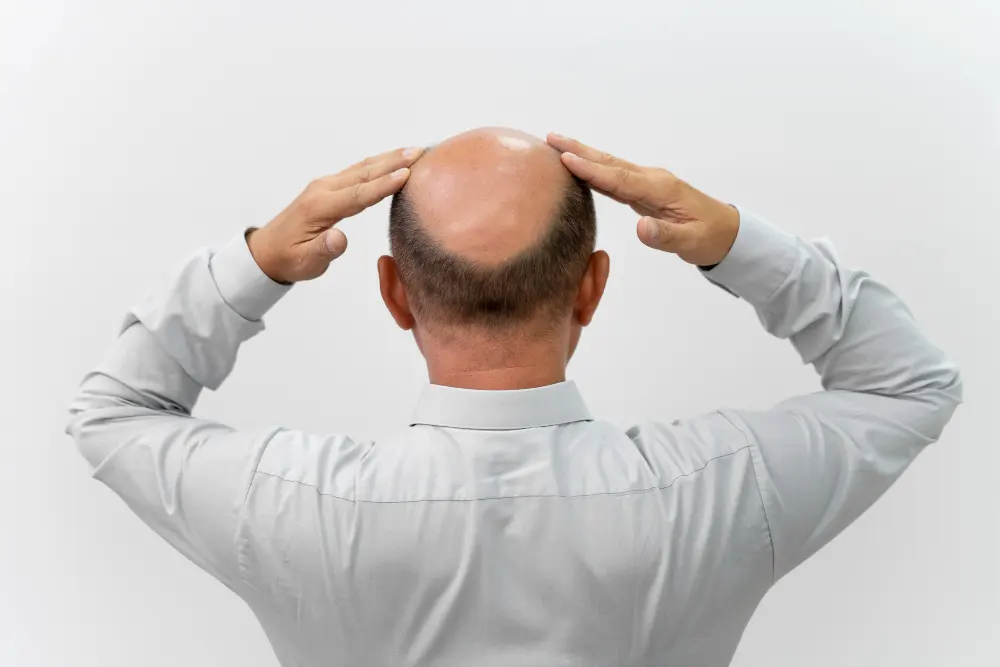
TL;DR: Baldness comes in many forms, including male pattern baldness, female thinning, alopecia areata, scarring, traction, and stress-related shedding. Causes range from genetics and hormones to lifestyle and medical conditions. Treatments vary by type: medications (Minoxidil, Finasteride), PRP therapy, hair transplants (FUE, DHI, Sapphire), or cosmetic solutions. Early medical consultation is key. Today, Turkey is the global leader in hair restoration, offering advanced techniques at affordable, all-inclusive prices especially with expert clinics like EsteQuality in Istanbul.
What Is Baldness?
Baldness refers to partial or complete loss of hair from the scalp or body. While occasional hair shedding is normal, baldness occurs when hair follicles shrink, weaken, or stop producing hair altogether. It can affect both men and women, but patterns and causes often differ. There are different types of baldness, ranging from hereditary hair loss (androgenetic alopecia) to temporary shedding caused by stress, illness, or certain hairstyles. Understanding the type of baldness is crucial in choosing the right treatment
All Types of Baldness
Baldness appears in several distinct forms, each with unique patterns and causes. The most common types include male and female pattern baldness, but there are also patchy forms like alopecia areata, scarring forms that cause permanent loss, and temporary shedding from stress or lifestyle factors. Recognizing the type of baldness is essential for choosing the right treatment, as some can be managed with medication while others require surgical intervention such as a hair transplant.
Types of Baldness List
- Male Pattern Baldness (Androgenetic Alopecia)
- Female Pattern Hair Loss
- Receding Hairline
- Crown Balding
- Complete Baldness
- Diffuse Thinning
- Widening Part Baldness
- Alopecia Areata
- Scarring Alopecia
- Traction Alopecia
- Telogen Effluvium
Table: Types of Baldness with Causes & Treatments
| Type of Baldness | Causes | Treatments |
| Male Pattern Baldness | Genetics, DHT hormone | Minoxidil, Finasteride, Hair Transplant |
| Female Pattern Hair Loss | Genetics, hormones (menopause, pregnancy) | Minoxidil, PRP, Hair Transplant |
| Receding Hairline | Genetic predisposition, aging | FUE/DHI Transplant, Medications |
| Crown Balding | Androgenetic alopecia, hormones | Medications, Hair Transplant |
| Complete Baldness | Advanced genetic hair loss | Hair Transplant, Cosmetic Solutions |
| Diffuse Thinning | Stress, nutritional deficiencies, illness | PRP, Supplements, Stress Management |
| Widening Part Baldness | Female pattern thinning | Minoxidil, PRP, Hair Transplant |
| Alopecia Areata | Autoimmune condition | Corticosteroid injections, Immunotherapy |
| Scarring Alopecia | Inflammatory scalp disease, injury | Anti-inflammatory drugs, Surgical restoration |
| Traction Alopecia | Tight hairstyles, hair pulling | Avoiding tension, PRP, Transplant (if severe) |
| Telogen Effluvium | Stress, illness, hormonal imbalance | Address underlying cause, Temporary regrowth |
Types of Baldness in Men
Men are more prone to baldness due to the influence of genetics and hormones (DHT). Common types include:
- Male Pattern Baldness (Androgenetic Alopecia):
The most common type, starting with a receding hairline and thinning at the crown, often progressing to complete baldness. - Receding Hairline:
Early-stage baldness where the hairline gradually moves back, usually at the temples. - Crown Balding:
Hair loss concentrated on the crown (top of the head), which may merge with a receding hairline over time. - Complete Baldness:
Advanced stage where most of the scalp is hairless, with only thin hair remaining on the sides and back.
Types of Baldness in Women
Although baldness is less common in women than men, it still affects millions worldwide. The patterns differ and are often less visible in the early stages:
- Female Pattern Hair Loss (Androgenetic Alopecia):
Instead of a receding hairline, women experience overall thinning, especially at the crown. - Diffuse Thinning:
Widespread shedding across the scalp, making hair look less dense rather than forming bald patches. - Widening Part Baldness:
A distinct pattern where the hair part becomes wider due to gradual thinning on the top of the head.
Other Types of Baldness
Not all baldness is genetic. Other types include:
- Alopecia Areata:
An autoimmune condition causing patchy bald spots on the scalp or body. - Scarring Alopecia:
Permanent hair loss caused by conditions that damage or destroy hair follicles, such as certain skin diseases. - Traction Alopecia:
Caused by tight hairstyles (ponytails, braids, extensions) that pull on hair over time. - Telogen Effluvium:
Temporary hair loss triggered by stress, illness, or hormonal changes, usually reversible with treatment.
Causes of Different Types of Baldness
Baldness can result from a combination of genetic, hormonal, environmental, and lifestyle factors:
- Genetics: Family history is the leading cause of male and female pattern baldness.
- Hormonal Factors: DHT (dihydrotestosterone) contributes to follicle miniaturization; thyroid disorders and pregnancy can also cause hair changes.
- Lifestyle & Stress: Poor diet, chronic stress, and lack of sleep can accelerate hair loss.
- Medical Conditions: Autoimmune diseases, scalp infections, and certain medications (e.g., chemotherapy) may trigger baldness.
👉 Identifying the root cause is key to selecting an effective treatment.
Treatment Options by Baldness Type
The treatment approach depends on the type and severity of baldness:
- Medications:
- Minoxidil (topical): Stimulates regrowth and slows loss.
- Finasteride (oral): Blocks DHT to preserve existing hair.
- PRP Therapy (Platelet-Rich Plasma):
Uses a patient’s own blood plasma to nourish hair follicles and improve density. - Hair Transplant Surgery:
- FUE (Follicular Unit Extraction): Minimally invasive, natural results.
- DHI (Direct Hair Implantation): Higher density and precision for hairline.
- FUT (Strip Method): Less common today due to scarring.
- Sapphire FUE: Advanced version with faster healing.
- Cosmetic Solutions:
Wigs, hair fibers, and styling techniques for temporary coverage.
💡 Best Practice: Early intervention provides the highest chance of slowing or reversing baldness progression.
When to See a Doctor for Baldness
Not all hair shedding means permanent baldness. But medical consultation is recommended if you notice:
- A rapid increase in hair shedding
- Widening hair part or visible scalp
- Patchy bald spots
- Hair loss after illness, childbirth, or medication
- Family history of early baldness
👉 Early diagnosis can help slow progression and open up more treatment options, including medication or minimally invasive therapies.
Why Turkey Is a Leading Destination for Baldness Treatments
Turkey has become the world leader in hair restoration thanks to:
- 💰 Affordable costs — $2,000–3,500 all-inclusive vs $6,000–15,000 in the US/Europe
- 🩺 Advanced techniques — FUE, DHI, Sapphire FUE widely available
- 🌍 Medical tourism packages — covering flights, hotels, VIP transfers, aftercare
- 🏆 Experienced surgeons — Istanbul clinics treat thousands of international patients yearly
This combination of high quality and affordability makes Turkey the top choice for treating all types of baldness.
Why Choose EsteQuality for Baldness Treatment?
At EsteQuality, we offer more than just treatment we provide a complete medical tourism experience:
- ✈️ All-inclusive Turkey hair transplant packages (flight, hotel, transfers, aftercare kit)
- 🩺 Expert surgeons specializing in natural-looking hairline design
- 🔒 Privacy and comfort for international patients, including celebrities
- 💯 High success rates with advanced FUE, DHI, and Sapphire methods
👉 Whether you’re dealing with male pattern baldness, female thinning, or alopecia areata, EsteQuality ensures a personalized, safe, and effective solution.
.

