
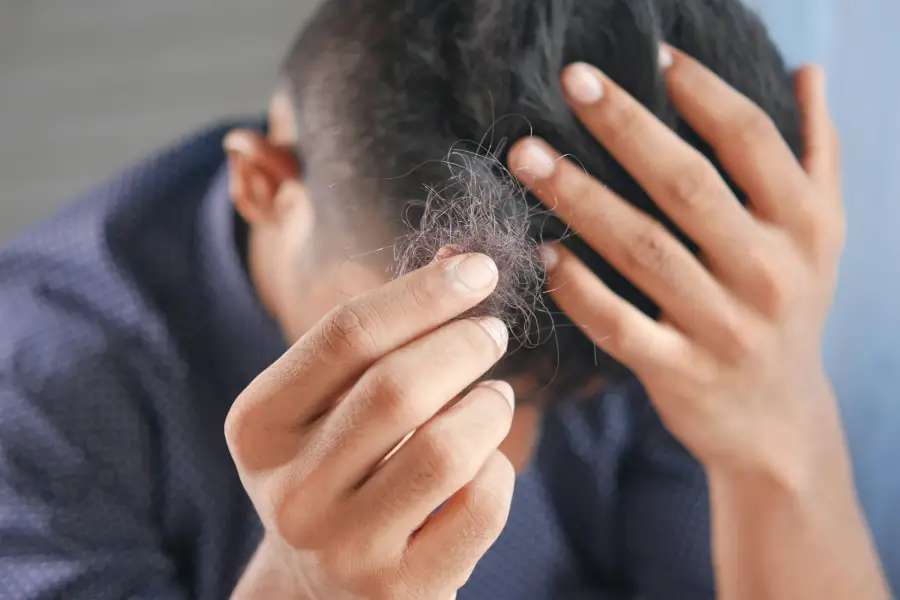
TL;DR: Yes, stress can cause hair loss, but it usually causes temporary shedding, not permanent baldness. The most common pattern is telogen effluvium, where emotional or physical stress pushes more hairs into the resting phase. Shedding often starts 2–3 months after the trigger, which is why people may not connect the hair loss to the stressful event immediately. Stress can also be linked with alopecia areata or hair-pulling behavior, so the pattern matters. Diffuse shedding often improves when the trigger is corrected, but patchy hair loss, crown thinning, receding hairline, or shedding that lasts more than 3–6 months should be evaluated.
Does stress cause hair loss?
Yes, stress can cause hair loss, but it most often causes temporary shedding rather than permanent follicle damage. Stress-related hair loss usually happens after the body experiences a shock. This can be emotional stress, illness, surgery, childbirth, rapid weight loss, poor sleep, or long-term anxiety. The hair follicles are usually still alive. The problem is that more hairs than normal shift into the resting phase and fall out later. This is why stress hair loss often feels sudden, even though the trigger happened weeks or months earlier.
What type of hair loss does stress cause?
Stress most commonly causes telogen effluvium, but it may also be linked with alopecia areata and trichotillomania. Stress-related hair loss does not always look the same. The pattern gives the strongest clue.
| Type | What it looks like | Main clue |
| Telogen effluvium | Diffuse shedding across the scalp | More hair in shower, brush, pillow |
| Alopecia areata | Round or patchy bald spots | Clear bald areas |
| Trichotillomania | Broken hairs in uneven patches | Hair pulling or short broken hairs |
| Pattern hair loss | Receding hairline, crown thinning, widening part | Gradual thinning in a pattern |
Most stress-related cases are telogen effluvium. Alopecia areata and trichotillomania need a different treatment plan, so patchy or uneven hair loss should not be treated as “just stress.”
How does stress cause hair shedding?
Stress can disrupt the hair growth cycle and push more follicles into the resting phase. Hair grows in cycles. At any time, most hairs are in the growth phase, while a smaller percentage are resting or shedding. When the body is under strong stress, this balance can shift. More follicles enter the resting phase at the same time. After a delay, those hairs shed together. This creates the classic stress-shedding pattern: sudden hair fall, lower density, and more hair loss during washing or brushing.
Common triggers include:
- Emotional stress
- Anxiety or burnout
- Severe illness or fever
- Surgery
- Childbirth
- Rapid weight loss
- Crash dieting
- Low protein intake
- Medication changes
- Poor sleep
The key point is simple: stress hair loss is usually a delayed shedding reaction, not instant baldness.
When does stress-related hair loss start?
Stress-related hair loss usually starts 2–3 months after the stressful event. This delay is one of the most important parts of the topic. A patient may feel stressed in January but notice shedding in March or April. That happens because the follicle first shifts into the resting phase. The hair does not fall immediately. It sheds later, when the cycle reaches the release stage.
| Timeline | What happens |
| Week 0 | Stress trigger happens |
| Weeks 1–8 | More follicles shift into resting phase |
| Months 2–3 | Shedding becomes noticeable |
| Months 3–6 | Shedding may continue if the trigger persists |
| After recovery | New growth slowly improves density |
This is why many people blame shampoo, hair oil, or washing frequency. In reality, the trigger may be an earlier stressor.
What does stress hair loss look like?
Stress hair loss usually looks like diffuse shedding across the scalp, not one clean bald spot. The most common signs are more hair in the shower, more hair on the pillow, more hair in the brush, and a thinner ponytail. The scalp may look less dense under bright light. Stress shedding usually does not create a sharply receding hairline by itself. It also does not usually create one round bald patch. Those signs may point to another type of hair loss.
| Pattern | More likely explanation |
| Sudden shedding all over | Telogen effluvium |
| Round bald patches | Alopecia areata |
| Receding temples | Male pattern hair loss |
| Crown thinning | Androgenetic alopecia |
| Widening part line | Female pattern hair loss |
| Broken hairs in patches | Hair pulling, traction, or breakage |
| Red, itchy, scaly scalp | Scalp inflammation or infection |
The practical rule is this: diffuse shedding can be stress-related; patterned or patchy loss needs diagnosis.
Can anxiety cause hair loss?
Yes, anxiety can contribute to hair loss when it causes prolonged stress, poor sleep, appetite changes, or hair-pulling behavior. Anxiety does not always cause hair loss directly. The risk increases when anxiety affects the body for weeks or months. Poor sleep, reduced eating, weight changes, muscle tension, high stress hormones, and compulsive hair pulling can all worsen shedding. If the hair loss is diffuse, telogen effluvium is more likely. If there are broken hairs or uneven patches, hair-pulling behavior should be considered.
The clean answer is: anxiety can trigger or worsen hair loss, but the pattern must be checked before choosing treatment.
Can emotional stress cause hair loss?
Yes, emotional stress can trigger temporary shedding, especially after grief, burnout, trauma, or prolonged pressure. Hair loss after emotional stress is usually not immediate. It often appears months later as telogen effluvium.
Common emotional triggers include:
- Grief
- Divorce or relationship stress
- Work burnout
- Financial pressure
- Exams
- Major life changes
- Trauma
- Long-term anxiety
The important point is not only the stress itself. The body’s response matters too. Poor sleep, reduced nutrition, weight loss, and ongoing anxiety can make the shedding stronger.
Is stress hair loss the same as male pattern baldness?
No, stress hair loss and male pattern baldness are different, but they can happen at the same time. Stress hair loss usually causes sudden shedding across the scalp. Male pattern baldness usually causes gradual recession at the temples, crown thinning, or both. This distinction changes the treatment plan. Stress shedding often improves when the trigger is controlled. Male pattern hair loss is usually progressive and needs long-term management.
A patient can have both. Stress may cause sudden shedding while genetic hair loss continues underneath. In that case, the shedding may recover, but the hairline or crown may still need treatment.
Is stress hair loss permanent?
Stress-related hair loss is usually not permanent if it is telogen effluvium.
In telogen effluvium, the hair follicles are usually still active. The problem is not follicle death; it is a temporary shift in the hair cycle. Once the trigger is controlled, shedding often slows down and new growth gradually returns.
Permanent hair loss becomes more likely if the pattern is not diffuse shedding. A receding hairline, crown thinning, widening part line, or long-term density loss may suggest underlying male or female pattern hair loss.
How long does stress hair loss last?
Stress hair loss often lasts 3–6 months, but visible density recovery can take longer. The shedding may slow first, but the hair does not look full again immediately. New hair grows slowly, so visible improvement often takes several months after the shedding phase improves.
| Stage | What usually happens |
| Month 0 | Stress trigger occurs |
| Months 2–3 | Shedding becomes noticeable |
| Months 3–6 | Shedding may continue |
| Months 6–12 | Density may gradually improve |
| 12+ months | Persistent thinning needs evaluation |
If shedding continues beyond 6 months, or if the hairline and crown keep thinning, the cause should not be assumed to be stress alone.
How can you stop hair loss from stress?
The best way to stop stress hair loss is to correct the trigger and support the body’s recovery. Stress shedding is not usually fixed by one shampoo, oil, or supplement. The main goal is to stabilize the factors that pushed the hair cycle into shedding.
Important steps include:
- Improving sleep quality
- Eating enough protein
- Avoiding crash diets
- Correcting iron or vitamin deficiencies
- Managing ongoing emotional stress
- Treating scalp inflammation if present
- Reducing heat, bleach, and tight hairstyles
- Checking for thyroid or hormonal problems if shedding persists
The practical answer is simple: stress hair loss improves best when the body is no longer under the same stress load.
What should you eat for stress-related hair loss?
Stress hair loss recovery needs enough protein, calories, iron, vitamin D, B12, zinc, and healthy fats. Hair production is not essential for survival, so the body may reduce hair growth when nutrition is poor. This is why stress hair loss can become worse if it comes with low appetite, weight loss, or skipped meals.
| Nutrient | Why it matters |
| Protein | Provides amino acids for hair fiber production |
| Iron / ferritin | Low levels can worsen shedding |
| Vitamin D | Supports normal hair-cycle function |
| B12 | Supports healthy cell turnover |
| Zinc | Deficiency can contribute to shedding |
| Healthy fats | Support skin and scalp health |
| Calories | Very low intake can trigger more shedding |
Supplements should not be random. They are most useful when a deficiency is confirmed or dietary intake is clearly restricted.
What tests should be checked for stress hair loss?
Persistent stress hair loss should be evaluated with blood tests and a scalp examination. Stress can be the trigger, but it may not be the only cause. Iron deficiency, thyroid imbalance, vitamin D deficiency, hormonal changes, recent illness, medication changes, and genetic hair loss can all overlap with stress shedding.
Common checks include:
- Ferritin
- Serum iron
- Complete blood count
- Vitamin D
- Vitamin B12
- Folate
- Zinc
- Thyroid function
- Hormonal assessment when needed
- Scalp and hair-density examination
The goal is not to test everything blindly. The goal is to confirm whether the shedding is truly temporary or part of a longer-term hair loss condition.
When should you see a doctor for stress hair loss?
You should see a doctor if shedding is severe, lasts more than 3–6 months, or comes with visible thinning, bald patches, or scalp symptoms. Mild diffuse shedding after a stressful event can improve with time. But some patterns need proper diagnosis.
See a hair specialist if you notice:
- Shedding lasting longer than 6 months
- Receding hairline
- Crown thinning
- Widening part line
- Round bald patches
- Scalp itching, redness, pain, or scaling
- Sudden heavy shedding
- Hair loss after rapid weight loss or illness
- Family history of early baldness
The safest approach is: diagnose the type of hair loss first, then choose treatment.
Can stress hair loss need a hair transplant?
Stress hair loss usually does not need a hair transplant, but stress can reveal existing pattern hair loss. Telogen effluvium alone is not a hair transplant indication. The follicles are usually still capable of growing hair again, so surgery is not the first step. A hair transplant may be considered only if there is permanent patterned hair loss, enough donor hair, stable progression, and realistic expectations.
| Situation | Best next step |
| Temporary stress shedding | Trigger control and monitoring |
| Nutrient deficiency | Correct the deficiency |
| Scalp inflammation | Treat the scalp condition first |
| Male pattern hair loss | Long-term hair loss treatment plan |
| Female pattern hair loss | Diagnosis and medical management |
| Stable permanent hair loss | Hair transplant evaluation |
The key message is clear: stress shedding should be treated medically first; permanent pattern loss can be planned surgically if the patient is suitable.
Can stress make male pattern baldness worse?
Stress may not directly cause male pattern baldness, but it can make existing thinning look worse. Male pattern hair loss is mainly driven by genetic and hormonal sensitivity. Stress shedding is different because it usually causes sudden diffuse hair fall. But both can happen together. A man with early genetic thinning may experience stress-related shedding and suddenly notice a weaker hairline or thinner crown.
| Problem | Typical pattern |
| Stress shedding | Sudden diffuse hair fall |
| Male pattern hair loss | Receding hairline and crown thinning |
| Combined case | Sudden shedding plus visible patterned thinning |
This is why treatment should not focus only on stress. If the hairline or crown is changing, the patient may need a long-term plan for androgenetic alopecia.
What treatments help stress-related hair loss?
The best treatment depends on whether the cause is temporary shedding, deficiency, scalp inflammation, or pattern hair loss. Stress shedding often improves by correcting the trigger. But if another condition is present, treatment should target that condition.
| Cause | Possible approach |
| Temporary stress shedding | Sleep, nutrition, stress control |
| Low ferritin or vitamin deficiency | Deficiency correction |
| Scalp inflammation | Scalp treatment |
| Pattern hair loss | Medical hair loss treatment |
| Weak hair quality | PRP or mesotherapy support |
| Stable permanent thinning | Hair transplant evaluation |
PRP, mesotherapy, minoxidil, or hair transplant should not be used as one-size-fits-all solutions. The right option depends on diagnosis.
How can you prevent stress hair loss from coming back?
You can reduce recurrence by keeping sleep, nutrition, weight, and scalp health stable. Stress hair loss can happen again if the body goes through another major trigger. Prevention is about lowering the total stress load on the hair cycle.
Useful habits include:
- Avoiding crash diets
- Eating enough protein
- Maintaining stable weight loss
- Sleeping consistently
- Treating dandruff or scalp itching early
- Avoiding tight hairstyles
- Limiting heat and chemical damage
- Getting checked early if shedding returns
The main idea is simple: hair reflects internal stability, so recovery depends on more than external hair products.
Does stress cause hair loss? Final verdict
Yes, stress can cause hair loss, but most stress-related shedding is temporary and treatable. Stress most commonly causes telogen effluvium, which leads to diffuse shedding a few months after the trigger. In many cases, the follicles remain active and hair density improves gradually once the trigger is corrected.
However, persistent thinning, bald patches, crown loss, or a receding hairline should not be dismissed as stress. Those patterns may point to genetic, hormonal, autoimmune, or scalp-related causes.
The clearest answer is: stress can cause shedding, but correct diagnosis determines the right treatment.
Frequently asked questions about stress and hair loss
Can stress cause bald spots?
Stress-related telogen effluvium usually causes diffuse shedding, not bald spots. Round bald patches may suggest alopecia areata or another condition that needs evaluation.
Can lack of sleep cause hair loss?
Yes, poor sleep can contribute to hair shedding by increasing physical stress on the body. Sleep disruption can also affect appetite, hormones, stress response, and recovery.
Will hair grow back after stress hair loss?
Yes, hair often grows back if the follicles are healthy and the trigger is corrected. Shedding may improve first, while visible density recovery takes longer.
How do I know if my hair loss is from stress?
Stress hair loss is more likely if shedding starts 2–3 months after a major trigger and affects the whole scalp. Patchy loss, crown thinning, or hairline recession should be checked separately.
Can stress hair loss happen twice?
Yes, stress hair loss can happen again after another major trigger. Repeated stress, illness, rapid weight loss, or poor nutrition can restart the shedding cycle.
Can stress hair loss be treated with shampoo?
Shampoo alone cannot treat stress hair loss unless scalp inflammation or dandruff is also present. Stress shedding is usually an internal hair-cycle response, not only a scalp surface problem.
Is minoxidil needed for stress hair loss?
Minoxidil is not always needed for temporary telogen effluvium. It may be considered if pattern hair loss is also present, but diagnosis should come first.
