
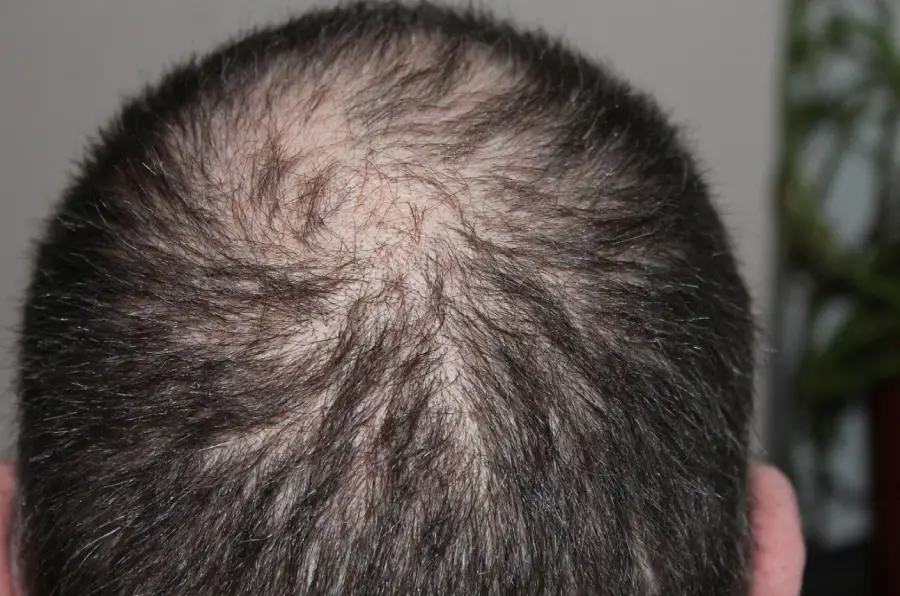
TL;DR: The donor area is one of the most important factors in hair transplant success because it determines how many grafts can be safely taken, how much density can be restored, and whether the result will still look natural years later. A strong donor area gives the surgeon more planning flexibility. A weak or overused donor area limits coverage and increases the risk of visible thinning. The key point is simple: a hair transplant is not only about filling the front or crown; it is also about protecting the donor area for the long term.
What is the donor area in a hair transplant?
The donor area is the part of the scalp where healthy follicles are taken for transplantation. In most patients, the donor area is located at the back and sides of the head. These hairs are usually more resistant to pattern hair loss, which is why they are used to restore thinning areas such as the hairline, mid-scalp, and crown. The donor area is not unlimited. Every graft taken from this region must be planned carefully because the same area may need to support future hair transplant sessions if hair loss progresses.
Why is the donor area important in a hair transplant?
The donor area is important because it controls the safe graft supply, final density, and long-term naturalness of the result. A patient may want a low hairline and full crown coverage, but the donor area decides what is actually possible. If too many grafts are taken, the donor area can become visibly thin. If too few grafts are available, the surgeon may need to prioritize the frontal hairline instead of trying to cover every thinning area.
This is why donor planning matters before choosing a technique. Whether a patient is consideringDHI hair transplant in Istanbul orSapphire FUE hair transplant, the donor area still sets the limit for safe extraction and realistic coverage.
What makes a good donor area?
A good donor area has strong density, healthy follicles, stable hair growth, and enough coverage to hide extraction points. The best donor areas usually have thick hair shafts, high follicular unit density, good scalp coverage, and no major scarring or inflammation. Hair color and texture also matter. Thick, wavy, or curly hair can often create better visual coverage than thin, straight hair with the same graft count.
A good donor area is evaluated by looking at:
- Hair density
- Hair shaft thickness
- Follicular unit quality
- Scalp condition
- Hair loss pattern
- Donor stability
- Previous transplant history
- Future hair loss risk
The goal is not only to take grafts. The goal is to take grafts without making the donor area look depleted.
How is the donor area checked before surgery?
The donor area is checked by assessing density, follicle quality, scalp health, extraction safety, and future hair loss risk. A proper donor-area assessment should not be rushed. The surgeon needs to understand how many grafts can be removed safely and how the donor area will look after extraction.
The assessment usually includes:
| Factor | Why it matters |
| Donor density | Shows how many grafts may be safely available |
| Hair thickness | Affects visual coverage after transplant |
| Follicular units | Determines graft quality and hair count |
| Scalp condition | Inflammation or scarring can affect planning |
| Hair loss stage | Helps predict future graft demand |
| Previous surgery | Shows whether the area was already used |
| Extraction pattern | Prevents patchy or uneven donor thinning |
Advanced cases need especially careful planning. In higher Norwood stages, the demand for grafts can be much higher than the donor supply, so the plan must prioritize the areas that will create the biggest visual improvement.
How many grafts can be taken from the donor area?
The safe number of grafts depends on donor density, scalp size, hair thickness, extraction spacing, and long-term hair loss planning. There is no universal graft number that fits every patient. One patient may safely provide 2,500 grafts, while another may support 4,000 or more depending on donor strength and extraction design. The same graft count can also look different depending on hair thickness and contrast between hair and scalp.
Safe extraction depends on:
- Donor area size
- Follicular unit density
- Hair shaft caliber
- Punch size
- Extraction distribution
- Remaining donor density
- Whether future sessions may be needed
- How short the patient wants to cut the hair
One study found that extracting around one-third of donor hair density in a controlled area did not create a major cosmetic difference in selected patients, but this does not mean every patient can safely lose that amount. Donor limits must be individualized.
Does a higher graft number always mean a better result?
No, a higher graft number does not always mean a better hair transplant result. A large graft number can help when the donor area is strong and the recipient area needs broad coverage. But aggressive extraction can damage the long-term plan. A natural result depends on balance: enough grafts for visible improvement, but not so many that the donor area becomes thin or patchy.
The better question is not “How many grafts can I get?” The better question is: “How many grafts can be taken safely while protecting the donor area?”
Can the donor area limit hairline design?
Yes, the donor area can limit how low or dense the new hairline should be. A very low hairline may require too many grafts. If the donor area is limited, lowering the hairline too aggressively can leave fewer grafts for the mid-scalp or crown in the future.
A natural hairline should match:
- Age
- Face shape
- Donor capacity
- Hair loss stage
- Future thinning risk
- Hair thickness
- Density goals
The best hairline is not always the lowest hairline. It is the one that looks natural now and still makes sense years later.
Does donor hair grow back after extraction?
Extracted donor follicles do not grow back in the donor area. This is one of the most important facts patients should understand before surgery. In FUE and DHI procedures, follicles are removed from the donor area and moved to the recipient area. Once a follicle is extracted, that exact follicle no longer remains in the donor zone.
This is why safe extraction matters. A strong donor area can still look normal after a well-planned procedure, but careless extraction can leave visible thinning.
What happens if too many grafts are taken from the donor area?
Taking too many grafts can cause overharvesting, patchy thinning, and an unnatural donor area appearance. Overharvesting happens when more grafts are removed than the donor area can safely provide. The result may look thin, uneven, moth-eaten, or visibly depleted, especially when the hair is cut short.
Common signs of overharvesting include:
- Patchy density at the back of the head
- Visible extraction gaps
- Uneven donor area coverage
- Scalp showing through the hair
- Difficulty wearing short hairstyles
- Poor donor availability for future surgery
If a patient already has donor area damage from a previous procedure, repair planning should be conservative. EsteQuality’s page onoverharvested donor area hair transplant repair is relevant for patients who want to understand correction options.
Can a weak donor area still be used for hair transplant?
A weak donor area may still be used in selected cases, but the plan must be realistic and conservative. A weak donor area does not always mean surgery is impossible. It means the clinic must be more careful with graft numbers, hairline design, coverage goals, and future planning. In weak donor cases, the priority is usually not full coverage. The priority is visual improvement where it matters most. This often means focusing on the frontal hairline and mid-scalp rather than trying to cover the entire scalp with low density.
A weak donor area may require:
| Situation | Planning approach |
| Low donor density | Conservative graft extraction |
| Advanced baldness | Prioritize frontal framing |
| Thin hair shafts | Avoid unrealistic density promises |
| Previous transplant | Check remaining donor capacity |
| Diffuse donor thinning | Be cautious with surgery |
| High future loss risk | Plan for long-term progression |
The key point is simple: donor quality decides the limits of the result.
Can beard or body hair be used if the donor area is weak?
Beard or body hair can be used in selected cases, but it cannot fully replace a strong scalp donor area. Beard hair is sometimes used as a secondary donor source, especially in repair cases or advanced hair loss cases. It can add volume, but it usually has a different texture, growth cycle, and appearance compared with scalp hair. Body hair may also be considered in limited cases, but it is less predictable than scalp hair. It should not be presented as a perfect substitute.
Best use cases for beard or body hair include:
- Adding density behind scalp grafts
- Supporting crown coverage
- Repairing previous overharvesting
- Improving coverage in advanced cases
- Blending with scalp hair when texture allows
For a natural frontal hairline, scalp hair is usually preferred because it looks softer and more natural.
How can the donor area be protected during FUE or DHI?
The donor area is protected by safe graft planning, balanced extraction, correct spacing, and avoiding aggressive harvesting. Donor protection starts before surgery. The surgeon should estimate current graft supply, future hair loss risk, and how much density must remain in the donor zone after extraction.
Important donor-protection principles include:
- Do not extract too many grafts from one small zone.
- Avoid creating visible gaps between hairs.
- Use balanced extraction across the safe donor area.
- Choose punch size carefully.
- Preserve grafts for future sessions if needed.
- Avoid unrealistic hairline lowering.
- Match graft count to the patient’s real donor capacity.
Technique matters, but planning matters more. A modern method can still produce poor results if graft extraction is too aggressive.
What does donor area recovery look like after hair transplant?
The donor area usually heals gradually, with early redness, scabbing, sensitivity, and temporary unevenness. In the first days, small extraction points may be visible. Scabbing and redness are common early. Mild tenderness, tightness, or itching can also occur as the area heals.
A simple recovery timeline looks like this:
| Time after surgery | Donor area appearance |
| Days 1–3 | Redness, small extraction marks, sensitivity |
| Days 4–10 | Scabbing starts to clear |
| Weeks 2–4 | Redness reduces, hair begins to cover the area |
| Months 1–3 | Donor area looks more even |
| Months 3–6 | Final donor appearance becomes clearer |
| 6+ months | Long-term extraction pattern can be assessed |
Patients can review EsteQuality’shair transplant recovery day by day guide to better understand the healing process after surgery.
Does the donor area look thinner after hair transplant?
The donor area can look slightly thinner after extraction, but it should not look patchy or depleted after a well-planned procedure. Some reduction is expected because follicles are removed permanently. The goal is to remove grafts in a way that the remaining hair still covers the donor area naturally.
The donor area is more likely to look thin if:
- Too many grafts were extracted
- Extraction was concentrated in one region
- The patient had low donor density
- Hair shafts were very thin
- The patient cuts the hair very short
- Multiple surgeries were performed without long-term planning
A good transplant protects both sides of the result: the recipient area and the donor area.
Can the donor area be repaired after a bad hair transplant?
Donor area repair may be possible, but it depends on the level of damage, remaining donor hair, scalp condition, and patient expectations. Repair can be more complex than a first hair transplant. The clinic must evaluate whether the issue is overharvesting, scarring, patchy extraction, low density, or poor blending.
Possible repair approaches may include:
- Strategic redistribution of remaining grafts
- Beard hair support in selected cases
- Scalp micropigmentation in some patients
- Longer hairstyle planning
- Conservative secondary surgery
- Avoiding further donor damage
Not every donor area can be fully restored. The realistic goal is often improvement, better blending, and less visible patchiness.
Can the donor area be used for a second hair transplant?
The donor area can be used for a second hair transplant if enough safe donor supply remains. A second surgery depends on the first extraction pattern, remaining density, hair loss progression, and current goals. If the first surgery used too many grafts, the second procedure may be limited.
Before a second transplant, the clinic should check:
- Remaining donor density
- Previous extraction pattern
- Scalp scarring
- Recipient area needs
- Crown and hairline priorities
- Future hair loss risk
- Whether expectations are realistic
The second transplant should not be planned only around the area that looks thin. It must also protect what remains of the donor area.
Hair transplant donor area: final verdict
The donor area is one of the main factors that determines whether a hair transplant can look natural, dense, and sustainable. A strong donor area gives more options. A weak donor area requires a more conservative plan. An overharvested donor area can limit future correction and make even a good recipient result feel incomplete. The most important message is this: a successful hair transplant is not measured only by how the hairline looks. It is also measured by how well the donor area is preserved.
Frequently asked questions about the hair transplant donor area
Is the donor area permanent?
Yes, donor hair is usually more resistant to pattern hair loss, which is why it is used for transplantation. However, donor hair still needs to be evaluated because some patients may have weak, diffuse, or unstable donor zones.
Does donor area hair grow back after FUE?
No, extracted follicles do not grow back in the donor area. The surrounding hair can cover the extraction points if grafts are removed safely and evenly.
How long does the donor area take to heal?
The donor area usually looks much better within a few weeks, but full visual recovery can take several months. Redness, scabbing, and sensitivity are normal in the early period.
Can too many grafts damage the donor area?
Yes, taking too many grafts can cause overharvesting and visible thinning. This is why graft planning must be based on donor capacity, not only on the patient’s desired density.
What if my donor area is not strong enough?
If the donor area is weak, the plan may need to be limited, staged, or supported with alternative options. In some cases, surgery may not be recommended if the expected result would not be natural or sustainable.
Can beard hair be used as donor hair?
Yes, beard hair can be used in selected cases, especially for added density or repair work. It is not usually the first choice for the frontal hairline because its texture can be different from scalp hair.
Can a second hair transplant damage the donor area?
Yes, a second transplant can damage the donor area if remaining graft supply is not calculated carefully. A second procedure should always include donor-area reassessment and long-term planning.
How do I know if I have a good donor area?
You need a donor assessment that checks density, hair thickness, scalp condition, follicle quality, and future hair loss risk. Photos alone are not enough. The donor area should be examined before deciding graft numbers.
