
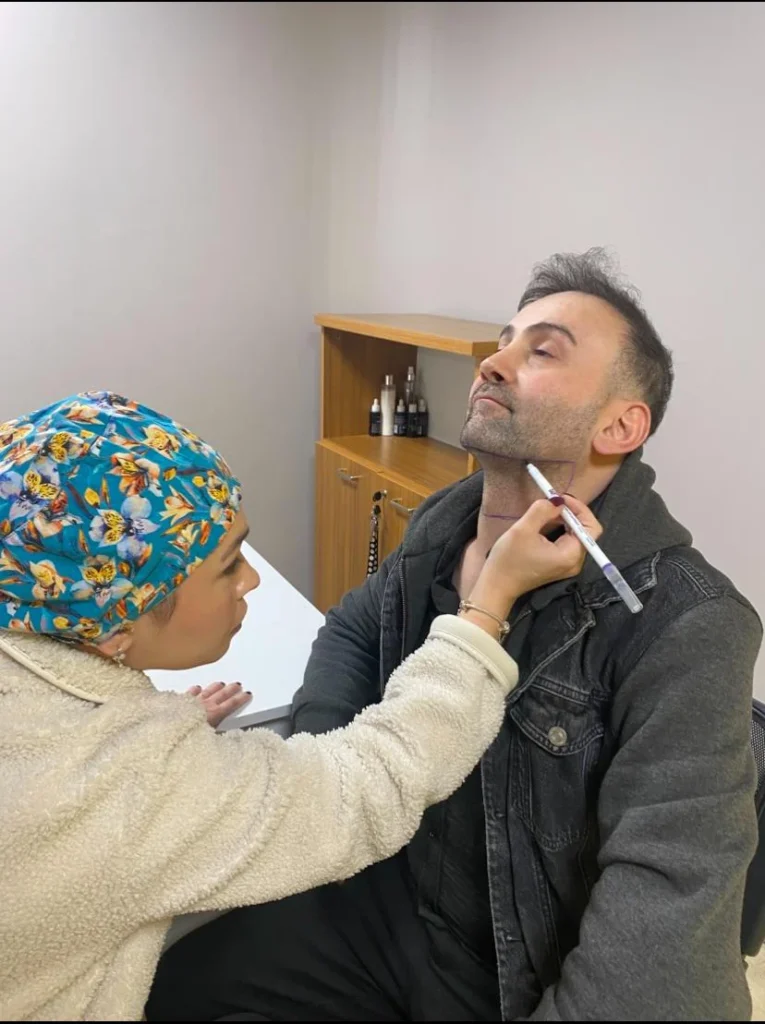
This is a real patient case of a beard to scalp hair transplant. For how the procedure works in general, see that page; this article walks through one 1,750-graft result.
Hair loss can be challenging, especially for patients with limited donor hair on the scalp. In such cases, beard hair transplant emerges as an effective alternative. This article presents a real case of beard to head hair transplant using 1,750 grafts with the DHI technique, performed at EsteQuality Hair Transplant Clinic.
Why Use Beard Hair for Hair Transplant?
Beard hair is increasingly used as an additional donor source for patients with advanced baldness or weak donor areas on the scalp. In this real case, the patient lacked sufficient grafts from the back of the head, making beard to scalp grafting a reliable solution to achieve natural density and coverage.
Differences Between Beard and Scalp Hair
- Thickness & Texture: Beard hairs are generally thicker and more coarse compared to scalp hairs, providing extra volume when transplanted.
- Growth Cycle: Beard hair has a slightly different growth cycle, but once transplanted, it continues to grow naturally like scalp hair.
- Colour & Curl Pattern: Sometimes, beard hair may appear slightly different in curl or shade; careful blending during implantation reduces this risk.
Who is Suitable for Beard to Head Hair Transplant?
Patients who benefit most from beard grafts for hair restoration include:
- Individuals with limited donor density on the scalp
- Those requiring high graft numbers for maximum coverage
- Patients aiming to enhance crown or mid-scalp density rather than frontal hairline
- Men with dense beards and no contraindications for facial graft harvesting
Patient Case: 1,750 Grafts Beard to Head Hair Transplant
At EsteQuality Hair Transplant Clinic, our patient arrived with advanced hair loss and insufficient scalp donor hair. The medical team recommended using beard grafts as a donor source to achieve satisfactory coverage with natural results.
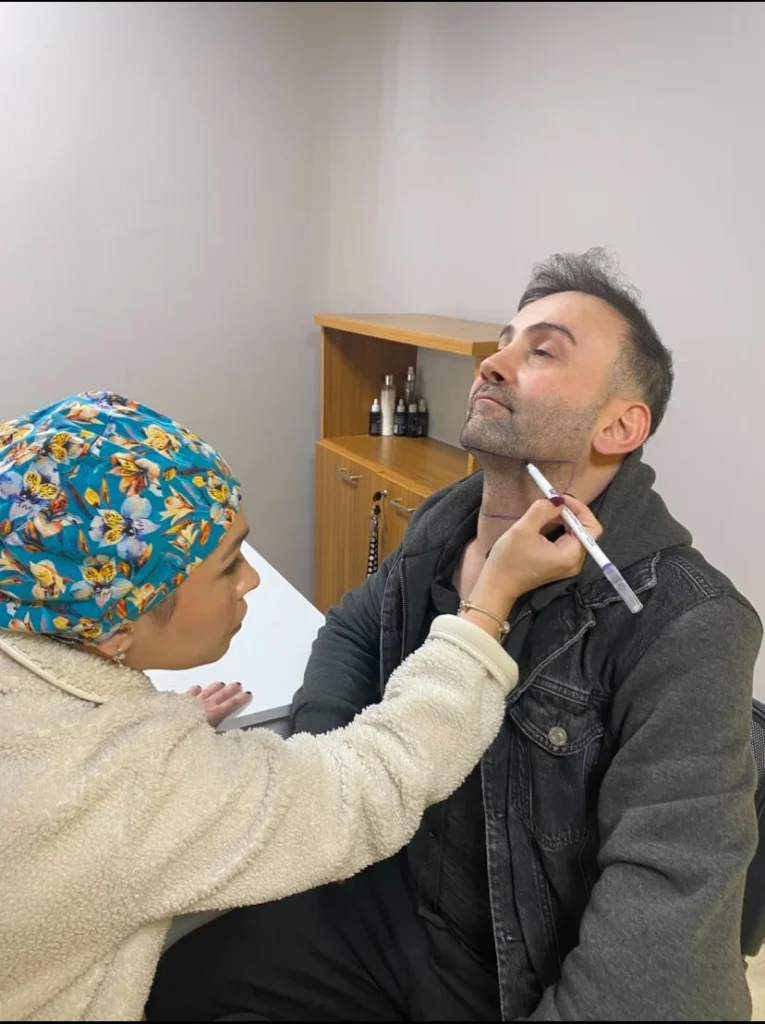
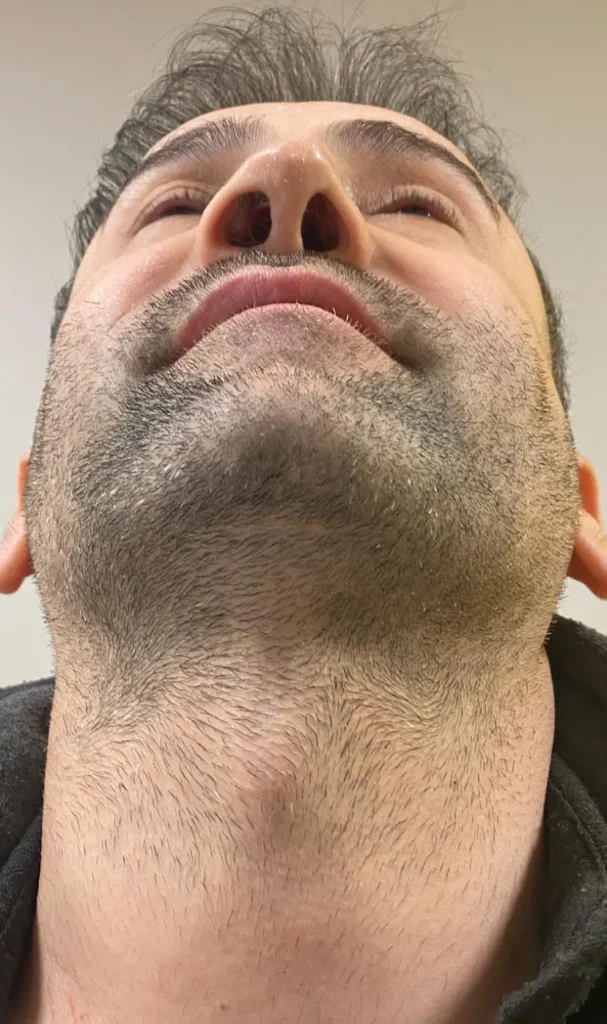
Pre-Operation Beard Condition
Before the procedure, the patient’s beard area showed:
- Thick, dense facial hair, particularly under the chin and along the jawline
- No prior scarring or folliculitis in the donor beard area
- Sufficient density to extract 1,750 grafts without causing visible thinning
The patient underwent a comprehensive dermatological and surgical assessment to ensure beard hair suitability for scalp transplantation.
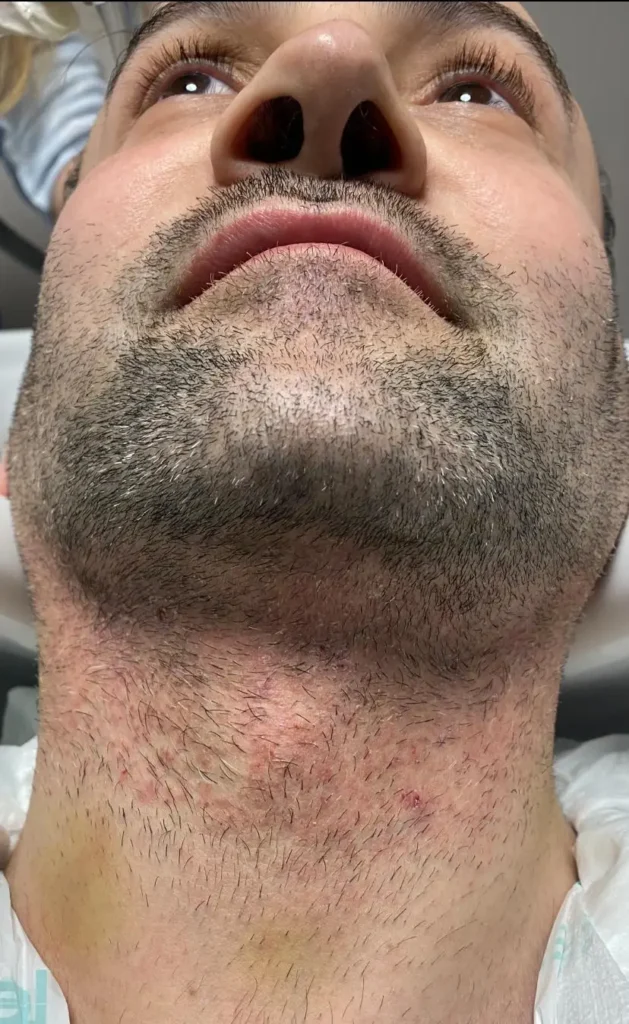
10 Days After the Operation
- The donor area (beard) showed mild redness and small crusts, typical during healing
- Recipient scalp area displayed initial implanted grafts clearly visible, with slight scabbing
📝 Patient Feedback (Day 10):
“I had minimal pain and swelling. Redness is fading each day. The team explained each step, so I felt confident during recovery.”
✅ Post-op care included:
- Gentle cleansing with clinic-recommended shampoo
- Avoiding shaving the donor area until full healing
- Antibiotic ointments as prescribed
2 Months Post Operation Results
At the 2-month follow-up, results showed:
- Stable graft survival with no significant loss in the transplanted area
- Beard donor area healed completely, with minimal visible thinning
- Early signs of new hair growth emerging on the scalp, indicating good adaptation of beard follicles
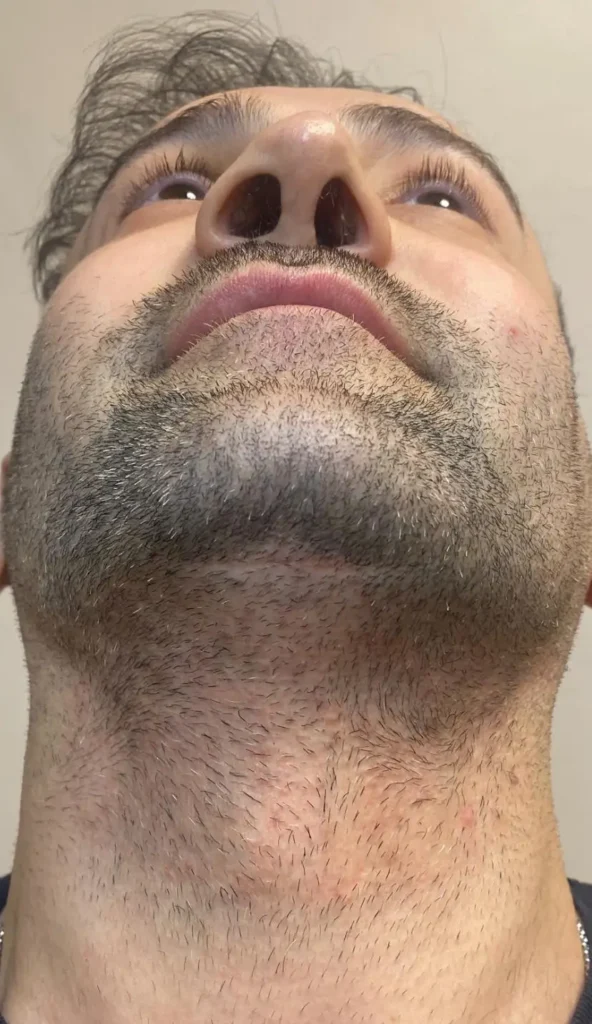
🗨️ Patient Comment (2 Months):
“I see the newly implanted hairs growing stronger each week. The beard area looks normal, and no one notices I had grafts extracted from there.”
How is Beard to Head Hair Transplant Performed with DHI Technique?
The Direct Hair Implantation (DHI) technique is particularly effective for beard to scalp transplants, ensuring maximum graft survival and natural-looking density. At EsteQuality Hair Transplant Clinic, the surgical team uses advanced DHI implanters for precise placement of beard hair grafts.
Step by Step DHI Method Explained
- Consultation & Planning
- Detailed assessment of beard donor area and scalp recipient site
- Calculating required graft number (in this case, 1,750 grafts)
- Designing the implantation pattern for natural density
- Local Anaesthesia
- Administered to both beard and scalp areas to ensure painless extraction and implantation
- Extraction of Beard Grafts
- Using micro punch tools (0.6-0.8mm) to minimise scarring
- Harvesting grafts evenly to avoid patchiness in the beard
- Graft Preparation
- Cleaning, sorting, and hydrating extracted grafts under sterile conditions
- Implantation Using DHI Pens
- Direct placement of each graft into the scalp using Choi Implanter Pens
- No need to open recipient channels beforehand, reducing trauma and ensuring precise angle, direction, and depth control
- Post-Operative Care & Instructions
- Guidelines for cleaning, sleeping position, and avoiding trauma to implanted areas
- Scheduled follow-ups for growth assessment
Advantages of DHI for Beard Hair Transplant
✔️ Minimally invasive technique with faster recovery
✔️ No channel opening needed, reducing bleeding and trauma
✔️ High graft survival rate, even for thicker beard follicles
✔️ Ensures natural implantation angles, crucial when blending beard hair with existing scalp hair
✔️ Suitable for dense packing, particularly in crown and mid-scalp zones
💡 Expert Note:
The DHI technique is ideal when working with beard hairs because it prevents follicle damage during placement, ensuring better aesthetic outcomes.
Frequently asked questions
Is a beard-to-scalp transplant permanent?
Yes. The transplanted beard follicles keep growing in their new position on the scalp, so the result is permanent.
Is a beard-to-scalp transplant painful?
It is done under local anesthetic, so it is not painful during the procedure. The donor and recipient areas can feel tender for a day or two afterwards.
What is the recovery time?
The beard donor area usually settles within about five days, faster than the scalp; the scalp then follows the normal transplant timeline, with the settled result at around a year.
See how a hair transplant is planned end to end on our hair transplant in Turkey page.
